
Most SaaS founders and content marketers have a love-hate relationship with AI copywriting. On one hand, the promise of infinite content generation is alluring. On the other hand, the reality is often hours spent wrestling with generic, robotic output that sounds exactly like your competitors.
If you are tired of reading "in today's digital landscape" or manually copy-pasting text from a chat window into your CMS, you are not alone. The market has matured past simple prompt boxes. Today, the best AI tools for copywriting are specialized engines. Some are built specifically for sales emails, others for deep SEO optimization, and a new breed handles the entire production pipeline autonomously.
In fact, discussions among professional copywriters reveal a clear consensus: nobody pays for a generic AI wrapper anymore. They pay for tools that solve specific workflow bottlenecks.
Whether you are a bootstrapped indie hacker looking to scale organic traffic or an agency owner managing a dozen client blogs, finding the right tool comes down to matching your specific use case with the right software architecture.
Let's break down the current state of AI writing and rank the top seven tools that actually drive business results in 2026.
Does AI Copywriting Actually Work?
The short answer is yes, but only if you use it correctly.
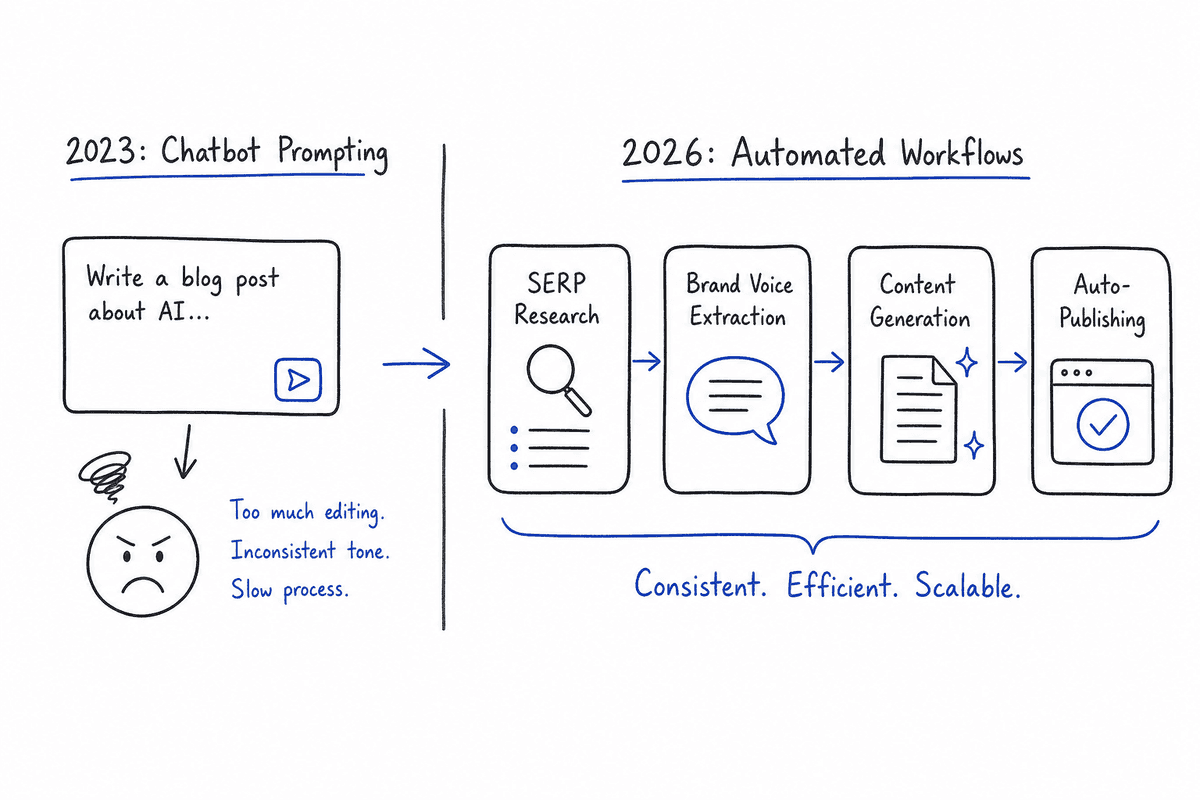
When AI writing tools first hit the mainstream, the common workflow was entirely manual: open a chat interface, type a generic prompt like "write a blog post about SaaS metrics," and publish the resulting wall of text. The result was predictable, structurally repetitive content that failed to rank on Google or resonate with human buyers.
Today, effective AI copywriting relies on context and workflow rather than zero-shot prompting.
AI works exceptionally well for:
- Overcoming the blank page: Generating outlines, structural wireframes, and first drafts.
- Scaling specific formats: Writing hundreds of product descriptions or metadata tags.
- Content optimization: Analyzing top-ranking SERP competitors and suggesting missing semantic entities.
- Repurposing: Turning a one-hour webinar transcript into a series of optimized blog posts and social threads.
It still struggles with original thought leadership, highly nuanced contrarian opinions, and interviewing subject matter experts. The most successful SaaS teams treat AI not as a replacement for human strategy, but as a high-speed execution layer for their documented content plans.
What Makes a Great AI Copywriting Tool for SaaS?
Before diving into the list, it helps to understand the criteria used to evaluate these platforms. When testing an AI tool for copywriting, look for these five core capabilities:
- Brand Voice Consistency: Can the tool analyze your existing content and replicate your specific tone, formatting quirks, and terminology?
- Workflow Integration: Does it connect directly to your CMS (WordPress, Webflow, Ghost, Shopify)? The more copy-pasting required, the less efficient the tool.
- SEO Intelligence: Writing well is only half the battle. The tool needs to understand search intent, analyze SERP competitors, and structure the content (using proper H2s, H3s, and schema markup) for both traditional Google algorithms and AI search engines like Perplexity.
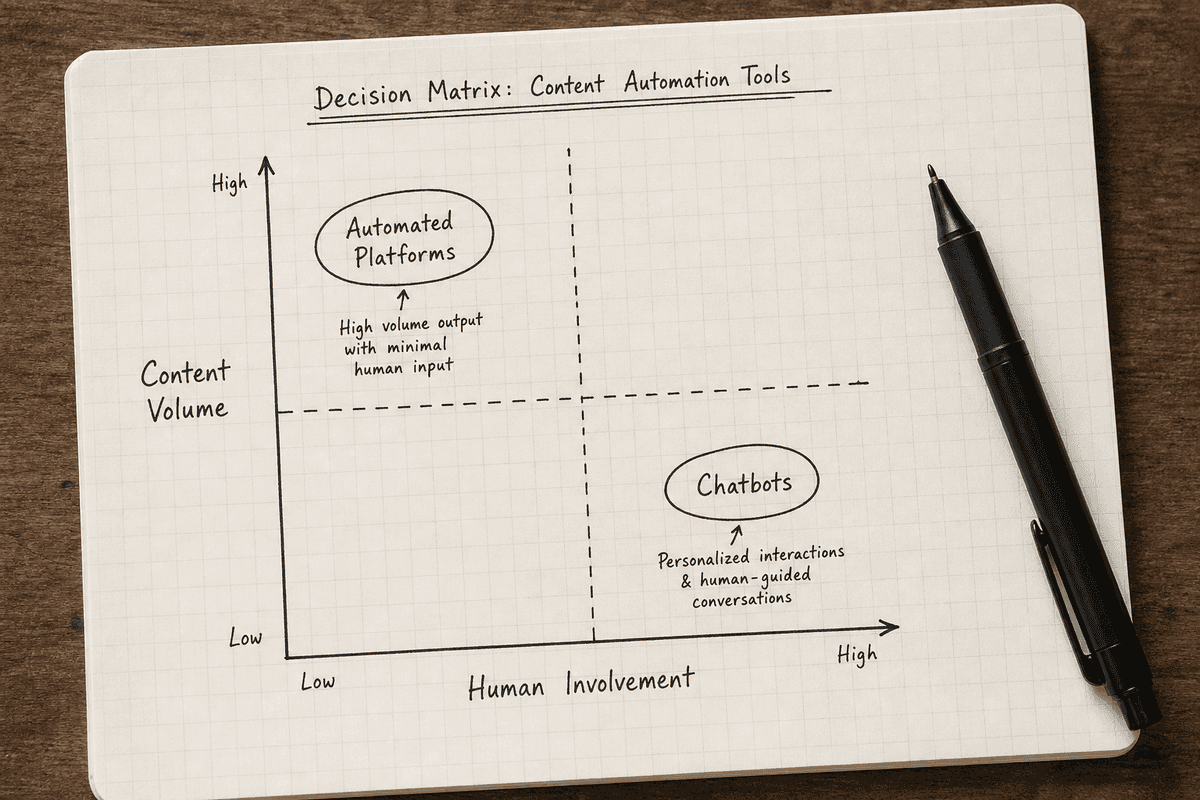
- Autonomy vs. Control: Some tools act as granular co-pilots (editing sentence by sentence), while others act as autonomous agents (handling the entire publishing lifecycle). You need to pick the style that matches your available headcount.
- Output Freshness: Relying on outdated training data leads to stale content. The best tools actively scrape live search results to ground their generation in real-time facts.
The 7 Best AI Tools for Copywriting in 2026
Based on capabilities, pricing, and specific SaaS use cases, here are the top seven AI copywriting platforms available right now.
1. Jasper (Best for Enterprise & Brand Voice)
Jasper was one of the earliest heavyweights in the AI writing space, and it has successfully transitioned from a simple template library to an enterprise-grade marketing co-pilot.
Jasper excels in cross-channel campaign generation. You can upload a single brief, and Jasper will generate a landing page, an email sequence, a blog post, and corresponding social media assets—all adhering to a strict, customizable brand voice.
Key Features:
- Company Knowledge Base: Upload your style guides, product specs, and customer personas. Jasper references these to ensure factual accuracy.
- Campaign Mode: Generates cohesive assets across multiple channels simultaneously.
- Collaboration: Excellent team features, making it a favorite for larger marketing departments and agencies.
Pros:
- Highly sophisticated brand voice controls.
- Integrates with tools like Surfer SEO and Google Docs.
- Strong security and privacy protocols for enterprise users.
Cons:
- Pricing can be prohibitive for solo founders and early-stage startups.
- Still requires significant human-in-the-loop management to assemble and publish campaigns.
2. Copy.ai (Best for GTM & Sales Workflows)
While Jasper leans toward content marketing, Copy.ai has pivoted heavily toward Go-To-Market (GTM) and sales enablement workflows. It is designed to automate repetitive tasks that surround the copywriting process, such as account research and lead enrichment.
If you need to generate highly personalized cold outreach sequences based on LinkedIn data, or if you need to translate hundreds of CRM entries into tailored sales briefs, Copy.ai is arguably the best tool on the market. They also maintain a robust suite of free AI writing generators and tools for users who just need quick, ad-hoc copy.
Key Features:
- Workflows: Visual, node-based automation builders that connect to your CRM and email tools.
- Sales Focus: Pre-built templates for account planning, outbound emails, and follow-ups.
- Multi-Language Support: Translates and generates copy in over 95 languages.
Pros:
- Incredible for outbound sales teams and SDRs.
- Saves hours on prospect research and personalization.
- Intuitive interface for building complex text-based automations.
Cons:
- Less suited for long-form SEO blog posts compared to dedicated SEO tools.
- The workflow builder has a learning curve for non-technical users.
3. Surfer SEO (Best for Search-Optimized Articles)
Surfer SEO isn't just an AI writer; it's a comprehensive SEO suite that happens to feature a powerful generative engine called Surfer AI. It bridges the gap between technical search analysis and content creation.
Surfer analyzes the top-ranking pages for your target keyword, identifying exactly how many words, images, headings, and specific NLP (Natural Language Processing) entities you need to include to rank. It then uses this exact data map to generate an article.
Key Features:
- SERP Analyzer: Real-time data on competitor structures.
- Content Editor: Real-time scoring system that updates as you write or generate text.
- Outline Builder: Generates highly relevant H2 and H3 structures based on what Google already rewards.
Pros:
- Takes the guesswork out of SEO optimization.
- Consistently produces content that ranks well for informational queries.
- Integrates natively into WordPress and Google Docs.
Cons:
- Pricing is based on a per-article credit system, which can get expensive quickly.
- Output can sometimes feel slightly rigid or overly optimized if not edited by a human.
4. BeVisible (Best for Hands-Off Automated SEO Publishing)
For SaaS founders, indie hackers, and e-commerce store owners who want to grow organic traffic but do not have the time to manage a team of writers or deal with individual AI prompts, BeVisible represents a different category entirely: end-to-end automation.
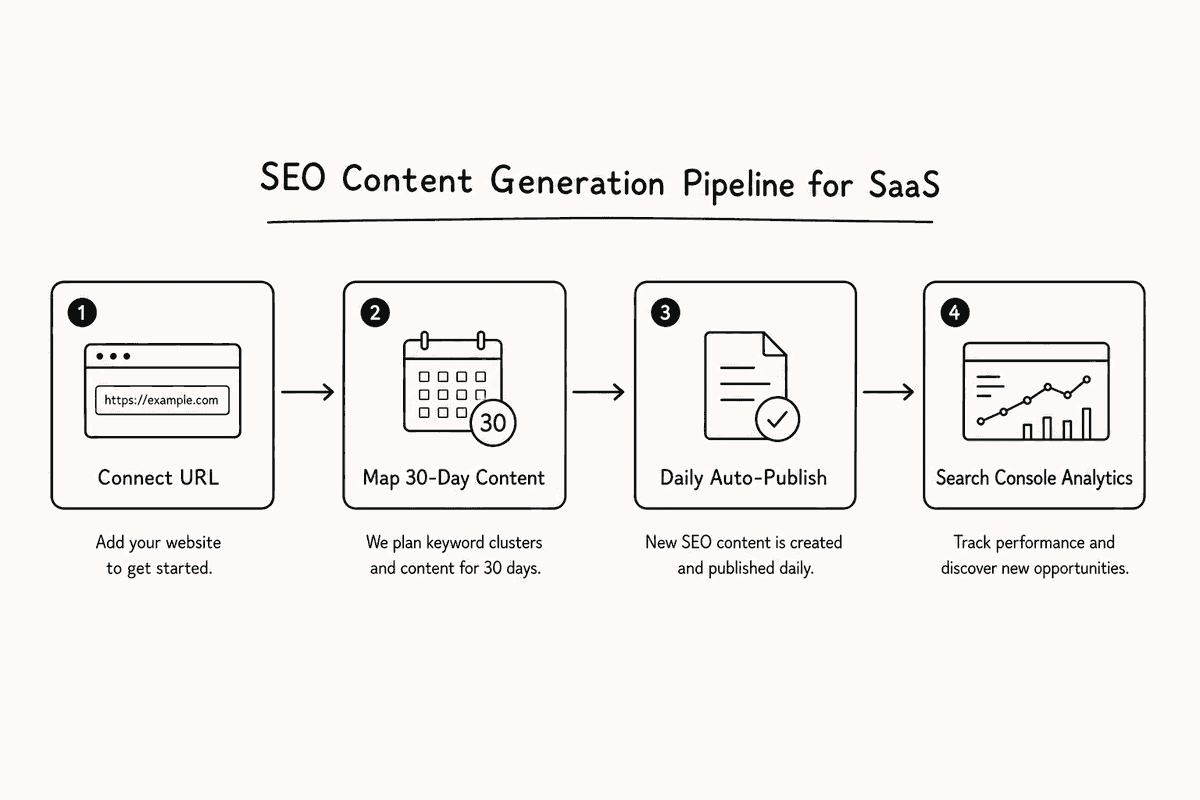
Instead of acting as a "co-pilot" that waits for your instructions, BeVisible operates as an autonomous publishing engine. You connect your site URL, define your niche, and the platform handles the rest. It conducts keyword research, builds a 30-day content map, writes, polishes, formats, and automatically publishes a new article to your CMS every 24 hours.
For teams weighing SEO charges in the UK or US against the cost of an agency, this automated approach drastically reduces overhead while maintaining consistency.
Key Features:
- Daily Auto-Publishing: Commits to a relentless schedule, pushing ranked answers to your site daily.
- AI Search Optimization: Structures articles "answer-first" with quotable sections and schema markup, optimizing not just for Google, but for LLM extractors like Perplexity and ChatGPT.
- Seamless CMS Integration: Pushes live to WordPress, Webflow, Notion, Ghost, and Shopify via API, complete with metadata, tags, categories, and branded cover images.
- Performance Tracking: Connects to Google Search Console to monitor analytics directly within the platform.
Pros:
- True "set and forget" organic growth engine.
- Incredibly cost-effective (Professional plan offers 30 articles/month for $79).
- Handles everything from SERP research to internal linking and formatting.
Cons:
- Less suited for highly opinionated, investigative journalism pieces.
- Requires trusting the platform's content map, though unlimited revisions are available.
5. Copymatic (Best for Broad Template Selection)
Copymatic is a versatile, user-friendly platform that excels at providing a massive library of templates. If your SaaS or agency needs to generate a wide variety of assets—from Facebook ads and website copy to product descriptions and blog posts—Copymatic offers a straightforward, low-friction interface.
It is particularly popular among users who find Jasper's enterprise features overwhelming but need more structure than a raw ChatGPT window provides.
Key Features:
- Extensive Template Library: Over 80 specialized tools for different copywriting needs.
- Image Generation: Built-in AI image creation to accompany your copy.
- Chrome Extension: Allows you to generate copy directly within your email client, social media platforms, or CMS.
Pros:
- Very easy to pick up and use immediately.
- Affordable pricing tiers for small teams.
- Good built-in plagiarism and grammar checking.
Cons:
- Long-form content generation can occasionally lose the thread on complex topics.
- Lacks the deep technical SEO data of Surfer or the automated pipeline of BeVisible.
6. Quillbot (Best for Rewriting & Polishing)
Not every copywriting task requires generating text from scratch. Often, you already have a rough draft, a messy brain dump, or a piece of older content that needs to be refreshed. This is where Quillbot shines.
Quillbot is fundamentally a paraphrasing and editing tool. It is widely used by content marketers to simplify complex jargon, adjust tone, and ensure grammatical perfection. They also offer a dedicated free AI copywriter suite that is highly regarded for quick touch-ups.
Key Features:
- Advanced Paraphrasing: Multiple modes (Fluency, Formal, Academic, Simple) to dial in the exact tone you need.
- Summarizer: Condenses long reports or articles into digestible bullet points.
- Co-Writer: A document editor that combines drafting, editing, and research in one interface.
Pros:
- The best tool on the market for refining and humanizing existing text.
- Inexpensive and includes a very generous free tier.
- Excellent browser extensions.
Cons:
- Not designed for end-to-end content generation.
- Primarily focused on sentence-level editing rather than structural SEO.
7. Wordtune (Best for Granular Sentence Editing)
Similar to Quillbot, Wordtune focuses on the micro-level of copywriting. Developed by AI21 Labs, it acts as an intelligent editor that understands the context and semantics of your writing.
If you are writing an important investor update, refining the hero copy for a SaaS homepage, or trying to figure out how to build an SEO landing page that converts, Wordtune allows you to highlight a specific sentence and see a dozen different ways to rewrite it—varying from more casual to more professional, or expanding/shortening the thought.
Key Features:
- Rewrite & Rephrase: Context-aware suggestions for alternative phrasings.
- Spices: A unique feature that adds statistics, examples, or jokes to expand a point.
- Read & Summarize: Can analyze external documents and summarize key points for your research.
Pros:
- Incredibly intuitive; feels like a natural extension of your own writing process.
- High-quality output that rarely sounds "AI-generated."
- Great for punchy, conversion-focused copy.
Cons:
- Only useful for editing; cannot generate long-form articles from a prompt.
- Can be tedious to use for very long documents, as it focuses on sentence-by-sentence adjustments.
Integrating AI Copywriting into Your Workflow
Choosing the best AI tool for copywriting is only step one. The real ROI comes from how you integrate it into your daily operations. A common mistake SaaS founders make is treating AI as a vending machine: put a prompt in, get an article out.
Instead, consider building a structured, hybrid workflow.
The Hybrid Content Pipeline
- Ideation & Strategy (Human): Rely on your unique customer insights. Read through support tickets, talk to your sales team, and review the best SEO blogs to identify topical gaps in your niche. Decide on the angle that only you can provide.
- Structuring & Data Gathering (AI): Use tools like Surfer SEO to pull entity data and build an outline based on search intent. Let the AI map out the required H2s and subtopics to ensure comprehensive coverage.
- Drafting (AI or Hybrid): For standard informational content, use an automated engine like BeVisible to generate the baseline draft, complete with schema and internal links. For highly opinionated thought leadership, use a co-pilot like Jasper to draft section by section alongside your own writing.
- Polishing & Tone Editing (Human + AI): Review the draft. Inject your specific product examples, realistic numbers, and case studies. Use Wordtune or Quillbot to tighten verbose paragraphs and punch up your headings.
- Publishing & Distribution (AI Automation): Leverage your platform's API integrations to push the content to WordPress or Webflow automatically, complete with generated meta descriptions and alt text.
Are Free AI Copywriting Generators Worth It?
If you are on a tight budget, you might be tempted to stick exclusively to free tools. As highlighted in comprehensive reviews of the space, including Wordstream's analysis of AI copywriting tools and Alex Birkett's deep dive into AI platforms, free tools have their place, but they come with significant tradeoffs.
Free tiers of ChatGPT, Claude, or basic prompt generators are excellent for brainstorming, generating email subject lines, or writing short social media posts. However, they lack the workflow integrations necessary for scale.
When you use a free, generic LLM interface, you take on the hidden costs of manual labor: formatting markdown, researching keywords, copying text into your CMS, downloading images, and writing metadata. For a SaaS founder, the time spent managing these manual steps quickly eclipses the monthly cost of a purpose-built AI platform.
If you run an e-commerce brand, you might find specific Etsy SEO tools or specialized free generators helpful for one-off product descriptions. But for a sustained, site-wide organic traffic strategy, investing in a paid, integrated workflow is almost always more profitable.
Final Verdict: Which AI Copywriter Should You Choose?
The "best" tool is entirely dependent on your primary bottleneck.
- Choose Jasper if you are an enterprise team that needs rigid brand voice control across complex, multi-channel campaigns.
- Choose Copy.ai if your primary goal is scaling outbound sales, enriching leads, and automating CRM workflows.
- Choose Surfer SEO if you already have a team of writers but need to ensure every piece of content is mathematically optimized for Google's algorithms.
- Choose BeVisible if you are a SaaS founder, indie hacker, or marketer who wants an automated, hands-off engine that handles the entire pipeline—from keyword research to daily CMS publishing—without requiring active management.
- Choose Quillbot or Wordtune if you write your own copy but want an intelligent editor to refine your tone, fix grammar, and punch up your sentences.
AI copywriting has evolved from a novelty into a foundational piece of the modern marketing stack. By selecting a tool that aligns with your specific workflow rather than just looking for a fancy prompt box, you can scale your content output while actually improving its quality and search visibility. Stop fighting the blank page and start building your content engine.