
If you are trying to scale SaaS organic traffic in May 2026 by manually writing and uploading four blog posts a month, you are competing against teams publishing four high-quality articles a day. The math no longer works in your favor.
The search landscape has fractured. You aren't just optimizing for Google's traditional blue links anymore; you are optimizing for AI overviews (SGE), ChatGPT, and Perplexity. To capture this traffic without hiring a massive editorial team, you need an operational stack built around AI. But as many have realized, slapping a ChatGPT wrapper onto a text box and calling it an "SEO tool" doesn't actually drive results.
Below, we break down the seven best AI tools for SEO right now, categorized by their specific role in your organic growth pipeline.
What Are the Best AI SEO Content Optimization Tools Right Now?
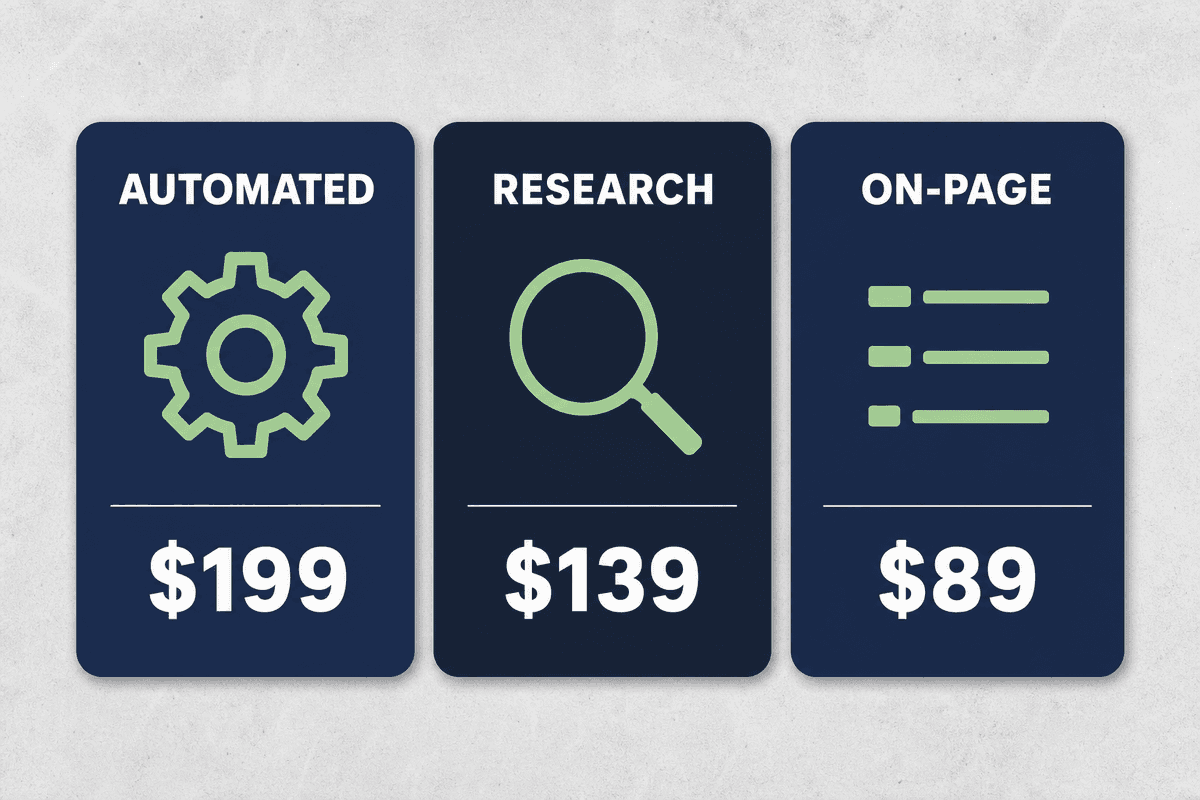
If you want the quick answer, here is the curated list of the top tools tested for 2026.
How I Selected the Best AI SEO Tools
To separate real utility from marketing fluff, I evaluated dozens of platforms based on criteria that actually impact rankings and workflow efficiency. As noted by experts who frequently test optimization software, the market is flooded with tools that generate words but fail to generate traffic.
Here is the methodology used to narrow down this list:
- Data Accuracy (3+ Months Minimum): Does the tool rely on real-time search volume and accurate SERP data, or is it hallucinating keyword metrics? Accurate data is non-negotiable, especially when providing client reporting or projecting marketing ROI.
- Workflow Integration: Does the tool push directly to your CMS (WordPress, Webflow, Notion, Shopify), or does it require you to copy, paste, and format manually?
- AI Capabilities vs. Marketing Fluff: Does the tool actually utilize advanced LLM reasoning for clustering and semantic analysis, or is it just a basic prompt interface?
- Pricing vs. Value: We prioritized tools that offer clear value for SaaS founders and small teams without requiring enterprise contracts.
7 Best AI SEO Tools in 2026 (Free + Paid)
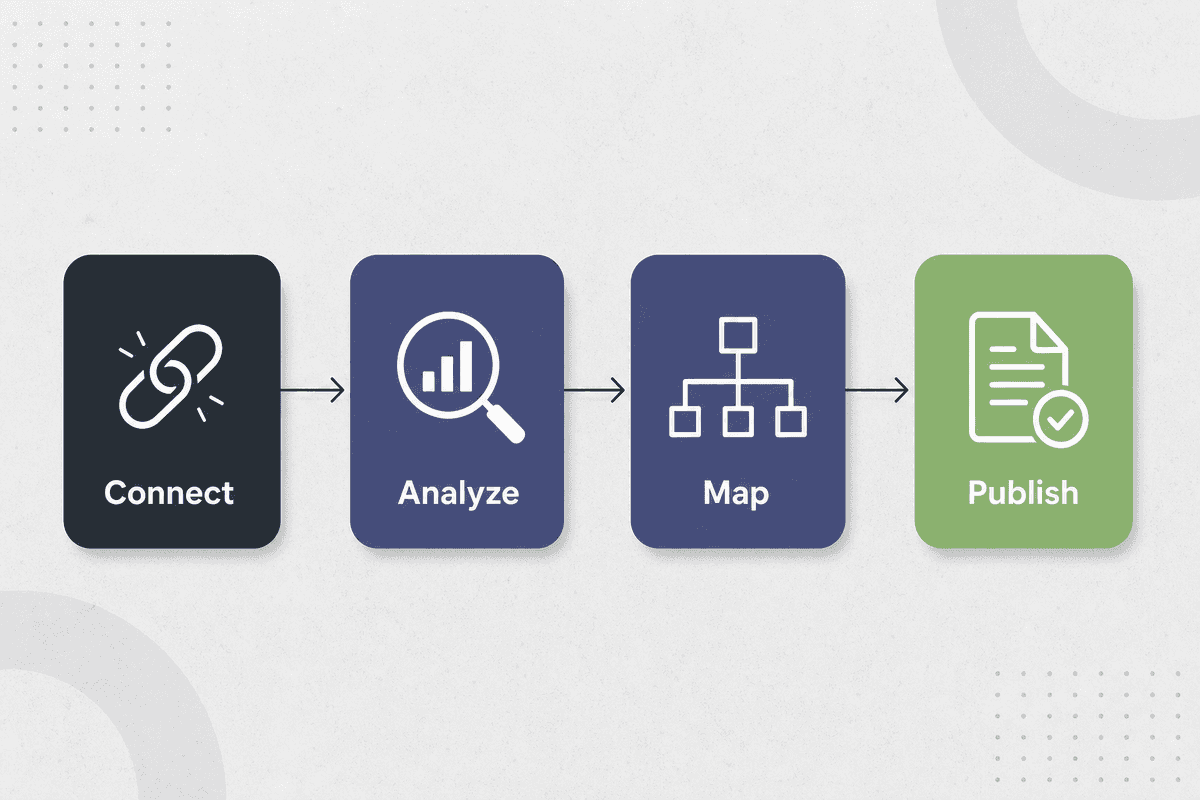
1. BeVisible – Best for End-to-End Automated Publishing
Most AI writing tools give you a text document and leave the rest of the work to you. BeVisible is different because it handles the entire production pipeline. It functions less like a writing assistant and more like an automated SEO content agency.
You connect your site URL, specify your SaaS niche, and BeVisible conducts keyword research and competitor analysis to generate a targeted 30-day content map. Once approved, it automatically researches, writes, formats, and publishes a new article to your CMS via API every 24 hours.
Key Features:
- Daily Auto-Publishing: Integrates directly with WordPress, Webflow, Ghost, Notion, and Shopify, handling metadata, tags, categories, and scheduling.
- AI Search Optimization: Articles use an "answer-first" structure, quotable sections, and schema markup specifically designed for extraction by ChatGPT and Perplexity.
- Built-in Asset Generation: Automatically creates internal links and branded cover images.
- Analytics Included: Pulls directly from Google Search Console to track performance.
Pricing: Professional plan is $199/month for 30 published articles (launch discount), offering a 3-day free trial and unlimited revisions.
The "Human-in-the-Loop" Tip: Use BeVisible to build your foundational topical authority automatically. Spend your human hours reviewing the 30-day content map before it executes to ensure it perfectly aligns with your specific SaaS features.
2. Semrush One – Best for Comprehensive SEO Analysis
Before you write a single word, you need data. Semrush One remains the industry standard for uncovering what your target audience is actually typing into search engines. Its recent AI integrations have made parsing massive datasets significantly faster.
Key Features:
- Keyword Magic Tool: AI-assisted clustering groups thousands of keywords by search intent.
- Backlink Gap Analysis: Instantly identifies which referring domains are linking to competitors but not to you.
- SEO Writing Assistant: A built-in plugin that scores your drafts against top-ranking rivals.
Pricing: Starts at $139/month.
The "Human-in-the-Loop" Tip: AI keyword clustering is powerful, but it can group terms that require entirely different landing pages. Always manually review clustered keywords to ensure the search intent matches your planned page format.
3. Surfer SEO – Best for Content Optimization
Surfer SEO analyzes the top-ranking pages for your target keyword and reverse-engineers exactly what entities, word counts, and heading structures Google expects to see.
Key Features:
- Content Editor: Provides a real-time score (0-100) based on NLP (Natural Language Processing) keyword inclusion.
- SERP Analyzer: Breaks down competitor pages by structural elements, image count, and semantic richness.
- Grow Flow: AI-driven weekly insights suggesting quick-win internal links and missing topics.
Pricing: Starts at $89/month.
The "Human-in-the-Loop" Tip: Chasing a 100/100 Surfer score often leads to unreadable, keyword-stuffed gibberish. Aim for an 80/100 and prioritize the human reading experience over forced keyword insertions.
4. Frase – Best for Content Brief Creation
If you work with freelance writers or agencies, Frase is arguably the best tool for bridging the gap between an SEO strategy and a final draft. It excels at parsing the top 20 Google results to build comprehensive content briefs in minutes.
Key Features:
- Automated Briefs: Generates outlines based on the exact H2s and H3s your competitors are using.
- Question Research: Pulls "People Also Ask" and Quora/Reddit questions directly into the editor so you can answer them comprehensively.
- Content Scoring: Similar to Surfer, it scores text against a proprietary topic model.
Pricing: Starts at $15/month for basic features, making it highly accessible.
The "Human-in-the-Loop" Tip: Never send a raw, AI-generated Frase brief directly to a writer. Add specific brand guidelines, mandatory internal links, and unique angles to prevent the writer from just creating a copycat article.
5. Search Atlas – Best Ahrefs/Semrush Affordable Alternative
Search Atlas has emerged as a robust, cost-effective alternative for startups who need enterprise-grade data but cannot justify a massive monthly subscription. It combines technical auditing, rank tracking, and AI content generation into a single dashboard.
Key Features:
- Content Suite: Built-in optimization tools that rival standalone software.
- Technical Audits: Uses AI to identify indexing issues and site speed bottlenecks.
- Client Reporting: Excellent white-label reports for services businesses and agencies.
Pricing: Starts at $99/month.
The "Human-in-the-Loop" Tip: Use Search Atlas to identify technical debt on your site, but always have a developer verify AI-suggested code changes before pushing them live to prevent breaking your site architecture.
6. Perplexity Pro – Best for Research with Citations
While not a traditional SEO tool, Perplexity Pro has become indispensable for content marketers. Unlike standard LLMs that often hallucinate facts, Perplexity functions as an answer engine that scours the live web and provides verifiable citations.
Key Features:
- Deep Research Mode: Capable of synthesizing whitepapers, academic journals, and recent news.
- Live Web Access: Bypasses the knowledge cutoff limitations of older models.
- Citation Tracking: Every claim is linked to a source, making it ideal for creating high-trust YMYL (Your Money or Your Life) content.
Pricing: $20/month.
The "Human-in-the-Loop" Tip: When your competitors are relying on outdated ChatGPT knowledge, use Perplexity to pull statistics, quotes, and data from the last 30 days to win the "freshness" signal in search.
7. Rankability – Best for Content Quality Monitoring
Publishing content is only half the battle; maintaining its rankings is the other. Rankability focuses on the ongoing optimization of your existing content library. It continuously monitors your pages and alerts you when they begin to decay in the SERPs.
Key Features:
- Content Decay Alerts: Notifies you when a historically high-performing post loses traffic.
- Optimization Suggestions: Tells you exactly what new entities competitors have added since you last updated your post.
- Quality Scoring: Evaluates your entire blog against current algorithmic preferences.
Pricing: Starts at $49/month.
The "Human-in-the-Loop" Tip: Don't rewrite an entire article just because it dropped one position. Look at the specific suggestions Rankability offers and surgically update just the sections that have fallen out of date.
Ready to Rank in AI Search? (The SGE Shift)
One of the biggest mistakes SaaS founders make right now is using AI tools exclusively to rank in Google's traditional ten blue links. As users shift toward generative search experiences, your strategy must evolve. You need to transition from "ranking for keywords" to "ranking as the definitive answer."
To optimize for AI extraction, your content needs:
- Answer-First Structures: Place the direct answer to the user's query immediately below the heading.
- High Information Density: Avoid fluffy introductions. LLMs prioritize text that delivers dense, factual information.
- Clean Code & Schema: Ensure your site architecture uses proper JSON-LD schema markup so AI bots can instantly understand your page hierarchy without guessing.
Platforms that automate smart optimization specifically for these technical layers are separating the winners from the losers in 2026.
Frequently Asked Questions
What to Look for in the Best AI SEO Tool?
When selecting software, prioritize workflow integration over raw feature counts. A tool is only valuable if your team actually uses it. Look for API connectivity to your CMS, clear pricing tiers that scale with your output, and features that actively monitor content decay rather than just generating initial drafts.
Are there free AI SEO tools worth using?
Yes, but they are limited. The free tiers of ChatGPT and Claude are excellent for brainstorming and basic structuring. Google Search Console remains the best free tool for tracking actual performance. However, for scaled content generation and deep SERP data, paid tools are required. As community discussions consistently reveal, relying entirely on free tools usually results in bottlenecked production and thin content.
How do AI SEO tools impact rankings?
They are force multipliers, not magic wands. If you use AI to spam low-quality, unedited content, your rankings will tank. If you use AI to speed up research, outline comprehensively, scale publishing volume, and optimize for semantic relevance while maintaining high editorial standards, your rankings will grow exponentially.
Next Steps for Scaling Your SaaS Traffic
If you want to build organic traffic that actually converts into MRR, you cannot treat SEO as an afterthought. Start by defining your workflow:
- Audit Your Current Pipeline: Where is the bottleneck? If it's research, look at Semrush or Frase. If it's the actual writing and publishing, look at an end-to-end platform.
- Automate the Baseline: Connect BeVisible to your CMS and let it handle the daily heavy lifting of finding keywords, writing structured articles, and publishing them. This guarantees your site remains active and crawls frequently.
- Layer in Strategic Human Edits: Use your saved time to inject your unique SaaS features, case studies, and proprietary data into the content.
Stop writing manually while your competitors automate. Pick your tools, connect them to your site, and start building your topical authority today.