
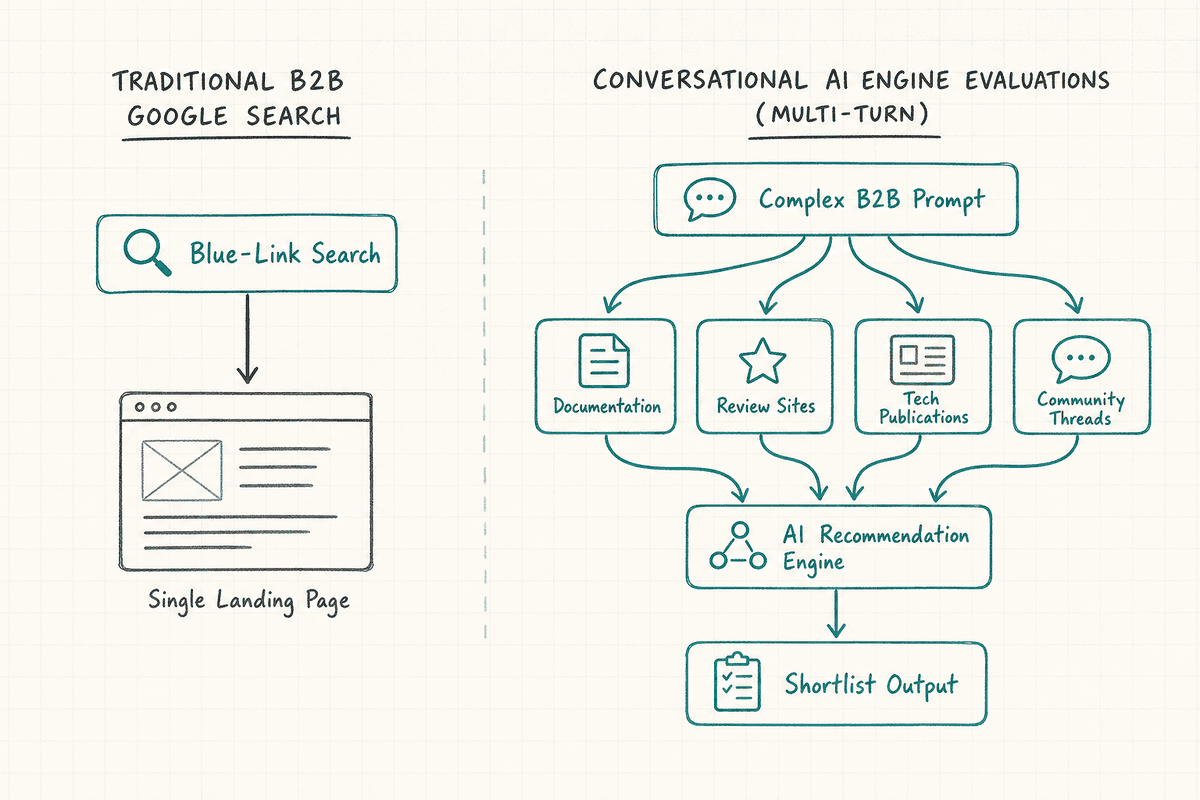
When B2B buyers search for new software, agencies, or enterprise platforms, they rarely start with a blue-link search query anymore. Instead, they paste their stack requirements, budget constraints, and feature lists directly into ChatGPT, Perplexity, Gemini, or Google AI Overviews.
If an AI engine omits your brand when a decision-maker asks for the top five solutions in your category, your sales team never receives the demo request. You lose the deal before your pipeline tracking even registers an anonymous site visit.
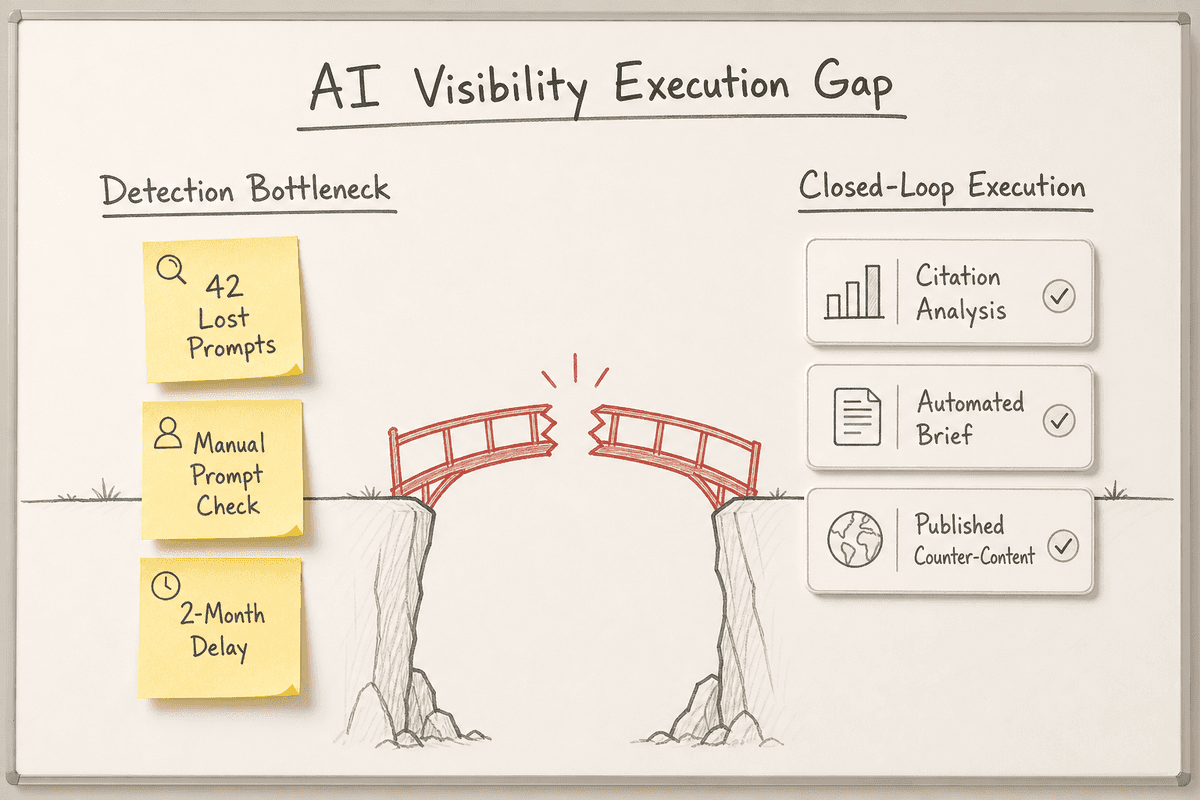
Profound emerged as an early favorite for tracking brand mentions across Large Language Models (LLMs). It gave marketers a glimpse into how AI tools rendered their brand names relative to competitors. As B2B growth teams mature their Generative Engine Optimization (GEO) programs, standard brand monitoring hits a hard ceiling. Knowing that ChatGPT left your software off a buyer shortlist is useful; having an automated pipeline that pinpoints why, extracts the missing citation sources, and turns that gap into published counter-content is what actually changes revenue outcomes.
Understanding how your brand appears across AI tools requires looking beyond initial monitoring tools to evaluate platform platforms built specifically for B2B workflows.
Why B2B AI Visibility is Fundamentally Different from B2C
Tracking AI visibility for a B2B platform requires a different playbook than tracking consumer brands. B2C queries are often transactional or hyper-focused on simple attributes: price, availability, or immediate ratings. B2B buyer prompts are complex multi-step evaluations.
A B2B software prospect rarely asks a simple prompt like "What is the best CRM?" They ask:
"We are a mid-market healthcare company using HubSpot and Snowflake. We need a HIPAA-compliant customer data platform under $50,000 annually that supports reverse ETL. Which four vendors should we put on our RFP shortlist, and what are their pros and cons?"
┌────────────────────────────────────────────────────────────────────────────────────────┐
│                                B2B PROMPT TAXONOMY LAYERS                              │
├──────────────────────────┬──────────────────────────────────┬──────────────────────────┤
│ PROMPT CATEGORY          │ BUYER INTENT EXAMPLE             │ EVALUATION CRITERIA      │
├──────────────────────────┼──────────────────────────────────┼──────────────────────────┤
│ 1. Problem Discovery     │ "How to reduce churn in PLG"     │ Frameworks & Methodology │
├──────────────────────────┼──────────────────────────────────┼──────────────────────────┤
│ 2. Stack Integration     │ "Tools that sync Postgres to...  │ API & Native Connectors  │
├──────────────────────────┼──────────────────────────────────┼──────────────────────────┤
│ 3. Direct Shortlisting   │ "Top 5 enterprise security tools"│ Compliance & Scale       │
├──────────────────────────┼──────────────────────────────────┼──────────────────────────┤
│ 4. Competitive Head-to-Head│ "Brand A vs Brand B pricing"   │ TCO & Contract Terms     │
└──────────────────────────┴──────────────────────────────────┴──────────────────────────┘
When an AI engine processes this prompt, it scans external citations, technical documentation, review aggregators, and authoritative industry summaries to assemble its answer.
To monitor AI search presence effectively, B2B teams must track four distinct elements of the generative response:
- Recommendation Share: Does the AI engine explicitly include your brand in the recommended list, or are you relegated to an honorable mention or omitted entirely?
- Citation Source Ownership: Which domain URLs did the AI engine crawl to substantiate its answer? Is it pulling from your documentation, a competitor’s blog, an analyst report, or a third-party review site?
- Contextual Positioning: Is the AI describing your platform accurately? Does it cite outdated pricing models, missing enterprise certifications, or legacy feature limitations?
- Sentiment and Bias: Does the model frame your product as the market leader, a budget alternative, or a risky implementation choice?
Standard rank trackers built for traditional Google SERPs cannot measure these factors. A brand can hold the organic position for a keyword on Google while remaining absent from Perplexity summaries or ChatGPT recommendations for the exact same query intent.
The Bottleneck with First-Generation Tools Like Profound
Profound made a significant mark by making LLM output monitoring accessible. It helped shift marketing teams away from manual spot-checking and spreadsheets.
As enterprise growth teams scale their generative search efforts, relying purely on first-generation prompt monitoring tools surfaces three key operational bottlenecks:
1. The "Now What?" Execution Gap
Standard tracking platforms show you a dashboard full of visibility scores, sentiment charts, and prompt charts. They tell you that you are losing ground on 42 key buyer prompts to a main competitor. What happens next? In traditional workflows, a strategist must manually open each prompt, analyze the cited URLs, identify missing topical nodes, draft a brief, hand it to a writer, and publish a new piece of content weeks later. By that time, the AI models have updated their index multiple times over.
2. Static Prompt Monitoring vs. Dynamic Buyer Scenarios
Many monitoring platforms monitor static lists of seed keywords. B2B buyers interact with AI assistants conversationally, asking follow-up questions, requesting comparison tables, and changing parameters on the fly. Tools that only check one prompt variation fail to capture how AI assistants answer multi-turn conversations.
3. Lack of Citation Source Analysis
Knowing that Perplexity unrecommended your software is useless unless you know which specific articles, blog posts, and forum threads Perplexity trusted when forming that opinion. Without automated source decomposition, marketing teams waste hundreds of hours guessing what content needs to be written or updated.
When evaluating alternatives, SaaS founders and marketing leaders need tools that bridge the gap between detection and publishing. If you want to dive deeper into how foundational content supports your site architecture, review our guide on how to build an SEO landing page.
5 Top AI Visibility Monitoring Tools Beyond Profound
Here is a breakdown of the leading AI visibility platforms available for B2B organizations, evaluated by tracking capabilities, model coverage, source analysis, and execution capabilities.
┌────────────────────────────────────────────────────────────────────────────────────────┐
│                             AI VISIBILITY TOOL FEATURE MATRIX                          │
├──────────────┬─────────────────────────┬──────────────────────┬────────────────────────┤
│ TOOL         │ AI MODELS TRACKED       │ KEY STRENGTH         │ EXECUTION CAPABILITY   │
├──────────────┼─────────────────────────┼──────────────────────┼────────────────────────┤
│ BeVisible    │ ChatGPT, Gemini,        │ Full Loop: Detection │ Native AI Content      │
│              │ Perplexity, AI Mode,    │ to Published Content │ Engine, Workflow,      │
│              │ Google AI Overviews     │ & Citations          │ Scheduling             │
├──────────────┼─────────────────────────┼──────────────────────┼────────────────────────┤
│ Semrush      │ Google AI Overviews,    │ Traditional SEO +    │ Keyword Research &     │
│              │ Hybrid SERP Data        │ AI Overview Overlay  │ Manual Content Docs    │
├──────────────┼─────────────────────────┼──────────────────────┼────────────────────────┤
│ Ahrefs       │ LLM Prompts, Perplexity,│ Citation Link Graph  │ Site Audits & Backlink │
│              │ AI Overviews            │ & Brand Mentions     │ Outreach Tasks         │
├──────────────┼─────────────────────────┼──────────────────────┼────────────────────────┤
│ Frase.io     │ SERP-based AI Summaries,│ Content Optimization │ Outline Generator &    │
│              │ Research Prompts        │ & Writing            │ Brief Builder          │
├──────────────┼─────────────────────────┼──────────────────────┼────────────────────────┤
│ Custom API   │ Custom LLM Endpoints    │ Full Control & Raw   │ Manual Engineering     │
│ Scripts      │ (OpenAI, Anthropic)     │ Data Ownership       │ Maintenance Required   │
└──────────────┴─────────────────────────┴──────────────────────┴────────────────────────┘
1. BeVisible
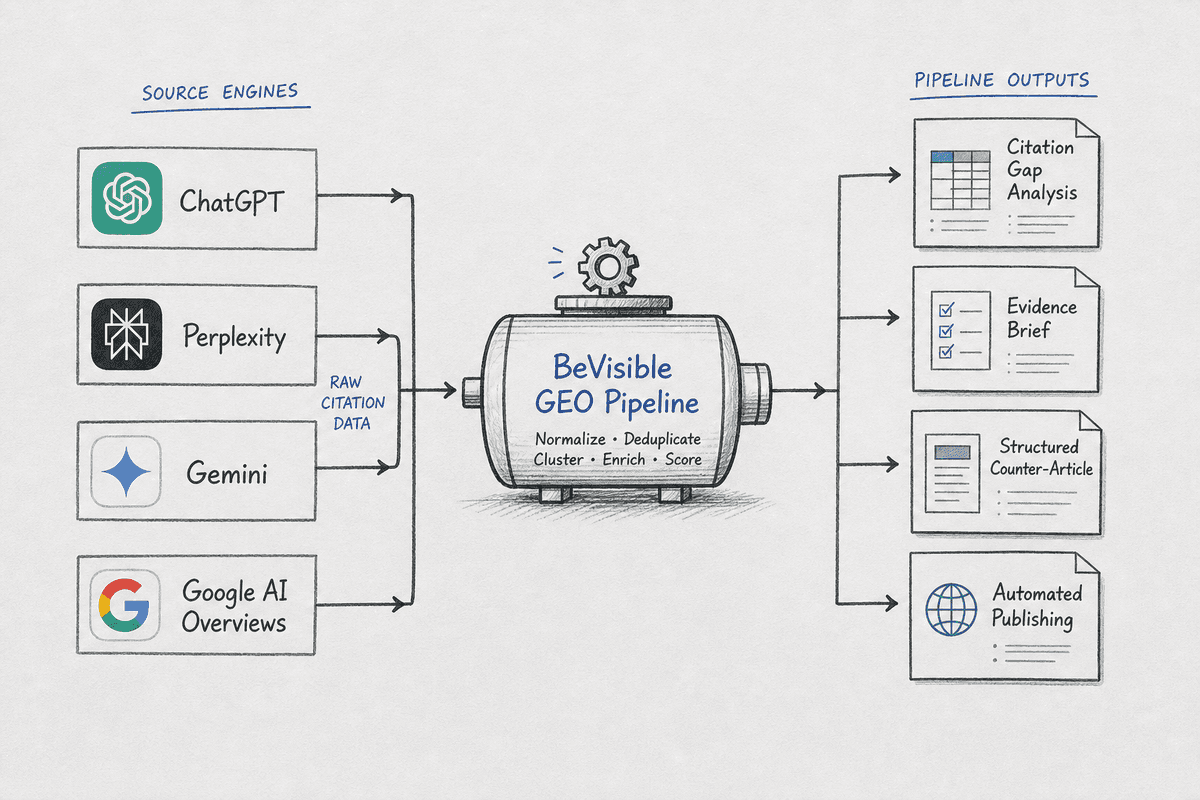
BeVisible was engineered specifically to solve the "detection-to-execution" disconnect that plagues B2B content teams. Rather than treating visibility monitoring as a passive reporting exercise, BeVisible connects LLM monitoring directly with an automated content engine.
Key Features & AI Model Coverage
BeVisible monitors buyer prompts across all primary AI discovery engines:
- ChatGPT (GPT-4o and web-browsing enabled configurations)
- Perplexity AI (Pro and Standard search engines)
- Google Gemini
- Google AI Mode & AI Overviews
Strategic Advantage for B2B
BeVisible tracks how AI assistants answer buyer questions, which brands they recommend, and which sources they cite. The platform maps your visibility across buyer prompts, extracts missing brand mentions, identifies competitor-heavy citations, and quantifies your Share of Voice across specific intent clusters.
Where traditional tools stop at showing a red indicator for lost visibility, BeVisible turns those visibility gaps into evidence-backed opportunities. It builds strategic briefs based on the missing citation sources, then manages the review, scheduling, and publishing of counter-content designed to win back LLM citations.
┌────────────────────────────────────────────────────────────────────────────────────────┐
│                        BEVISIBLE CLOSED-LOOP VISIBILITY SYSTEM                         │
│                                                                                        │
│  ┌──────────────────┐      ┌──────────────────┐      ┌──────────────────┐              │
│  │  1. MONITOR      │      │  2. DIAGNOSE     │      │  3. EXECUTE      │              │
│  │  ChatGPT, Gemini │ ───► │  Missing Brand   │ ───► │  Evidence-backed │              │
│  │  Perplexity, AIO │      │  Mentions &      │      │  Articles,       │              │
│  │  Buyer Prompts   │      │  Weak Citations  │      │  Publishing      │              │
│  └──────────────────┘      └──────────────────┘      └──────────────────┘              │
│            ▲                                                          │                │
│            └──────────────────────────────────────────────────────────┘                │
│                               4. RE-INDEX & TRACK                                      │
└────────────────────────────────────────────────────────────────────────────────────────┘
Best For
B2B SaaS founders, growth teams, agencies, and content organizations that need to turn missing mentions, weak citations, and competitor wins into published work without adding headcount.
2. Semrush (AI Search Tracker Integration)
Semrush expanded its traditional SEO toolkit to incorporate generative search tracking features. By integrating AI Overviews and hybrid AI search tracking into its main domain analytics suite, Semrush allows long-time users to evaluate traditional rankings alongside AI snippet presence.
Key Features
- Combined traditional rank tracking and AI Overview monitoring in one dashboard.
- Comprehensive domain authority and backlink profile tracking.
- Competitive visibility overlap maps across high-volume keyword sets.
Strategic Advantage
For enterprise organizations already deeply embedded in the Semrush ecosystem, the platform offers a unified view of search visibility. You can see whether a drop in organic click-through rate correlates with the appearance of a Google AI Overview snippet for the same query. Recent industry analysis highlights how platforms like Semrush are evolving from legacy rank trackers into hybrid AI search platforms [1] [2].
Limitations for B2B AI Search
Semrush excels at Google-centric visibility, but it offers less depth when evaluating conversational multi-turn prompts inside standalone LLM platforms like ChatGPT or Claude. Furthermore, bridging the gap between identifying an AI Overview missing citation and publishing corrective content remains a manual process.
3. Ahrefs (Brand & Prompt Intelligence Engine)
Ahrefs remains an industry benchmark for backlink indexing and web crawling. Recognizing the shift toward generative engine optimization, Ahrefs introduced prompt-tracking research features alongside its established Web Explorer and Brand Mentions tools.
Key Features
- Citation backlink tracking to see which authority sites feed AI search indexes.
- Comparison metrics between Ahrefs rank data and generative model citations.
- Unlinked brand mention tracking across high-authority tech publications.
Strategic Advantage
Because LLMs rely heavily on authoritative, highly-cited web pages to form ground-truth answers, Ahrefs’ deep link database allows growth teams to see which underlying articles fuel AI summaries [3]. If ChatGPT regularly cites a specific industry round-up article that excludes your company, Ahrefs helps you identify that source URL so your PR team can target it for inclusion.
Limitations for B2B AI Search
Ahrefs is primarily an analysis tool rather than an AI execution platform. It provides extensive raw data on web graphs, but requires manual interpretation to translate raw backlink graphs into actionable content briefs for generative engine optimization.
4. Frase.io
Frase.io built its reputation on SERP content optimization, helping writers craft articles that match search intent. The platform has adapted to provide SERP-based AI summary analyses and content gap detection.
Key Features
- AI summary decomposition comparing top-ranking SERP passages.
- Automated content brief generator based on competitor entity coverage.
- Question-clustering tools to identify secondary prompt queries.
Strategic Advantage
Frase simplifies the creation of structured, answer-ready content. When research indicates that AI models prioritize specific sub-topics or structured tables for a given query, Frase helps writers build outlines that hit those precise topical targets [1].
Limitations for B2B AI Search
Frase remains primarily a content-writing editor. While it assists with individual article creation, it lacks enterprise prompt-tracking workflows, automated multi-engine monitoring (such as tracking Perplexity vs. Gemini simultaneously), and automated publishing pipelines.
5. Custom Python / LLM API Pipelines
For technical growth engineering teams, building a custom monitoring pipeline using OpenAI, Anthropic, and Perplexity APIs is a viable DIY alternative.
# Example: Custom Prompt Sampling Script Structure
import openai
import json

prompts = [
    "What are the top enterprise data pipeline tools for healthcare?",
    "Compare Vendor A vs Vendor B for SOC2 compliance tools."
]

def check_ai_visibility(prompt_list):
    results = []
    for prompt in prompt_list:
        response = openai.ChatCompletion.create(
            model="gpt-4o",
            messages=[{"role": "user", "content": prompt}]
        )
        content = response.choices[0].message.content
        # Logic to parse brand presence and citations
        results.append({"prompt": prompt, "output": content})
    return results
Strategic Advantage
Building an in-house pipeline grants full control over prompt selection, execution frequency, and model parameters. You own the raw data and can customize scoring algorithms to match your exact internal business metrics.
Hidden Pitfalls & Limitations
Custom API monitoring script maintenance costs add up quickly. API schemas change frequently, LLM outputs drift over time, and web-browsing capabilities (like ChatGPT with Bing or Perplexity live search) require complex orchestration to capture web search grounding accurately. Most critically, an internal script only outputs raw data JSON; your team still needs to build custom UI elements, content generators, and publishing connectors to act on the findings.
The Strategic Framework: How to Execute an AI Visibility Program
Buying an AI visibility monitoring platform is only the first step. To increase your brand's recommendation rate across LLMs, your team needs an execution workflow.
Here is the four-stage framework used by high-performing B2B growth teams to convert prompt visibility tracking into measurable pipeline growth.
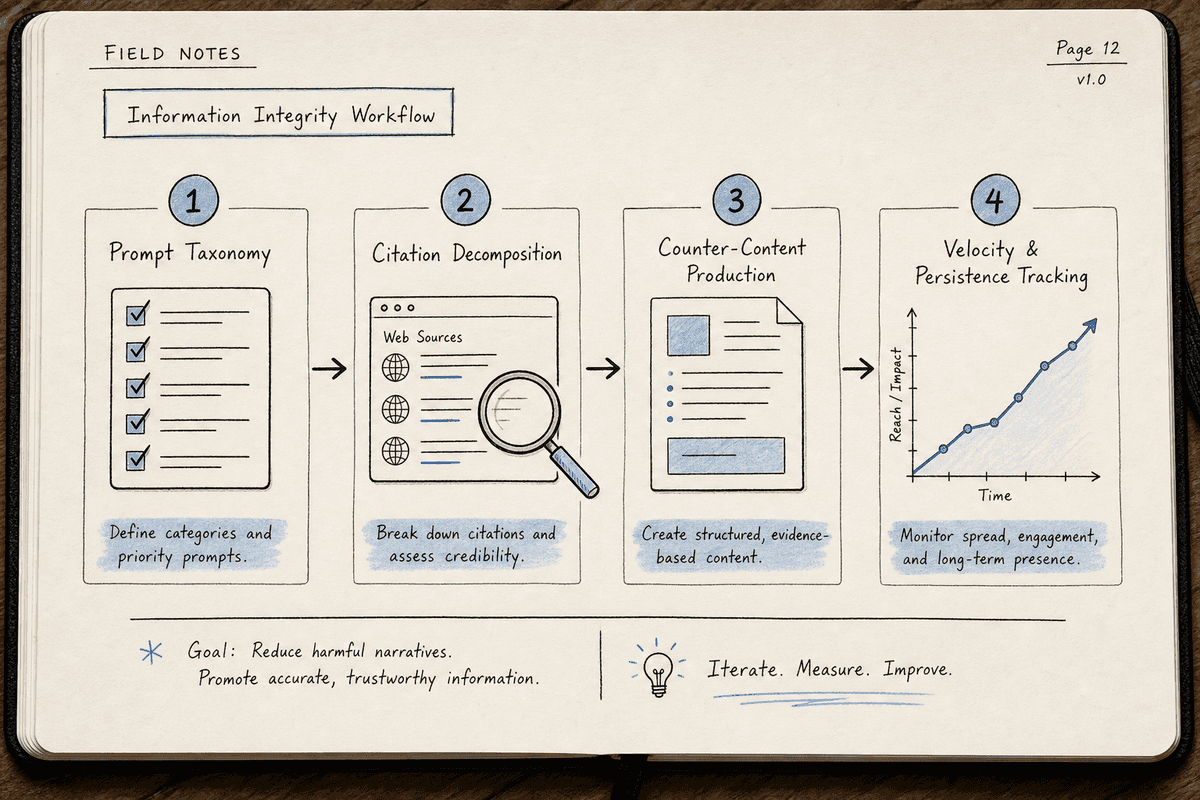
Stage 1: Build a High-Intent B2B Prompt Taxonomy
Traditional SEO teams map content strategies around search volumes. AI search optimization requires mapping content around buyer context. High search volume keywords do not always reflect high-intent AI prompts.
Construct your prompt taxonomy across three functional tiers:
- Category Definition Prompts: "What tools do enterprise Security Ops teams use for incident response in 2026?"
- Feature & Integration Specific Prompts: "Which billing platforms support native usage-based billing with Stripe and Salesforce integration?"
- Competitive Evaluation Prompts: "What are the main drawbacks of [Competitor Brand] for mid-market teams, and what alternatives offer better support?"
Stage 2: Perform Citation Source Decomposition
When you identify a prompt where your brand is missing or mischaracterized, run a citation audit. Open the AI response source references (or review them in your BeVisible engine dashboard) to determine where the AI assistant retrieved its information [4].
In B2B categories, citation sources fall into four distinct categories:
┌────────────────────────────────────────────────────────────────────────────────────────┐
│                              CITATION SOURCE CATEGORIES                                │
├──────────────────────────┬─────────────────────────────────┬───────────────────────────┤
│ CATEGORY                 │ SOURCE EXAMPLES                 │ OPTIMIZATION ACTION       │
├──────────────────────────┼─────────────────────────────────┼───────────────────────────┤
│ 1. First-Party Domain    │ Product pages, docs, whitepapers│ Structure with clear schema│
│                          │                                 │ and direct answer blocks. │
├──────────────────────────┼─────────────────────────────────┼───────────────────────────┤
│ 2. Third-Party Reviews   │ G2, TrustRadius, Capterra       │ Encourage targeted user   │
│                          │                                 │ reviews citing key features│
├──────────────────────────┼─────────────────────────────────┼───────────────────────────┤
│ 3. Niche Editorial       │ Industry blogs, tech publications│ Pitch inclusion or submit │
│                          │                                 │ guest technical articles. │
├──────────────────────────┼─────────────────────────────────┼───────────────────────────┤
│ 4. Community Discussions │ Reddit, StackOverflow, LinkedIn │ Participate authentically │
│                          │                                 │ in contextual threads.    │
└──────────────────────────┴─────────────────────────────────┴───────────────────────────┘
If Perplexity bases its top three recommendations on two industry blogs and a Reddit thread, optimizing your primary landing page alone will not change the output. You must publish counter-content and ensure your brand is cited on those third-party hubs.
Stage 3: Bridge Detection to Content Production
This is where traditional workflows stall. When a visibility gap is flagged, your content system should immediately generate an actionable topic brief designed for generative AI indexing.
High-converting counter-content for AI search should include:
- Direct Answer Statements: Place a concise 2-3 sentence definition at the top of the article that directly answers the buyer prompt.
- Structured Comparison Tables: Use clear Markdown or HTML tables comparing features, pricing tiers, and integration compatibility. LLMs read tabular data easily during retrieval-augmented generation (RAG) processes.
- Clear Semantic Schema: Use explicit headings (
##,###) framing specific questions (e.g., "Is [Brand] SOC2 Compliant?"). - Verifiable Statistics and Data: Include original survey data or real customer usage statistics. LLMs prioritize unique data points over generic marketing claims.
For an extensive review of quality resources that help SaaS leaders stay ahead of search shifts, explore our curated collection of the best SEO blogs for SaaS founders.
Stage 4: Track Recommendation Velocity and Citation Persistence
AI search models do not update instantly like traditional SERPs. Models rely on a combination of live web retrieval and background retraining runs.
Track two operational metrics to measure progress:
- Recommendation Velocity: How quickly your brand moves from absent to cited across target prompt sets following a content publish or update cycle.
- Citation Persistence: How consistently your brand remains in the top three recommendations across multiple runs over a 30-day window [5].
┌────────────────────────────────────────────────────────────────────────────────────────┐
│                        RECOMMENDATION VELOCITY vs PERSISTENCE                          │
│                                                                                        │
│  RECOMMENDATION VELOCITY (Speed)       CITATION PERSISTENCE (Stability)              │
│  [Publish] ──► [Cited in 48 hrs]      [Run 1: Yes] ──► [Run 2: Yes] ──► [Run 3: Yes]  │
│  Measures how fast new content        Measures whether LLM answers remain steady       │
│  is indexed and retrieved by RAG.      over 30-day prompt sampling cycles.             │
└────────────────────────────────────────────────────────────────────────────────────────┘
Practical Scenario: Fixing an AI Recommendations Deficit
To understand how an AI visibility monitoring and execution system works in practice, consider a realistic SaaS scenario.
The Problem
A mid-market RevOps software vendor named DataPulse noticed a drop in inbound demo requests from enterprise buyers. While their traditional Google organic rankings remained stable in the top three positions for "enterprise revenue intelligence software," their buyer pipeline continued to decline.
The Audit
Using an AI visibility tool to analyze buyer prompts across ChatGPT, Perplexity, and Google AI Overviews, the growth team uncovered a clear pattern:
- Prompt: "What are the best revenue intelligence platforms for enterprise teams using Salesforce and Snowflake?"
- ChatGPT Output: Recommended three key competitors, omitting DataPulse entirely.
- Perplexity Output: Recommended competitor products, adding a note that DataPulse "lacks enterprise Snowflake sync capabilities." (This statement was factually incorrect; DataPulse had launched native Snowflake sync six months prior).
┌────────────────────────────────────────────────────────────────────────────────────────┐
│                         DATAPULSE AI VISIBILITY DIAGNOSTIC                             │
├───────────────────┬──────────────────────────────────┬─────────────────────────────────┤
│ ENGINE            │ INITIAL LLM RESPONSE             │ ROOT CAUSE CITATION SOURCE      │
├───────────────────┼──────────────────────────────────┼─────────────────────────────────┤
│ ChatGPT           │ Omitted DataPulse entirely       │ Outdated third-party blog       │
│                   │                                  │ listing legacy tools from 2024  │
├───────────────────┼──────────────────────────────────┼─────────────────────────────────┤
│ Perplexity AI     │ Stated "lacks native Snowflake   │ 2-year-old forum discussion     │
│                   │ sync capabilities"               │ and unupdated documentation page│
└───────────────────┴──────────────────────────────────┴─────────────────────────────────┘
The Root Cause
Perplexity’s live web search crawler retrieved information from a two-year-old community forum post and an outdated third-party software review roundup. Neither source reflected the recent product updates. ChatGPT relied on older web index data that lacked structured integration documentation for DataPulse's new release.
The Execution Strategy
DataPulse launched a targeted multi-step campaign:
- Updated Internal Documentation: They restructured their native Snowflake integration landing page, adding structured data, a step-by-step setup guide, and a explicit answer block stating: "DataPulse offers full, bidirectional native sync with Snowflake for enterprise plans."
- Published Counter-Content: Using BeVisible's execution engine, they generated and published a technical comparison whitepaper titled "Revenue Intelligence Architecture: Snowflake vs Alternative Data Warehouses."
- Targeted Citation Outlets: Their PR team reached out to the publisher of the outdated review roundup, requesting an updated review link that cited the new integration docs.
The Result
Within 18 days:
- Perplexity updated its answer summary, adding DataPulse to the top three enterprise recommendations.
- ChatGPT began listing DataPulse with explicit mentions of its native Snowflake integration.
- Inbound demo requests rebounded by 34% over the following quarter.
3 B2B Generative Search Myths Debunked
Navigating AI visibility requires separating proven optimization tactics from speculation. Here are three persistent myths that derail B2B marketing teams.
Myth 1: "Top 3 Organic Google Rankings Guarantee ChatGPT Recommendation"
The Reality: High traditional SERP rank does not guarantee inclusion in LLM recommendations. Traditional SEO focuses on matching keyword frequency and link authority. LLMs summarize content based on entity relationships, semantic relevance, and topical authority across multiple sources. A brand ranking #1 on Google can easily be left out of a ChatGPT recommendation if its content lacks clear semantic data structures or direct comparison answers.
Myth 2: "Press Release Blasts Force AI Engine Citation Updates"
The Reality: Synthesized, low-quality press releases distributed across news syndication networks are routinely filtered out by modern search engines and RAG retrieval pipelines. LLMs prioritize credible sources: official product documentation, verified customer review profiles, established industry blogs, and technical content with unique data. Pumping low-grade press releases into the web graph rarely moves the needle for generative visibility.
Myth 3: "AI Visibility Tracking is Just Traditional Rank Tracking with a New Name"
The Reality: Rank tracking measures a static position for a specific keyword string (e.g., Position #4 for "CRM software"). AI visibility monitoring measures dynamic recommendation share within probabilistic, non-deterministic text summaries. Because prompt responses vary based on context, phrasing, and real-time retrieval, tracking requires probabilistic sampling across multiple model variants rather than looking for a single position number.
Frequently Asked Questions
How often should B2B companies run prompt monitoring audits?
Because major AI models update their indices and retrieval pipelines continuously, B2B teams should track key category prompts at least weekly. High-stakes buyer intent prompts (such as direct brand vs. competitor comparison prompts) should be monitored in real time or daily to catch factual inaccuracies, pricing errors, or sudden drops in recommendation share before they impact pipeline generation.
What is the primary difference between prompt share of voice and traditional organic share of voice?
Traditional organic Share of Voice measures how many organic blue links your domain controls on a fixed search results page. Prompt Share of Voice measures the percentage of AI-generated answers where your brand is explicitly mentioned, recommended, or cited as a primary source across dynamic conversational prompt tests.
Can you force ChatGPT or Perplexity to correct hallucinated product information?
You cannot directly edit an LLM's static weights or force a manual update. You can influence real-time RAG results by publishing clear, structured, and factual counter-content on your domain, updating documentation schema, and refreshing third-party review citations. When web search crawlers re-index these updated sources, the retrieval layer updates the model's generated answers accordingly.
Choosing the Right AI Visibility Tool Beyond Profound
Monitoring your brand's AI search presence is no longer optional for B2B organizations. As buyer research continues shifting from blue links to conversational AI assistants, maintaining visibility requires an active optimization program.
While platforms like Profound raised awareness around LLM tracking, standard monitoring dashboards leave growth teams stranded at the detection stage. To systematically grow pipeline from AI search, B2B teams need tools that bridge the gap between identifying visibility gaps and executing high-impact content operations.
┌────────────────────────────────────────────────────────────────────────────────────────┐
│                           TOOL SELECTION DECISION TREE                                 │
├──────────────────────────────────────────┬─────────────────────────────────────────────┤
│ IF YOUR PRIMARY GOAL IS...               │ CONSIDER USING...                           │
├──────────────────────────────────────────┼─────────────────────────────────────────────┤
│ Closed-loop tracking, citation analysis, │ BeVisible                                   │
│ and automated content execution          │                                             │
├──────────────────────────────────────────┼─────────────────────────────────────────────┤
│ Unified enterprise SERP rank tracking    │ Semrush                                     │
│ with AI Overview overlays                │                                             │
├──────────────────────────────────────────┼─────────────────────────────────────────────┤
│ Deep backlink graph analysis and         │ Ahrefs                                      │
│ unlinked web mention tracking            │                                             │
├──────────────────────────────────────────┼─────────────────────────────────────────────┤
│ Single-article writer briefs and SERP    │ Frase.io                                    │
│ topic outlines                           │                                             │
└──────────────────────────────────────────┴─────────────────────────────────────────────┘
Evaluate your team’s internal bandwidth and content capabilities. If you have an abundant content engineering team, building custom API scripts or using standalone data monitoring dashboards may fit your existing workflow. If your goal is to empower a growth or marketing team to detect visibility losses, analyze underlying citation sources, and publish counter-content automatically, choose an execution platform like BeVisible to capture revenue opportunities before your competitors do.