
Most SaaS founders hit a wall around blog post number twelve. You start the year strong, mapping out keywords and publishing a few high-quality articles. But soon, the daily grind of researching search engine results pages (SERPs), drafting content, formatting headers, sourcing images, and fighting with your content management system (CMS) derails your organic growth strategy.
By 2026, the bottleneck for inbound marketing is no longer generating words. Text generators are abundant and often free. The actual challenge is building an automated workflow that consistently publishes optimized, human-readable answers without requiring three hours of manual editing per post.
Transitioning from a manual writing process to a fully automated copywriting AI pipeline changes how you acquire traffic. Instead of treating AI as a glorified autocomplete tool, you can deploy it as an end-to-end publishing engine.
Does AI Copywriting Actually Work? Limitations and Realities
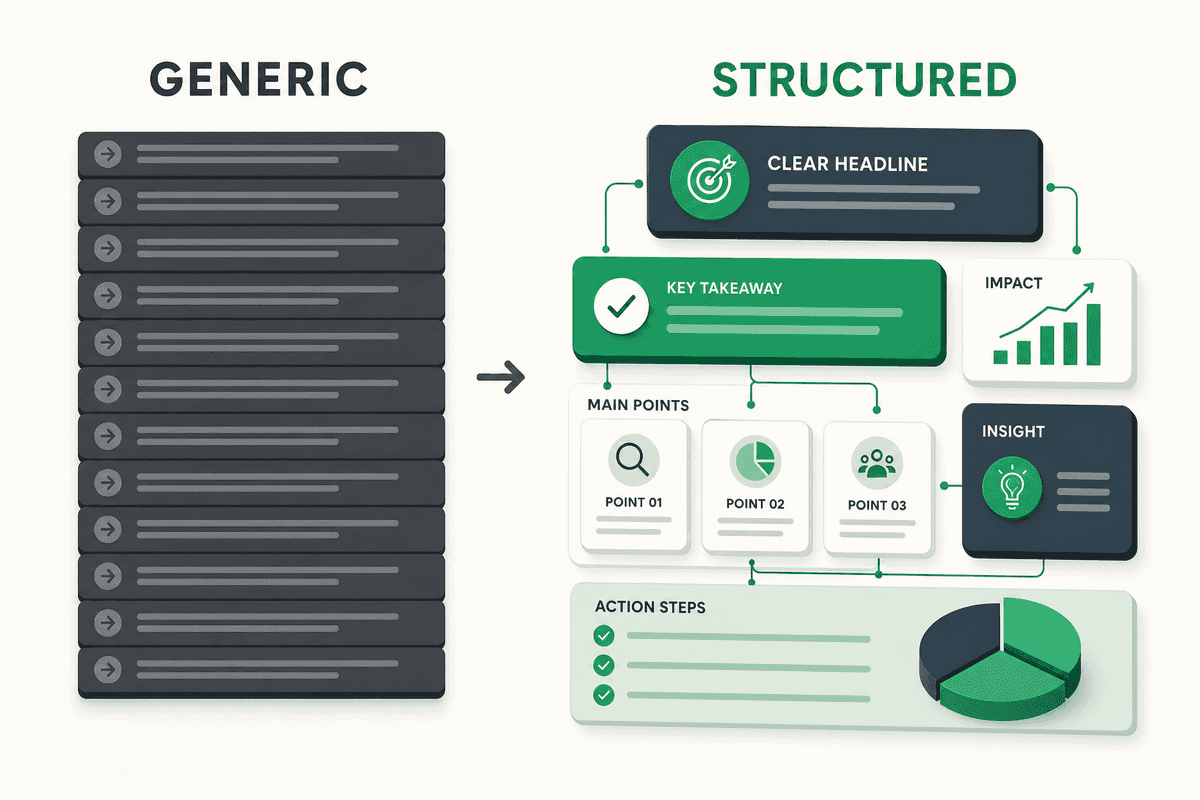
Skepticism surrounding AI-generated content is justified. Early iterations of these tools produced repetitive, soulless text that read exactly like a machine wrote it. If you ask a generic chatbot to write a blog post today, you will likely receive a dense wall of text filled with generic transitions and zero original insight.
But professional copywriting AI has evolved significantly. When examining the landscape, growth marketing experts like Alex Birkett note in their 2026 tool roundups that the most effective marketers do not use AI to replace strategy. They use it to accelerate execution.
AI copywriting works exceptionally well when you provide it with rigid frameworks, specific constraints, and clear data inputs.
The Failure Modes of AI Content
Before building an automated pipeline, you must understand where AI typically fails so you can engineer your workflow around these limitations:
- The Hallucination Problem: Large language models will confidently invent statistics, customer quotes, and case studies if they lack strict contextual boundaries.
- The "AI Voice": Overusing adverbs, complex sentence structures, and predictable conclusions creates a recognizable, bland tone that alienates readers.
- The Formatting Black Hole: Raw text output requires manual HTML formatting, image sourcing, internal linking, and meta description writing before it can go live.
To succeed, your strategy must shift from focusing on text generation to focusing on system architecture.
How Does It Work? Behind the Curtain
If you want to master copywriting AI, you need a basic understanding of what is happening under the hood.
Large Language Models (LLMs) do not "think" or "write" in the human sense. They operate on a mechanism called token prediction. When you feed an LLom a prompt, it analyzes massive datasets of human language to mathematically predict the most logical next sequence of words.
Because they predict based on patterns, their default output is the mathematical average of the internet. The average internet article is mediocre. Therefore, default AI output is mediocre.
To force an LLM to write unique and human-like copy, you have to manipulate its context window. You achieve this by feeding it highly specific frameworks—such as "answer-first" article structures, distinct brand guidelines, and factual competitor data—before it generates a single word.
Bridging the Gap: From Text Generators to Full Workflows
Many newcomers start by watching an AI Copywriting for Beginners tutorial, which typically teaches basic prompt engineering. You copy a prompt, paste it into a chat interface, and copy the resulting text back into WordPress.
This copy-paste loop does not scale.
Professional marketers and indie hackers are abandoning standalone text boxes in favor of automated workflows. If you browse industry discussions to see what copywriters are actually paying for, you will find a clear distinction between users who want a cheap brainstorming buddy and professionals who need a production pipeline.
Long-Form AI Content Writers: Automating SEO Blog Posts
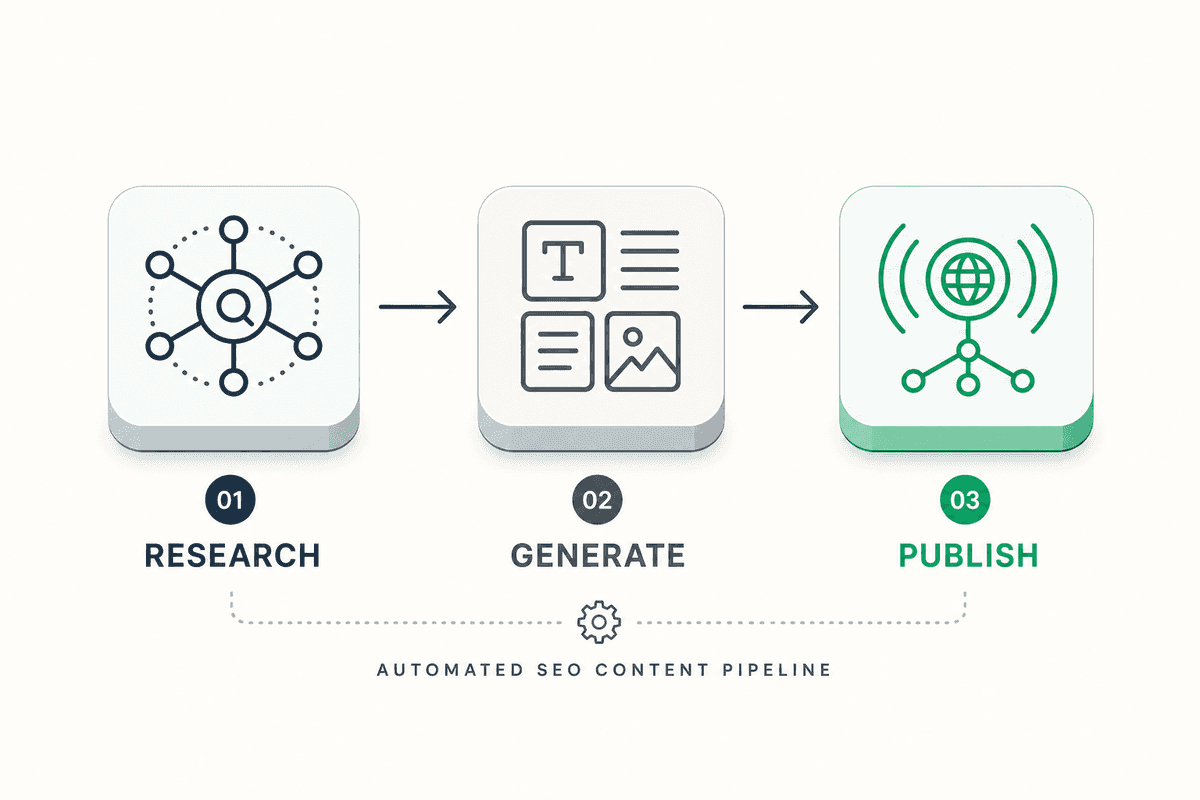
When segmenting the market, you must choose tools based on your required content length and technical capacity. Long-form SEO writing requires tools that can handle deep research, structural formatting, and CMS integration.
1. BeVisible (The End-to-End Publishing Pipeline)
BeVisible is an automated SEO content generation and publishing platform designed specifically for SaaS founders, indie hackers, and e-commerce stores who want organic growth without managing a large editorial team.
Instead of just generating text, BeVisible handles the entire production pipeline. You connect your site URL and define your niche. The platform then conducts keyword research and competitor analysis to build a customized 30-day content map. Every 24 hours, BeVisible automatically writes, polishes, and publishes a new article directly to your CMS (WordPress, Webflow, Notion, Ghost, or Shopify) via API.
The output features answer-first structures, quotable sections, schema markup, internal links, and branded cover images optimized for both traditional Google SEO and AI search engines like ChatGPT and Perplexity. The Professional plan offers 30 articles per month for $199 (available as a launch discount), complete with unlimited revisions, Google Search Console analytics, and a 3-day free trial.
2. Surfer SEO (The Manual Optimizer)
Surfer SEO remains a staple for content marketers who prefer a hands-on approach. It analyzes the top-ranking pages for your target keyword and provides a dense list of semantic terms you need to include. While it features strong writing capabilities, it is primarily an optimization layer that requires a human operator to build briefs and manage the publishing workflow.
3. Copymatic
For teams that want to manually generate distinct types of content across different formats, Copymatic offers a versatile dashboard. It provides specific templates for blog sections, landing pages, and marketing copy, making it a reliable middle-ground for content teams that still want to guide the drafting process paragraph by paragraph.
Short-Form Copywriting AI: Social Media, Ads & Website Copy
If you are not trying to rank 2,500-word articles on Google, your tooling needs change. Short-form tools excel at rapid ideation, A/B testing ad copy, and drafting social media captions.
4. Copy.ai
For startup founders looking to quickly brainstorm angles or write product descriptions, exploring free AI writing generators and tools like Copy.ai is a smart starting point. It requires no complex setup and excels at generating multiple variations of short, punchy copy.
5. Jasper
Jasper acts as a broad generalist. It is highly trainable and allows enterprise marketing teams to upload extensive brand voice documentation. It is best utilized as a copilot for social media managers and email marketers who need to produce high volumes of daily snippets while maintaining a strict corporate tone.
6. Quillbot
Sometimes you do not need an AI to write from scratch; you just need it to fix what you have already written. Tools like Quillbot operate as a free AI copywriter focused heavily on paraphrasing, summarizing, and grammar correction. It is an excellent utility layer for refining rough drafts.
A Step-by-Step Framework for Automating Daily Blog Posts
If you are ready to implement an automated daily publishing strategy using a pipeline tool like BeVisible, follow this deployment framework.
Step 1: SERP Research & Content Mapping
Do not write random articles. Begin by defining a tight topical cluster. If you run a SaaS product for email marketing, your first 30-day map should focus entirely on one specific sub-niche, such as "email deliverability for e-commerce."
- Identify 30 long-tail keywords with clear informational intent.
- Ensure your automated tool pulls competitor data for these specific keywords to establish the required word count and heading structures.
Step 2: Configure Answer-First Article Structures
Search behavior has changed. Users do not want to read a 500-word introduction detailing the history of a topic. They want the answer immediately.
Configure your AI pipeline to structure articles with the core answer in the first two paragraphs. Follow this with a detailed breakdown, practical examples, and quotable sections. This "answer-first" format satisfies impatient human readers and makes your content easily extractable by AI search engines like Perplexity.
Step 3: Set Up CMS Auto-Publishing
The defining feature of a 2026 workflow is API integration. Connect your AI platform directly to your Webflow, Ghost, or WordPress site.
You must map the data fields correctly:
- Title: Map directly to your H1.
- Content: Ensure the HTML payload includes rich formatting (tables, bullet points, bolded text).
- Metadata: Automate the generation of a 150-character meta description.
- Taxonomy: Auto-assign tags and categories so the posts populate correctly on your live blog feed.
- Images: Set the pipeline to generate and attach featured image alt text and branded cover images.
Step 4: Monitor Performance and Iterate
Set your system to publish once every 24 hours. Let it run continuously for 30 days. During this period, monitor your Google Search Console. Look for "impressions" rather than immediate clicks. If your articles are generating impressions, it means Google has indexed the automated content and finds it structurally sound.
3 Future-Proof Copywriting Strategies for the Rest of 2026
To stay ahead of competitors who are just discovering basic AI generation, implement these three advanced tactics.
Strategy 1: Optimize for AI Search Engines
Google is no longer the only traffic source. ChatGPT, Perplexity, and Claude are actively citing live websites to answer user queries. To optimize for these platforms, your content must be highly structured. Use clear H2 and H3 tags, employ bulleted lists heavily, and include schema markup behind the scenes. AI engines extract data from well-structured HTML much faster than dense paragraphs.
Strategy 2: Shift from Volume to Information Gain
Publishing 1,000 generic articles a month will result in a domain penalty. The algorithms are now trained to reward "Information Gain"—which means your article must present a fact, viewpoint, or structure that does not currently exist in the top 10 results. You can automate this by feeding your AI pipeline proprietary data, such as internal survey results or anonymized customer usage statistics, to use as the foundation for its drafting.
Strategy 3: Strategy-in-the-Loop Replaces Human-in-the-Loop
Two years ago, the advice was to manually edit every single AI-generated paragraph. Today, the models are competent enough at grammar and flow that line-editing is largely unnecessary. The human intervention point has moved upstream. Instead of editing the output, you should spend your time editing the input—refining the keyword strategy, adjusting the target audience parameters, and improving the brand voice guidelines before the 30-day automation begins.
Frequently Asked Questions
Will Google penalize AI content?
Google's official guidelines state that they reward high-quality content however it is produced. They do not penalize AI content simply for being AI. They penalize spam, thin content, and content that provides no value to the reader. If your automated pipeline produces deeply researched, well-formatted, and highly relevant answers, it will rank.
Can AI write unique and human-like copy?
Yes, but only if you provide unique inputs. If you ask an AI to "write an article about project management," it will write a generic summary. If you ask it to "write an article explaining how our specific SaaS tool reduced project management meeting times by 40%, using these three customer examples," the output will be highly unique and engaging.
How do I choose the best AI copywriting tool for a tight budget?
If you have zero budget, start with a newbie-friendly entry point. Use free tiers from tools like Copy.ai for brainstorming. However, recognize that your time is a cost. Spending three hours manually piecing together an article using free tools is often more expensive for a founder than paying a flat subscription for an automated publishing pipeline.
Next Steps: Launch Your 30-Day Content Pipeline
Staring at a blank screen and managing scattered freelance writers are bottlenecks you no longer have to tolerate. The technology to automate your entire organic growth strategy is available and affordable.
Stop paying for basic text generators and start investing in end-to-end workflows. Define your niche, identify your specific target audience, and let an automated system handle the heavy lifting of research, drafting, formatting, and publishing.
You can experience this fully automated workflow immediately. Start your 3-day free trial of BeVisible today, connect your CMS, and watch your site transform into a daily source of ranked answers while you focus on building your actual business.