
If you search for "keywords ai" today, Google hands you a perfectly fractured search engine results page. Half the results point to a Y Combinator-backed developer tool designed for AI observability. The other half point to marketing tools promising to revolutionize how you find search terms.
This split intent isn't an error; it’s a perfect reflection of where the internet is right now. We are simultaneously trying to build better AI applications and figure out how to be found by them.
For SaaS founders, indie hackers, and content marketers, understanding both sides of "Keywords AI" is no longer optional. The traditional SEO playbook—dumping a seed keyword into Google Keyword Planner, filtering by search volume, and writing a 2,000-word post to match—is losing its teeth. In its place, a new ecosystem has emerged: one where we use Artificial Intelligence to discover hidden search intent, and one where we optimize our content to be cited by AI agents like ChatGPT, Perplexity, and Google's AI Overviews.
In this comprehensive guide, we are going to unpack the dual nature of Keywords AI. We'll start by clarifying the developer tools that share this name, then pivot deeply into how you can build an evidence-led keyword and content workflow that helps your team test and improve how your SaaS appears in search and AI answers.
The Split Intent: What Exactly is Keywords AI?
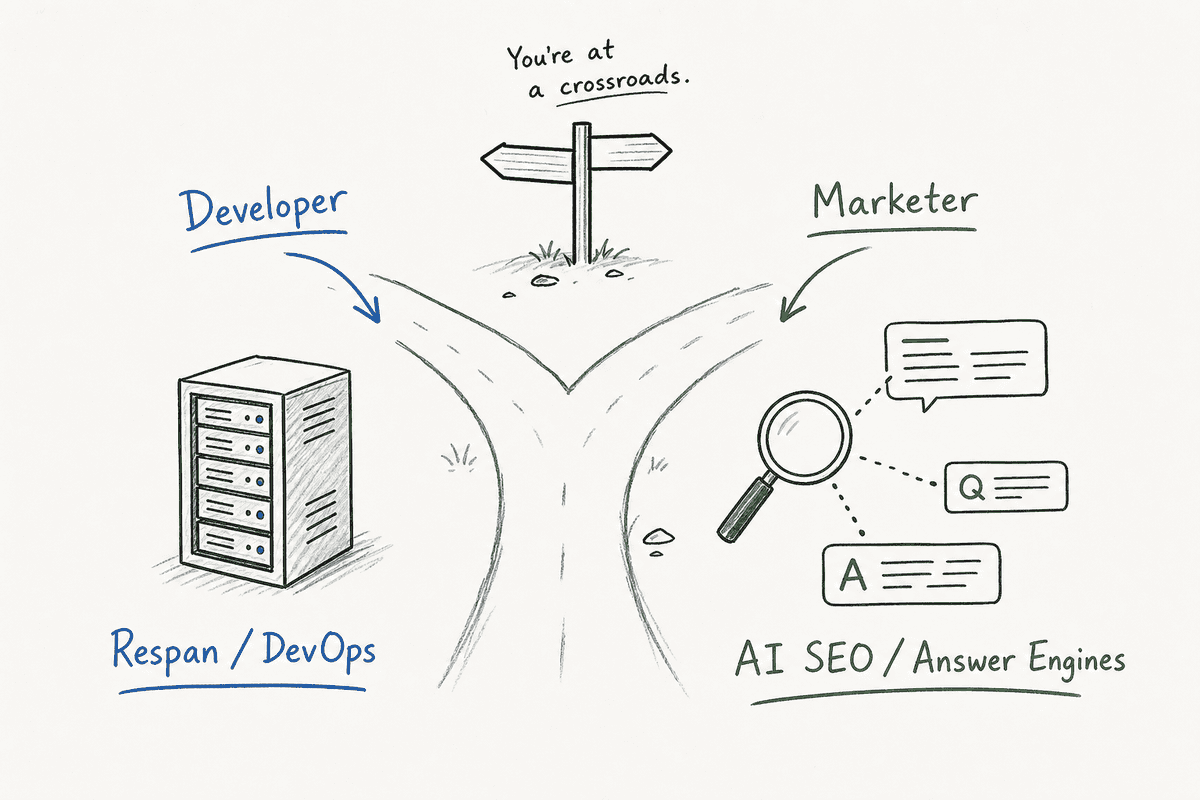
Before we dive into SEO strategies, let's clear up the search intent behind the term. The phrase "Keywords AI" currently points to two distinct, yet equally important, pillars of the modern tech stack:
1. The Unified DevOps Platform (Now Respan)
For engineers and technical founders, Keywords AI was originally known as a Unified DevOps platform to build AI applications that went through Y Combinator. It was built to solve a glaring problem: AI doesn't break like traditional software; its behavior simply shifts.
Today, this platform has evolved into Respan | LLM Engineering Platform, focusing on self-driving AI observability and evaluations for agents. If you are building a SaaS product that relies on LLMs, tools like Respan allow you to trace agent failures, iterate on prompts without losing control, and know exactly when production behavior shifts before it affects your users. It acts as a single gateway for your AI stack, ensuring compliance and security.
2. The Next Generation of SEO
For growth marketers, "Keywords AI" represents the intersection of Artificial Intelligence and Search Engine Optimization. It encompasses two critical motions:
- AI for Keyword Research: Using machine learning and LLMs to process massive datasets, discover long-tail semantic variations, and map the "jobs to be done" of your target audience.
- Answer Engine Optimization (AEO): Structuring your website's content so that AI crawlers (like OpenAI's bot or Perplexity's engine) extract, understand, and cite your brand as the definitive answer to user queries.
While Respan secures the internal logic of your AI applications, your marketing team still needs to secure external visibility. Let’s dive into how you can leverage AI to build an unstoppable organic growth engine.
Why Traditional Keyword Research is Failing SaaS Founders
For the last decade, SaaS keyword research followed a rigid, predictable path. You would plug a term into Ahrefs or Semrush, filter for a Keyword Difficulty (KD) under 40, look for a search volume above 500, and hand a brief to a freelance writer.
Here is why that model is actively failing in 2026:
The "Zero Volume" Illusion
Traditional tools rely on clickstream data and historical Google searches. But AI search engines have trained users to ask highly specific, conversational, and complex questions. A query like, "What is the best CRM for a 5-person plumbing business that integrates with Quickbooks and has a mobile app" will register as having "zero search volume" in legacy tools. Yet, that query has incredibly high commercial intent. Relying solely on historical volume means you are ignoring the exact queries your highest-converting customers are typing into ChatGPT.
Semantic Density over TF-IDF
In the past, SEOs relied on TF-IDF (Term Frequency-Inverse Document Frequency) to ensure a keyword appeared enough times on a page. AI search engines don't care how many times you say "B2B SaaS Marketing." They use vector embeddings to understand the distance between concepts. They look for semantic density—the presence of related entities, concepts, and frameworks that prove topical authority.
The Cost of Human Execution
Scaling an organic content strategy manually is prohibitively expensive. If you read up on current SEO Charges UK: Agency Rates vs Automation (2026), you'll find that traditional agencies easily charge thousands of dollars a month for a handful of articles that take weeks to produce. In an era where AI can synthesize search intent instantly, the human-only production pipeline is too slow to capture fast-moving SERP opportunities.
How to Use AI for Keyword Research: The 2026 Framework
If we can no longer rely purely on historical search volume, how do we find the right keywords? The answer lies in using AI to model human behavior, pain points, and natural language.
Here is a step-by-step framework for using AI to uncover the keywords your competitors are missing.
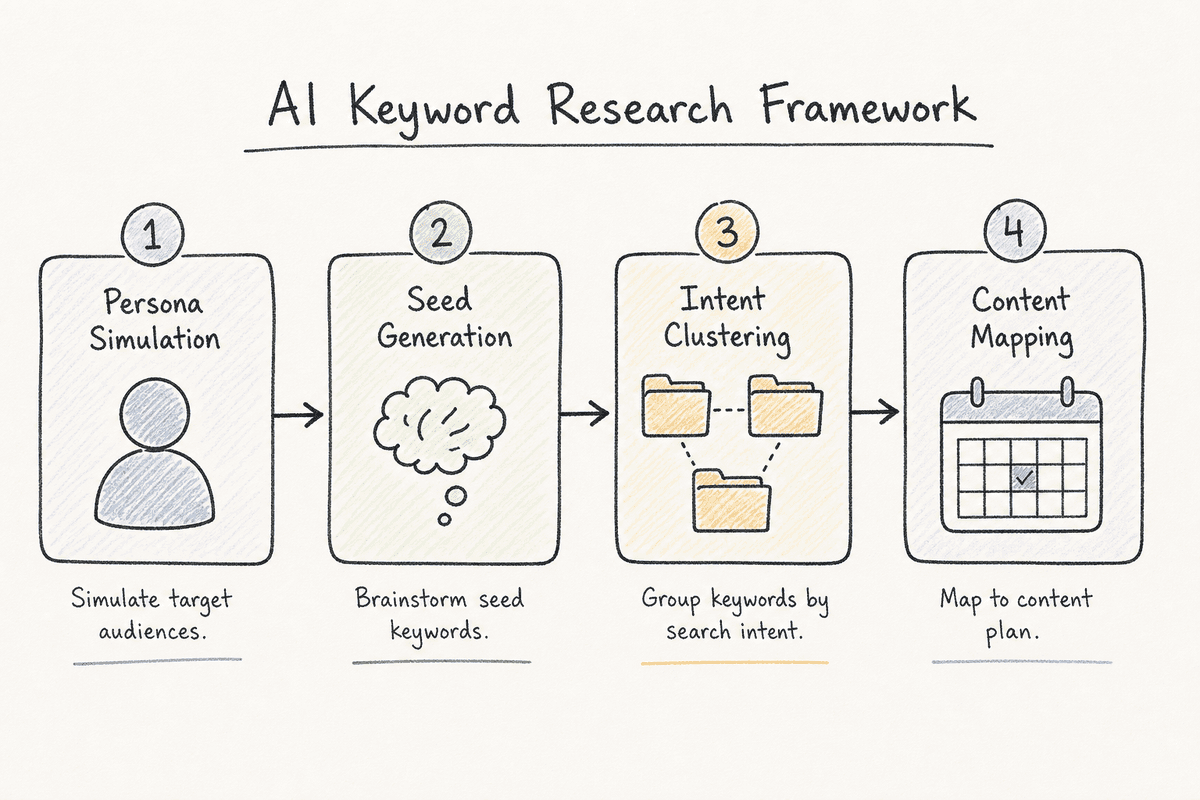
Step 1: Persona Simulation for Seed Keywords
Instead of starting with a product feature, start with a simulated user. LLMs are incredibly good at roleplaying. You can use ChatGPT or a dedicated Free AI Keyword Generator like Quillbot to generate seed ideas based on audience anxiety.
The "Job-to-be-Done" Prompt:
"Act as the VP of Sales at a mid-sized B2B SaaS company. It is Tuesday afternoon and you are frustrated because your team is missing their outbound quotas. Your current CRM feels bloated and your SDRs are complaining about manual data entry. Brainstorm 20 highly specific, conversational questions you would type into a search engine to find a solution. Do not use the word 'CRM' in every query."
This prompt will yield queries like:
- "How to automate sales logging without Salesforce"
- "Tools to track outbound calls automatically"
- "Why is my sales team spending so much time on admin tasks"
These are your new seed keywords.
Step 2: Uncovering the Hidden Long-Tail
Once you have your seed questions, you need to expand them into actionable keyword clusters. While AI chatbots are great for brainstorming, dedicated tools are better for data aggregation.
For example, if you want to understand how to scrape search engines directly, look into Keyword (Research) Tool ⚠️ Plan Google Keywords【FREE】, which extracts Google Autocomplete data. Because Google Autocomplete is predictive and based on recent user behavior, it often reveals emerging trends before they show up in standard SEO software.
Additionally, platforms are integrating AI directly into their UI. If you read up on How to Use AI for Keyword Research: A 6-Step Practical Guide from Nightwatch, you'll see how modern trackers use AI to automatically cluster keywords by search intent, allowing you to build topical maps in minutes rather than days.
Step 3: Cross-Referencing with Unconventional Data Sources
AI models are trained on the open web, which means they love platforms like Reddit, Quora, and YouTube. One of the most effective strategies today is mining video transcripts and forum threads for exact-match phrases.
For a deep dive into this specific tactic, many SEOs recommend exploring methodologies like The AI Keyword Research Hack No One Talks About. By using AI to summarize YouTube comments or Reddit threads in your niche, you can extract the exact vocabulary your customers use when complaining about their problems.
Step 4: Intent Mapping and Clustering
Once you have a list of 500+ AI-generated and autocomplete-sourced keywords, you must group them. An AI prompt for clustering looks like this:
"I am going to provide a list of 100 search queries. Group them into distinct 'Topic Clusters'. For each cluster, identify the primary search intent (Informational, Navigational, Commercial, Transactional). Finally, suggest one core pillar page title for each cluster."
This turns a chaotic spreadsheet into a structured, ready-to-execute content map.
Answer Engine Optimization (AEO): Ranking in ChatGPT & Perplexity
Finding the right keywords with AI is only half the battle. The second half is ensuring that when someone types those keywords into an AI search engine, your website is the one cited as the source.
ChatGPT, Google's AI Overviews, and Perplexity do not "read" pages the way human users do. They retrieve context via Retrieval-Augmented Generation (RAG). To be retrieved, your content must be structured specifically for AI extraction.
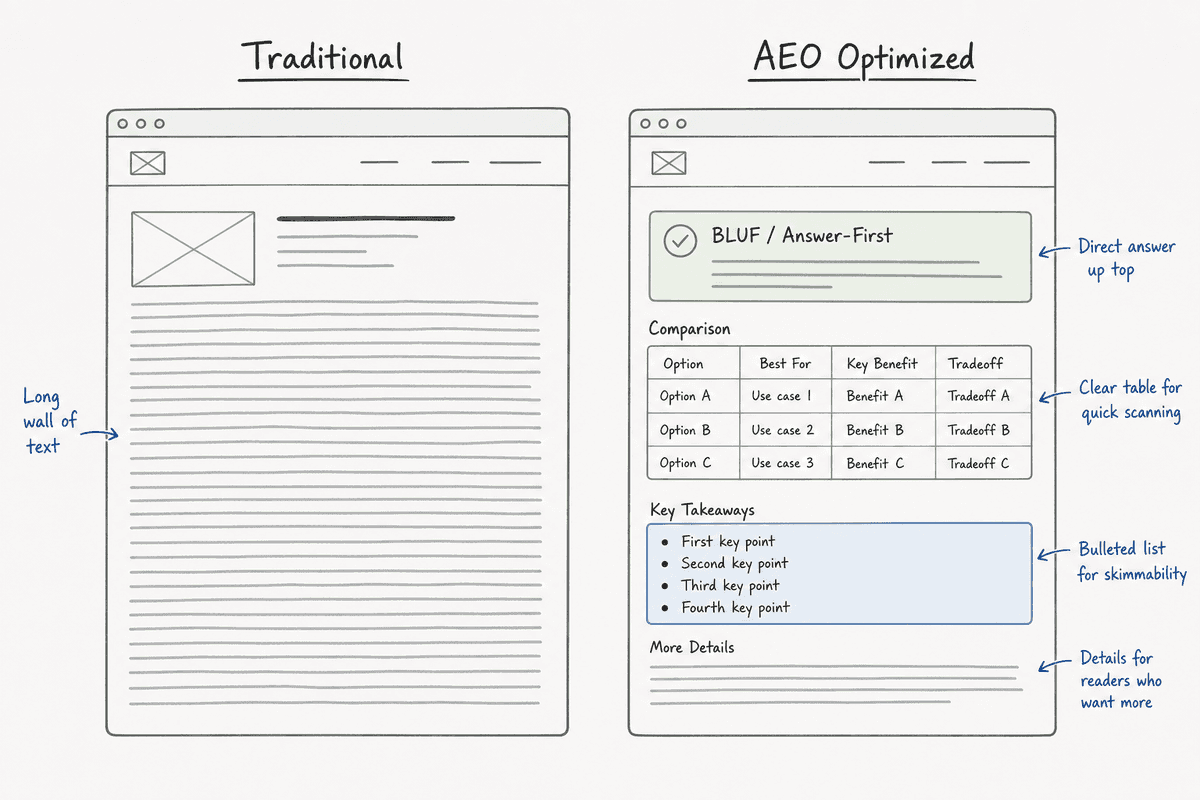
1. The Answer-First Structure (BLUF)
AI models prioritize the "Bottom Line Up Front" (BLUF). If your blog post starts with a 300-word meandering introduction about "In today's fast-paced digital landscape," the AI crawler will likely abandon the page or fail to extract the core value.
Instead, immediately answer the query in the first two sentences following an H2.
- Bad: "When considering the best metrics for SaaS, there are many things to think about..."
- Good: "The three most important metrics for SaaS growth are Net Revenue Retention (NRR), Customer Acquisition Cost (CAC), and Monthly Recurring Revenue (MRR)."
2. High Entity Density and Quotable Sections
If you want Perplexity to cite your SaaS blog, you need to make your content highly quotable. This means using specific, defensible data points. AI models look for "entities" (known nouns, people, places, tools, and concepts). The higher the density of relevant entities in your text, the more confident the AI is in your authority.
3. Bulleted Lists, Tables, and Strict Markdown
LLMs parse markdown exceptionally well. They love structure. If you are comparing two concepts, do not write three paragraphs of text. Put it in a markdown table. If you are outlining a process, use a numbered list.
If you are designing a page specifically to capture high-intent traffic, you need to ensure the architecture supports this readability. I highly recommend reviewing How to Build an SEO Landing Page (7-Step Guide) to understand how to blend conversion copywriting with AI-friendly formatting.
Technical SEO in the Era of AI Crawlers
You can have the best AI-researched keywords and the most beautifully written content, but if the AI bots cannot crawl your site, you will not rank. Technical SEO has become both easier (thanks to automation) and harder (thanks to complex modern web frameworks).
The Single-Page Application (SPA) Dilemma
Many SaaS companies build their marketing sites or web apps using Single-Page Application frameworks like React, Angular, or Vue. While these provide incredibly fast, app-like experiences for human users, they can be a nightmare for crawlers.
Bots from OpenAI, Anthropic, and even Google sometimes struggle to render JavaScript properly. If your content relies heavily on client-side rendering, an AI bot might just see a blank page or a loading spinner.
To ensure your keywords actually register, you must implement Server-Side Rendering (SSR) or dynamic rendering. If you are dealing with this architectural challenge, you must read Single-Page Application SEO: What Works in 2026? and follow the technical roadmap laid out in SEO for Single Page Applications: The Technical Checklist. Furthermore, depending on your development resources, you can explore different integration methods in Implementing SEO in Single Page Applications (3 Ways).
Schema Markup as Direct AI Communication
Schema markup (JSON-LD) is essentially a direct API to search engines. It removes ambiguity. By wrapping your content in FAQPage, Article, SoftwareApplication, or HowTo schema, you explicitly tell the AI crawler what the page is about.
In 2026, Schema is not a "nice to have"; it is the baseline requirement for Answer Engine Optimization.
The Automation Advantage: Building Your Daily Content Pipeline
Let's be brutally honest: knowing how to do AI keyword research and AEO formatting is useless if you don't have the capacity to execute it consistently. The modern search landscape rewards velocity and freshness.
If you are a SaaS founder, an indie hacker, or running a lean marketing agency, you do not have the time to manually generate seed keywords, cluster them, write answer-first content, build tables, format schema, and publish to your CMS every single day.
This is where end-to-end automation platforms like BeVisible change the calculus of organic growth.
Transforming Your Website into an Answer Engine
BeVisible is an AI visibility and content workflow for teams that want to monitor the buyer questions that matter, see where their brand and competitors appear, review cited sources, and turn evidence-backed gaps into content work.
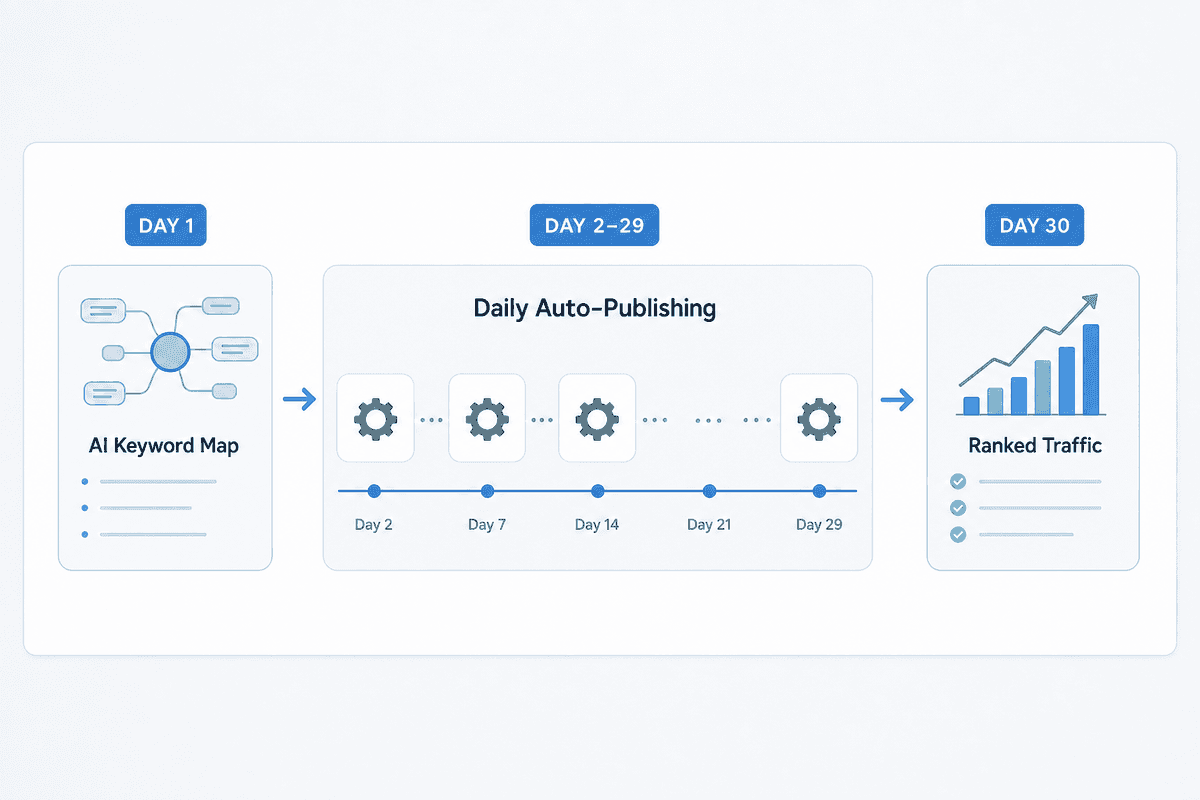
Here is how an automated pipeline replaces the manual "Keywords AI" grind:
- Prompt and competitor setup: Define the buying, comparison, alternative, and validation questions that matter for one brand.
- Daily visibility monitoring: Observe whether tracked AI answers mention the brand, where it appears, which competitors show up, and which sources are cited.
- Evidence-backed actions: Review the underlying answers and turn recurring gaps into prioritized content ideas instead of relying on one opaque score.
- Content workflow: Draft, review, schedule, and publish approved articles through supported CMS integrations.
- Repeat measurement: Compare later observations with the same tracked prompt set while accounting for provider, wording, location, and time variability.
The Economics of Automated SEO
Historically, scaling organic traffic required a massive budget. You either hired an in-house team or outsourced to agencies. If you are vetting local agencies, you might want to look at the Top 7 Agencies for SEO in Durham (Ranked 2026) or learn what to avoid by reading Hiring SEO Services in Phoenix? 5 Red Flags (2026).
But the reality is that the agency model is struggling to keep up with the daily publishing cadence required today. BeVisible's Growth plan is $99 month-to-month or $79 per month when billed annually. It includes one project, five AI platforms, 50 tracked prompts, daily monitoring, and up to 10 optimized articles per month. Check the pricing page before purchase because product limits and pricing can change.
There is even a 3-day free trial, allowing startups to instantly see the quality of an AI-native content map before committing.
Applying AI Content Outside of B2B SaaS
BeVisible is designed primarily for teams managing a SaaS or startup brand, while the principles of evidence-led keyword research apply across other ecosystems too. For example, e-commerce owners running Shopify or Etsy stores face massive organic competition. Understanding platform-specific algorithms requires specialized toolsets. If you are in the e-commerce space, you can augment your strategy by reviewing the 7 Best Etsy SEO Tools to Boost Sales in 2026.
To stay updated on how the best in the business are adapting to these shifts, make sure your reading list is sharp. Check out the 11 Best SEO Blogs Every SaaS Founder Needs (2026) to keep your finger on the pulse of AI search changes.
5 Common Mistakes When Using AI for Keywords
Even with the best tools, founders frequently make critical errors when integrating AI into their keyword workflows. Avoid these traps:
- Trusting AI Search Volumes: LLMs are notorious for hallucinating data. If ChatGPT tells you a keyword has "10,000 monthly searches," it is guessing. Use AI for discovery and ideation, but use deterministic tools (like Google Search Console or BeVisible's analytics) for validation.
- Ignoring the "Brand" Entity: If you don't explicitly teach the AI search engine who you are, it won't recommend you. Make sure your homepage and "About Us" pages clearly state your exact value proposition, target audience, and feature set.
- Creating Thin AI Content: Generating 100 pages of 300-word "glossary" terms using raw GPT-4 prompts will get you hit by Google's Helpful Content updates. Depth, formatting, and structural quality matter immensely.
- Forgetting Internal Links: AI models use links to understand site hierarchy. A flat site structure confuses crawlers. Automated tools that build internal links (like BeVisible) solve this, but if you are doing it manually, never publish an orphan page.
- Over-Optimizing for Single Terms: Stop obsessing over "SaaS CRM." Optimize for the broader topic cluster: "Managing sales pipelines for remote teams," "SaaS CRM data security," and "Automating SDR workflows."
Frequently Asked Questions
What is the difference between Respan and Keywords AI tools for SEO?
"Keywords AI" originally referred to a specific Y Combinator startup that provided a unified DevOps platform for AI applications. That company is now known as Respan, focusing on AI observability and LLM agent evaluations. In the context of marketing, "Keywords AI" refers to the practice of using artificial intelligence to discover search intent, cluster keywords, and optimize content for AI search engines like Perplexity and ChatGPT.
Can ChatGPT do keyword research for me?
Yes, but with limitations. ChatGPT is excellent for brainstorming seed keywords, mapping user personas, and clustering topics based on intent. However, it cannot provide accurate search volumes or real-time competitor backlinks. It is best used alongside a dedicated AI SEO platform that integrates live search data.
What is Answer Engine Optimization (AEO)?
AEO is the process of structuring your website's content so that AI crawlers (like OpenAI, Google Gemini, or Perplexity) can easily extract and cite your information. It relies heavily on "Answer-First" formatting, schema markup, high entity density, and clear markdown structures like tables and bullet points.
Will Google penalize me for using AI to generate content?
Google's official guidelines state that they do not penalize AI content; they penalize unhelpful, thin, or spammy content. If your AI-generated content is accurate, structured well, features rich formatting, and actually answers the user's query comprehensively, it can rank highly in traditional SERPs and AI Overviews. Using a structured platform like BeVisible ensures the output meets these high editorial standards.
The Future Belongs to the Automated
The era of manually hunting for keywords and crossing your fingers is over. The term "Keywords AI" represents a massive paradigm shift in how information is categorized, retrieved, and delivered to users.
For technical founders, it means securing your AI applications with tools like Respan to ensure your agents behave as expected. But for growth, marketing, and survival in the SaaS ecosystem, it means embracing automation.
You can no longer afford to ignore how AI search engines extract data. By shifting your strategy toward AI-driven intent mapping, adopting Answer-First structures, and leveraging platforms like BeVisible to automate the daily grind of production and publishing, you stop playing catch-up. You transform your website from a static brochure into a daily, compounding source of ranked answers—securing your visibility in both traditional Google search and the AI engines of tomorrow.