
If a B2B buyer asks ChatGPT for a list of vendors in your category, do you show up?
A year ago, that was a novelty question. Today, it is a revenue leak. Traditional rank trackers will tell you that you hold the number one spot on Google for your core commercial intent keyword. But when a prospect types that exact same query into Perplexity, Gemini, or an AI Overview, those systems often completely ignore your optimized landing page, choosing instead to cite a two-year-old Reddit thread, a G2 comparison matrix, or a competitor’s blog post.
Generative Engine Optimization (GEO) is the discipline of fixing that disconnect. As noted by industry experts, traditional SEO helps you rank on a SERP, but GEO helps you get cited by an AI.
For B2B startups, building visibility in AI assistants is rapidly becoming the primary way to land on buyer shortlists. Because this shift is happening so quickly, the software ecosystem is rushing to catch up. Otterly.ai often serves as the entry-level default for early-stage startups trying to measure their brand presence in AI. It is functional, cheap, and simple.
But once a startup realizes they are missing from critical AI prompts, simple brand tracking is no longer enough. You need to know why the AI chose the competitor, which sources the AI trusts, and how to execute a content strategy that inserts your brand into those algorithmic answers.
Here is a breakdown of the best GEO tools for B2B startups in 2026, where the market is heading, and the best Otterly.ai alternatives for teams that need to turn AI visibility gaps into published work.
The State of B2B AI Search in 2026
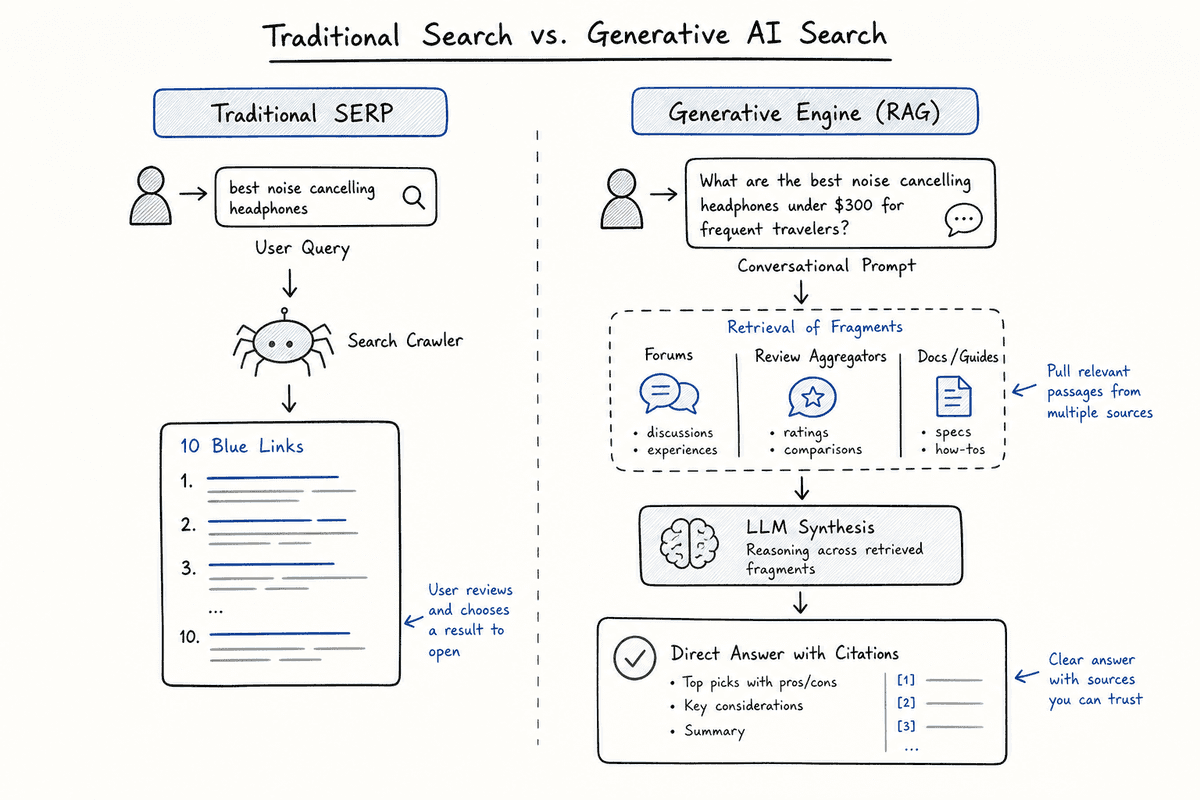
The shift from standard search to generative answers is fundamentally altering the B2B marketing funnel. Buyers no longer want a list of ten blue links to evaluate themselves; they want a synthesized, highly specific answer tailored to their tech stack, budget, and use case.
With 72% of users already engaging with AI Overviews, the transition from traditional search navigation to direct conversational answers is well underway, making GEO an absolute requirement for B2B marketers looking forward to 2025 and beyond.
This changes the technical requirements for content teams. A standard search engine algorithm indexes text, evaluates backlinks, and measures site speed. A Large Language Model (LLM) powering an AI search assistant uses a Retrieval-Augmented Generation (RAG) architecture. When a user asks a question, the system retrieves relevant data fragments from its index, feeds those fragments into the LLM as context, and generates an original answer.
To win in GEO, you do not just need to rank; you need to be the most relevant, highly structured, easily extractable piece of context for the specific prompt the buyer used.
The Problem with First-Generation Rank Trackers
Most legacy SEO suites attempt to bolt GEO features onto their existing platforms. They scrape an AI Overview and report whether your URL is present. This is insufficient for B2B startups for several reasons:
- AI is heavily fragmented: Buyers use ChatGPT, Claude, Gemini, Perplexity, and native browser AI modes. Tracking just Google's AI Overview misses a massive portion of the buyer journey.
- LLMs synthesize, they don't just link: Sometimes your brand is mentioned as a recommendation, but your website is not linked. A traditional rank tracker will mark this as a total failure, even though brand recommendation is a huge win.
- Citation tracking is complex: If an LLM recommends your software, it might cite a third-party review site as its source rather than your website. You need to know which third-party sites are feeding the LLM so you can optimize your presence there.
Why Startups Look for Otterly.ai Alternatives
Otterly.ai has built a strong user base among early-stage startups primarily due to its pricing model. Starting at roughly $29 per month, it provides an accessible entry point for teams who simply want to know, "Does ChatGPT know we exist?" according to recent evaluations.
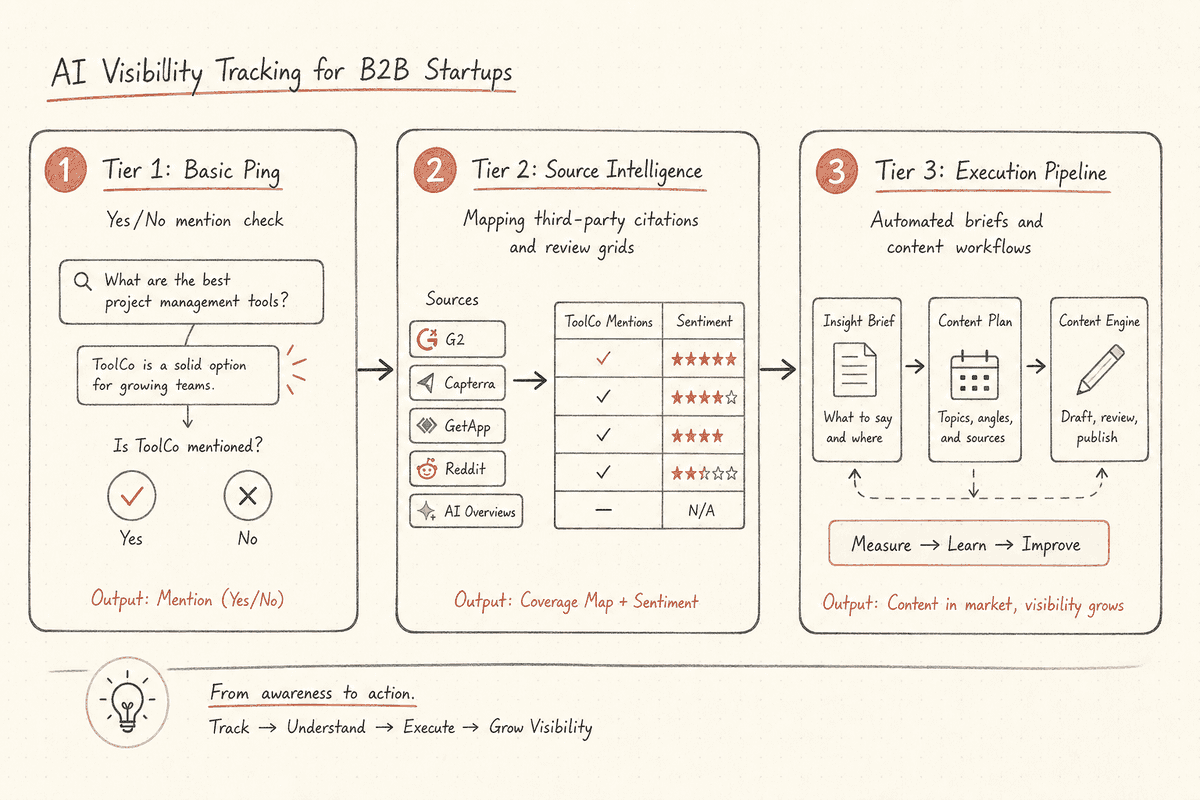
For a pre-seed startup, that basic level of brand visibility tracking is often enough. But as startups secure funding, hire marketing teams, and scale their content operations, they encounter the limitations of basic tracking:
- Lack of Execution Context: Knowing you are missing from a Gemini answer is only step one. The tool does not tell you how to bridge the gap.
- No Content Pipeline Integration: Once you identify a weak citation, you need to write an article, update a review, or schedule a PR campaign. Basic trackers leave this workflow entirely manual.
- Limited Prompt Complexity: B2B buyers ask highly specific, multi-variable questions ("What is the best CRM for a 50-person manufacturing company using SAP?"). Basic tools struggle to track complex, conversational buyer prompts across multiple engines simultaneously.
When the goal shifts from passive monitoring to active revenue generation, startups must upgrade their GEO stack.
Top GEO Tools for B2B Startups
Evaluating GEO software requires looking at your specific bottlenecks. Are you struggling to track complex buyer journeys? Do you need an all-in-one content generator? Or do you need a workflow engine that connects AI visibility data to your content calendar?
Here are the top alternatives to consider.
1. BeVisible (Best for Execution and Content Workflows)
Most GEO tools stop at the dashboard. They show you a red arrow indicating your visibility has dropped, and then leave you to figure out what to do next. BeVisible is designed for B2B marketing teams, agencies, and SaaS founders who need to turn those missing mentions into actual work.
Instead of just reporting on visibility, BeVisible tracks ChatGPT, Gemini, Perplexity, AI Mode, and AI Overviews across your specific buyer prompts. When it detects that a competitor is winning a category, or that an LLM is citing a weak source for a specific claim, it turns that gap into an evidence-backed opportunity.
Key Strengths for B2B Startups:
- Cross-Engine Monitoring: It doesn't just look at Google. It monitors the actual AI assistants your buyers have open in their tabs.
- Source Tracking: BeVisible identifies exactly which sources (forums, review sites, documentation) the AI assistants are citing to form their answers. If ChatGPT recommends your competitor because of a specific G2 review, BeVisible flags it.
- Action-Driven Pipeline: The platform helps content teams turn visibility gaps into scheduled articles, review campaigns, and publishing work. It bridges the gap between analytics and execution.
If you are already familiar with the technical requirements of standard optimization—like How to Build an SEO Landing Page (7-Step Guide)—BeVisible helps apply that same rigorous workflow to AI citations.
2. BrandViz.AI (Best for Simulating Buyer Intent)
If your primary challenge is understanding how different buyer personas interact with AI across their purchasing journey, BrandViz.AI is a strong alternative. BrandViz specializes in simulating buyer journeys to reveal exactly how your brand appears to prospects using various AI tools as detailed in their industry comparisons.
Key Strengths for B2B Startups:
- Persona Simulation: You can build models of your target buyers and watch how the AI alters its recommendations based on the persona's constraints (e.g., enterprise vs. SMB).
- Competitive Benchmarking: It provides clear visual mapping of where your competitors dominate specific clusters of AI prompts.
- Query Tracking: Excellent tracking of long-tail conversational queries that are difficult to monitor in traditional SEO tools.
BrandViz is particularly useful for growth teams that want to present clear, visual evidence of market share gaps to their executive leadership.
3. Writesonic (Best for Content Generation + GEO)
For lean startups where the person doing the tracking is also the person writing the content, combining tools can save significant time and budget. Writesonic is highly recommended in the B2B space because it merges AI-optimized content creation with citation tracking in a single platform according to recent technical reviews.
Key Strengths for B2B Startups:
- Unified Interface: You can identify a source that mentions a competitor, analyze the gap, and immediately generate an optimized draft to target that same topic.
- Speed of Execution: Startups can rapidly deploy highly structured content designed specifically for LLM ingestion.
- All-in-one Efficiency: Reduces the need to hop between a rank tracker, a brief generator, and a writing tool.
While it may lack the deep workflow management of an execution platform, Writesonic is a powerful engine for early-stage teams prioritizing volume and speed.
4. Profound (Best for Scaling to Enterprise Analytics)
If a startup has secured a Series B or C round and is dealing with massive, complex data sets across multiple product lines, they may outgrow standard B2B tools. Profound provides in-depth, enterprise-grade analysis of AI visibility, offering deep data extraction for complex competitive tracking as highlighted by industry analysts.
Key Strengths for B2B Startups:
- Deep Data Integration: Built to handle massive query volumes and integrate with enterprise data lakes.
- Granular Competitor Analysis: Allows teams to dissect exactly how market narratives are shifting inside LLMs over time.
- Historical Benchmarking: Strong capabilities for looking backward to see when an AI model updated its preferred vendor list.
Profound is overkill for a bootstrapped team, but for high-growth startups moving into the enterprise space, it offers the necessary analytical rigor.
The Core Components of an Effective GEO Strategy
Buying a GEO tool does not automatically give you visibility in ChatGPT. The tool simply provides the map; your content team still has to drive the vehicle. For B2B startups, focusing on the mechanics of why an AI chooses a citation is critical.
The Contrarian Truth About AI Citations
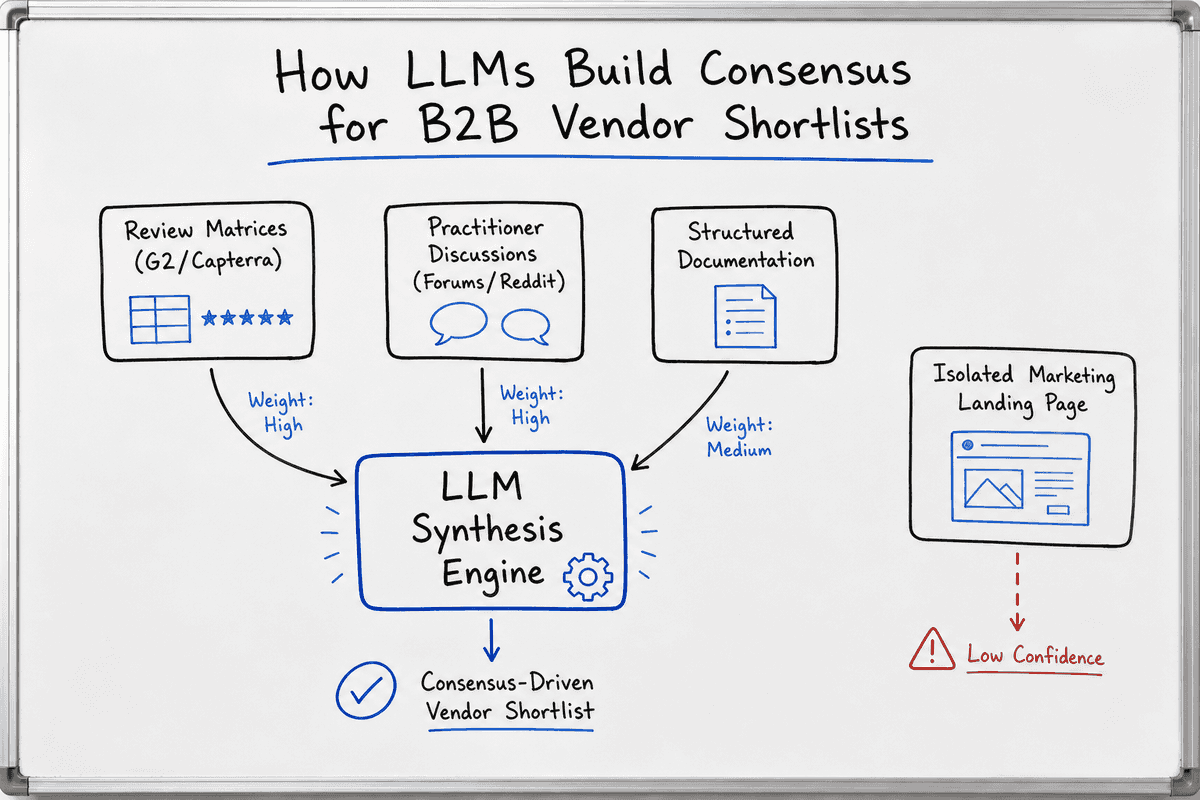
There is a persistent myth in B2B marketing that if you rank number one on Google, you will automatically be the top recommendation in an AI assistant. This is demonstrably false.
Consider a B2B SaaS company that holds the top organic search spot for "best CRM for manufacturing." They optimized their landing page perfectly, bought the right backlinks, and passed all Core Web Vitals tests. Yet, when a buyer asks ChatGPT that exact question, the AI recommends three completely different competitors and cites a niche manufacturing forum and a software review aggregator.
Why? Because LLMs are trained to prioritize information density and consensus, not just traditional SEO authority. The AI recognized that the number-one ranked landing page was heavily biased marketing copy. It preferred the forum and the review site because those sources aggregated multiple viewpoints, making them mathematically safer for an LLM to rely on when generating an objective answer.
Sometimes, the fastest way to get your B2B startup cited by an AI is not to publish on your own blog. The fastest path is to ensure your brand is heavily mentioned, debated, and reviewed on the third-party platforms that the LLMs already trust.
Structuring Content for Machine Ingestion
When you do publish on your own domain, the format of your content dictates whether an LLM will cite it.
Standard narrative blogging works well for human readers but fails miserably for LLMs. An AI assistant is looking for distinct, easily extractable facts. To optimize for generative engines, B2B startups must structure their content using clear entities and relationships.
If you are a SaaS founder looking to train your team on these concepts, resources like the 11 Best SEO Blogs Every SaaS Founder Needs (2026) are excellent places to start transitioning your team's mindset from traditional search to AI visibility.
How to Turn GEO Data Into Pipeline
The biggest failure mode in the AI visibility space is paying for a tracking tool, watching your visibility score fluctuate, and taking absolutely no action. Data without workflow is just overhead.
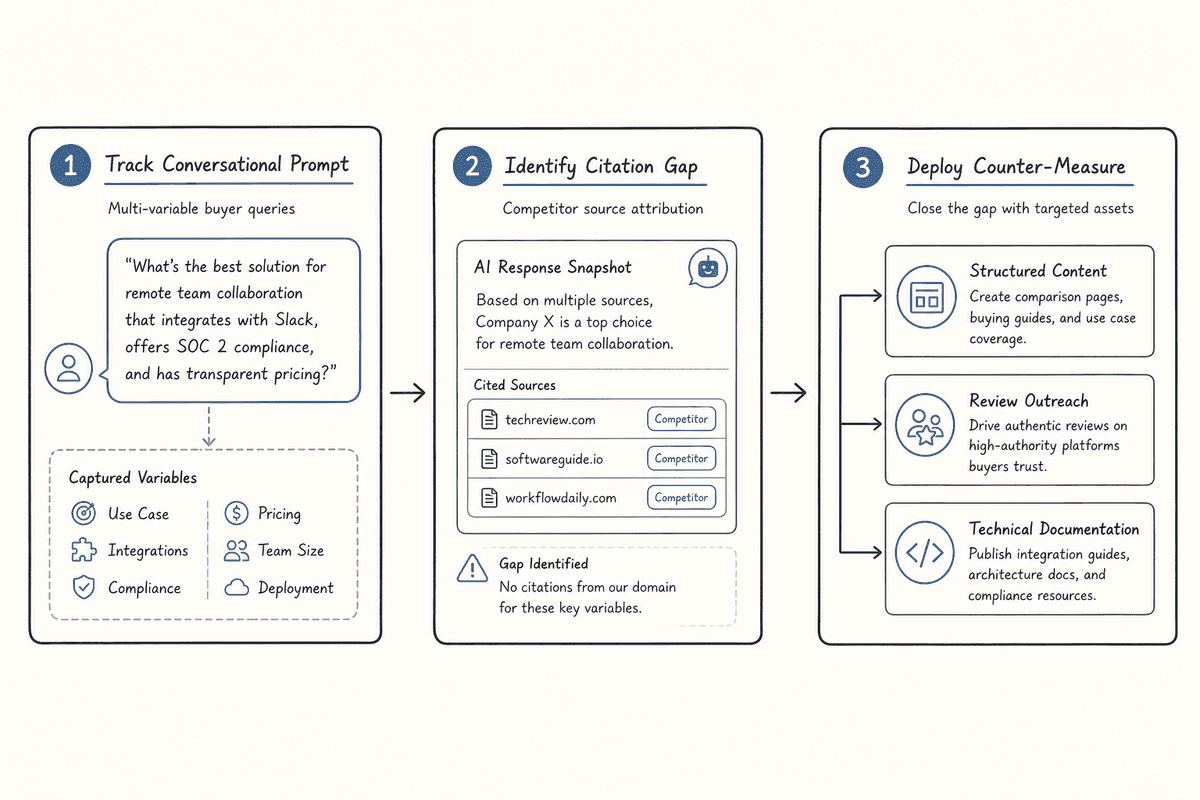
If you are replacing Otterly.ai with a more robust platform, you must build an execution pipeline. Here is how a B2B startup should process GEO data:
Step 1: Map the Buyer's Conversational Prompts
Do not just track keywords. Track full, conversational prompts. Buyers using Perplexity do not type "inventory software." They type, "What is the best inventory management software for a multi-warehouse e-commerce brand doing $5M in revenue, and how does it integrate with Shopify?"
Your GEO tool should be monitoring variations of these long-tail, highly specific questions.
Step 2: Analyze the Citation Gap
When the tool flags that you are missing from the AI's response to that prompt, look immediately at the citations. Where did the AI get its answer?
- Did it cite a competitor's technical documentation?
- Did it pull from a specific thread on Reddit?
- Did it reference a G2 grid?
Step 3: Deploy the Counter-Measure
Once you know the source of the AI's answer, assign a specific task to your content team based on the gap.
- If the AI cited a competitor's blog: Write a technically superior, more structured, and more objective article on your own site. Ensure your tables are cleaner and your data is more recent.
- If the AI cited a review aggregator: Launch an immediate campaign to your customer success team to generate highly specific, feature-focused reviews on that exact platform.
- If the AI cited a forum: You cannot easily manipulate organic forum discussions, but you can ensure your founders and technical leads are actively providing objective, high-value answers in those communities to build entity association over time.
This is where execution-focused platforms like BeVisible shine, as they natively bridge the gap between identifying the citation and scheduling the work required to fix it.
Budgeting for GEO: Tools vs. Agencies
As startups map out their marketing budgets for 2026, the question of whether to handle GEO in-house or hire an agency inevitably arises.
As the B2B landscape shifts heavily toward generative search in the niche that operators operate in, early-stage startups generally benefit from bringing a tool in-house first. Understanding the mechanics of AI citations internally ensures that when you do hire an agency later, you know exactly what you are buying.
If you rely entirely on an external agency before understanding your own AI visibility gaps, you risk paying high retainers for standard SEO work disguised as GEO. (For context on how standard search pricing structures are evolving, see SEO Charges UK: Agency Rates vs Automation (2026)).
A healthy approach for a Series A startup is to invest in a solid execution-focused tool, train an internal content lead to manage the pipeline, and only bring in specialized GEO agencies when attempting to penetrate highly saturated, enterprise-level query clusters.
Frequently Asked Questions About B2B GEO Tools
Is GEO completely replacing SEO for B2B SaaS? No. They are parallel disciplines. Traditional search engines still drive massive top-of-funnel traffic, particularly for navigational queries (users looking for a specific website) and informational queries. However, for commercial investigation—where a buyer is comparing tools, looking for alternatives, or seeking highly specific use-case validation—AI assistants are rapidly taking over. You need both.
How long does it take to influence an AI's answer? It is highly volatile. Unlike traditional SEO, which can take months to reflect changes in backlinks or domain authority, LLMs can ingest new data and alter their answers much faster—sometimes within days if the source they cite is highly trusted (like a major news outlet or an authoritative aggregator). However, establishing your brand as a trusted entity across multiple data sources is a long-term play that requires consistent execution.
Can you do GEO without a dedicated tool? Technically, yes. You can manually type prompts into ChatGPT, Gemini, and Perplexity every week, record the results in a spreadsheet, and try to guess why the answers changed. However, for a B2B startup where time is the most constrained resource, manual tracking is wildly inefficient. The cost of a tool is negligible compared to the labor hours wasted manually querying multiple AI interfaces.
Building the Execution Habit
Tracking your visibility in AI engines is only the diagnostic phase. The startups that will win their categories over the next three years are not the ones with the most expensive tracking dashboards; they are the ones with the tightest feedback loops between tracking, analysis, and content execution.
Whether you are graduating from a basic tracker like Otterly.ai or building your GEO stack from scratch, prioritize platforms that force you to take action. Monitor how the AI answers, find out who it trusts, uncover the gaps, and get to work publishing the evidence that the algorithms are looking for.