
Traditional keyword research relies on a massive, trailing dataset of what people typed into search boxes six months ago. But as buyer behavior shifts toward conversational interfaces like ChatGPT, Gemini, and Perplexity, that historical data is losing its predictive power. When a SaaS founder asks an AI assistant for the "best CRM for a 50-person agency," the engine doesn't return ten blue links based on keyword volume. It returns a synthesized answer based on brand citations, entity authority, and contextual relevance.
For content and growth teams, this shift presents a massive execution gap. Knowing that you are losing visibility to AI Overviews is only half the battle. The real value lies in turning those visibility gaps into high-converting article ideas.
Tools like Peec AI (and its Rankability AI Analyzer) have gained traction by offering citation tracking and competitor benchmarking across AI models. They help identify where your brand is missing from the conversation. But as the ecosystem matures, B2B marketing teams are looking for alternatives that don't just report on the weather, but help them build the shelter—platforms that seamlessly bridge the gap between AI visibility monitoring and content execution.
This guide breaks down the top Peec AI alternatives specifically designed to fuel your content pipeline, examining how to extract article ideas from AI citations, sentiment, and competitor mentions.
The Shift: Why AI Visibility Monitoring is Your Best Ideation Engine
If you are still generating content ideas by filtering a spreadsheet of keywords by "Volume > 500" and "Keyword Difficulty < 30," you are playing a game that is rapidly becoming obsolete. Answer engines operate on a different frequency.
When you monitor how AI assistants answer buyer questions, you are tapping into a real-time feedback loop of what large language models (LLMs) consider the consensus truth about your industry. If Perplexity consistently cites a specific competitor's blog post when asked about a niche workflow, it's not because of keyword density. It's because that post thoroughly covers the entities, questions, and semantic relationships the LLM associates with the topic.
 By tracking these interactions, you uncover specific content gaps. If an AI overview lists five features a specific software should have, and your landing page only mentions three, you have an immediate, data-backed mandate to update your page or build a new one. AI monitoring tools automate this discovery process, turning abstract visibility metrics into concrete editorial briefs.
The Anatomy of an AI-Driven Article Idea
An article idea generated from AI monitoring usually stems from one of four triggers:
- The Missing Citation: An AI tool recommends your software but cites a third-party review site instead of your own documentation or blog. Idea: Create an authoritative, first-party guide on the specific use case mentioned.
- The Competitor Hallucination: An LLM incorrectly attributes a feature to a competitor because they wrote a tangential blog post about it. Idea: Publish a clear, technical breakdown of your feature to correct the entity mapping in future training runs.
- The Sentiment Gap: The AI recommends your brand but includes a caveat based on outdated reviews (e.g., "powerful but hard to use"). Idea: Write a detailed guide or case study on your recent UX overhaul and onboarding process.
- The Emerging Prompt: You notice a rising trend of specific, long-tail conversational prompts (e.g., "How do I integrate tool X with tool Y without using Zapier?"). Idea: Build a highly specific tutorial addressing this exact constraint.
Core Criteria: Evaluating Peec AI Alternatives for Content Ideation
Not all AI tracking tools are built for content teams. Many are built strictly for PR professionals focused on crisis communications or enterprise reputation management. When evaluating alternatives to Peec AI for the specific goal of generating article ideas, you need to look at four critical dimensions.
1. Multi-Engine Tracking Capabilities
Your buyers don't exclusively use one AI assistant. A developer might prefer Perplexity for technical research, a marketer might use ChatGPT for brainstorming, and a casual searcher will rely on Google's AI Overviews simply because they are unavoidable.
The right alternative must track visibility across a broad spectrum of AI models. If a tool only tracks Google AI Overviews, you are missing the profound shifts happening in dedicated conversational interfaces. You need visibility into ChatGPT, Gemini, Perplexity, and emerging AI search modes to understand the full landscape of how your brand is perceived.
2. Direct Translation from Gap to Brief
Data without workflow is just overhead. If a platform requires you to export a CSV of missing citations, manually compare them against your CMS, and then draft a brief in a separate document, it is slowing you down.
The best alternatives provide a direct line from "missing mention" to "published work." Look for platforms that take a visibility gap and help you transition it into an actionable article concept, complete with the subtopics the AI expects to see.
3. Source Level Analysis
To write an article that an AI engine will cite, you need to know what it is currently citing. If an LLM answers a query about "B2B email marketing strategies" by citing a HubSpot article, a Mailchimp glossary page, and a Reddit thread, your monitoring tool needs to show you those exact URLs.
By reverse-engineering the sources the AI trusts, your content team can analyze the structure, entity density, and semantic depth of the winning articles, allowing you to build a superior, more comprehensive asset.
4. Sentiment and Context Views
It isn't enough to know that you were mentioned; you need to know how you were mentioned. Is the AI positioning you as a premium enterprise solution, a budget-friendly alternative, or a legacy tool? Sentiment analysis provides the angle for your content. If the AI positions you as a budget tool when you are trying to move upmarket, your next article idea needs to focus heavily on enterprise-grade security, scalability, and complex workflows to shift the narrative.
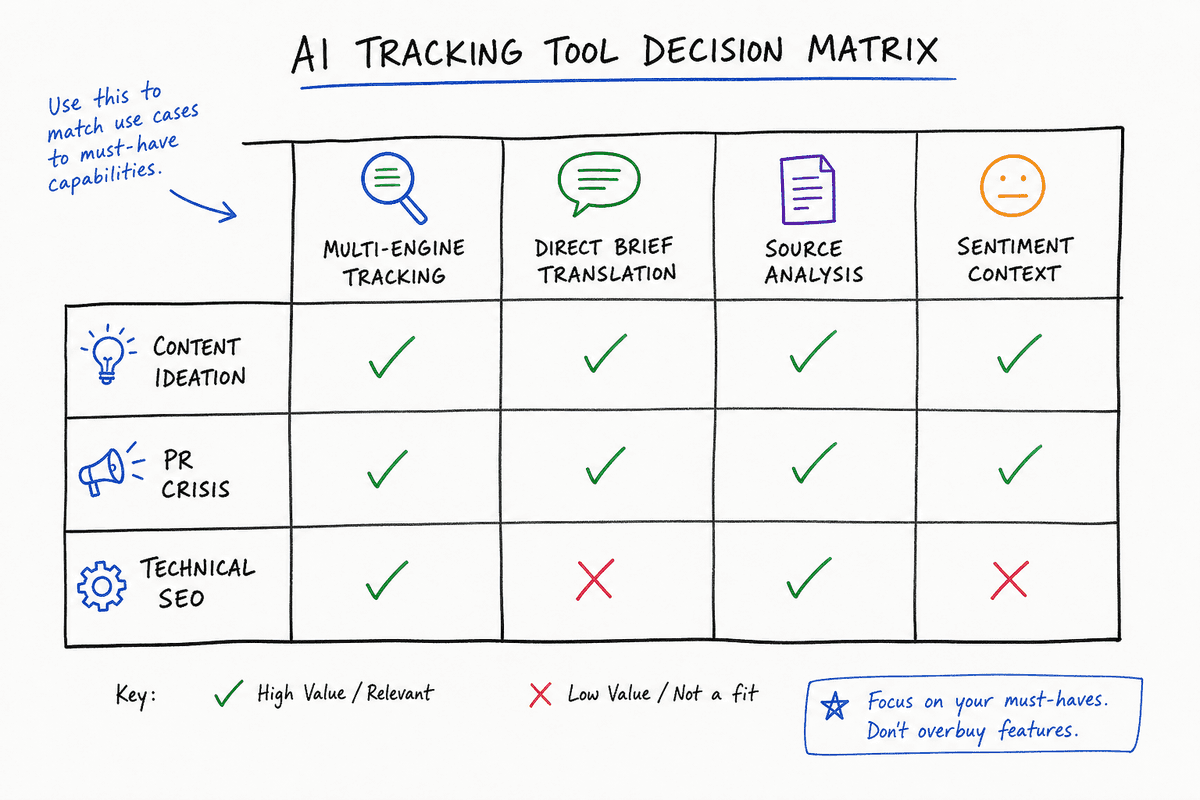
Top Peec AI Alternatives for AI Visibility and Content Generation
Based on these criteria, here is a detailed breakdown of the top tools available for monitoring AI citations and generating evidence-backed article ideas.
1. BeVisible (The Execution-Focused Alternative)
While Peec AI provides a solid foundation for citation tracking and competitor benchmarking, BeVisible is engineered specifically for teams that need to turn visibility data into execution.
BeVisible helps teams monitor how AI assistants answer buyer questions, which brands they recommend, and which sources they cite. It comprehensively tracks ChatGPT, Gemini, Perplexity, AI Mode, and AI Overviews across buyer prompts. What sets it apart as a content ideation engine is its workflow focus: it actively turns visibility gaps into evidence-backed opportunities, articles, review, scheduling, and publishing work.
How it Generates Article Ideas: BeVisible doesn't just show you a graph of declining share of voice. If it detects that Perplexity is consistently recommending three of your competitors for a high-intent buyer prompt but omitting your brand, it surfaces that gap as a targeted opportunity. The platform highlights exactly which sources the AI relied on to generate that answer. Your content team can immediately take that missing mention, review the cited competitor pages, and spin up an article project directly tied to closing that specific visibility gap.
Best For: Growth teams, SaaS founders, and agencies who view AI visibility not just as a reporting metric, but as a direct pipeline for their content calendar.
2. ZipTie (Best for AI Overview Tracking)
ZipTie has built a strong reputation specifically around tracking Google's AI Overviews. It excels at monitoring AI mentions, citations, and sentiment, offering robust features like scheduled checks and multi-country tracking.
As noted in a recent breakdown of best tools for monitoring AI overviews, ZipTie is particularly useful for discovering exactly who is talking about your topics and, crucially, what specific questions readers are asking that trigger an AI-generated response.
How it Generates Article Ideas: ZipTie's real power for content ideation lies in its question discovery. Because it tracks the long-tail conversational queries that prompt AI Overviews, you can extract a highly specific list of user pain points. If you notice that an AI Overview is consistently triggering for "how to migrate from [Competitor] to [Your Brand]" but the cited sources are just forum posts, ZipTie surfaces this gap. You can immediately generate an authoritative migration guide article, knowing there is guaranteed conversational demand for it.
Best For: SEO teams heavily focused on Google's evolving ecosystem and protecting their traditional organic traffic from zero-click AI cannibalization.
3. Trakkr (Best for AI Crawler Visibility)
Trakkr takes a slightly different approach, focusing heavily on AI crawler visibility and source tracking. It provides a distinct sentiment view to gauge audience reaction and LLM bias, making it a strong tool for generating topic ideas based on what people are already discussing in the context of your brand.
According to an analysis of AI search monitoring tools, Trakkr is highly effective for teams that need to understand not just what answers are being generated, but why they are being generated based on crawler behavior.
How it Generates Article Ideas: Trakkr's sentiment view is a goldmine for contrarian or corrective article ideas. If the AI crawler visibility reports show that LLMs are associating your brand with an outdated feature set because they are indexing old PR releases, you have an instant content mandate. You can generate article ideas focused on "The New Standard in [Your Industry]" or deep-dive technical updates designed specifically to give AI crawlers fresh, accurate entities to index.
Best For: Technical content teams and PR professionals who want to proactively shape how AI crawlers index their brand narratives.
4. Agility PR (Best for Media Monitoring Insights)
Agility PR approaches the market from a traditional media monitoring background, but has heavily integrated AI to process and analyze brand mentions. It provides AI-generated insights from monitored articles, extracting summaries, sentiment, and key themes at scale.
For teams looking to extract deeper insights, the platform utilizes specific AI prompts for media monitoring to summarize vast amounts of unstructured data. This rapid synthesis can spark unique angles and outline ideas incredibly fast.
How it Generates Article Ideas: Imagine your brand is mentioned across forty different industry blogs in a single week regarding a new product launch. Reading all forty is impossible. Agility uses AI to summarize these mentions and extract the core themes. It might reveal that while everyone loves the feature, 60% of the articles express confusion about the pricing model. That aggregated insight becomes your next article: a crystal-clear, transparent breakdown of your pricing philosophy, designed to control the narrative that the AI is currently piecing together from confused third parties.
Best For: Enterprise communication teams and agencies managing high-volume brand mentions across the web.
5. Profound AI & SE Ranking (Best for AI Mode Tracking)
Profound AI (often discussed alongside broader platforms like SE Ranking's AI suite) offers deep citation tracking and competitor benchmarking across various AI models. It acts as a comprehensive diagnostic tool for your AI search presence.
As highlighted in industry reviews of AI mode tracking tools, these platforms are essential for understanding your share of voice compared to direct competitors within conversational interfaces.
How it Generates Article Ideas: Profound AI excels at competitor gap analysis. By benchmarking your citations against a rival, you can easily identify the semantic categories where you are losing. If an AI mode tracking report shows that Competitor X is cited 80% of the time for queries related to "compliance" and you are cited 0% of the time, your content roadmap just wrote itself. You need to spin up a hub of articles covering SOC2, GDPR, and industry-specific compliance standards to build the entity authority required to compete in those AI prompts.
(Note: For a broader look at citation strategies, explore discussions on tools for monitoring AI citation and answer engine visibility).
3 Frameworks for Turning AI Visibility Gaps into Published Articles
Having the right Peec AI alternative is step one. Step two is utilizing frameworks to translate dashboard metrics into compelling, publish-ready content. Here are three proven methods for executing on your AI visibility data.
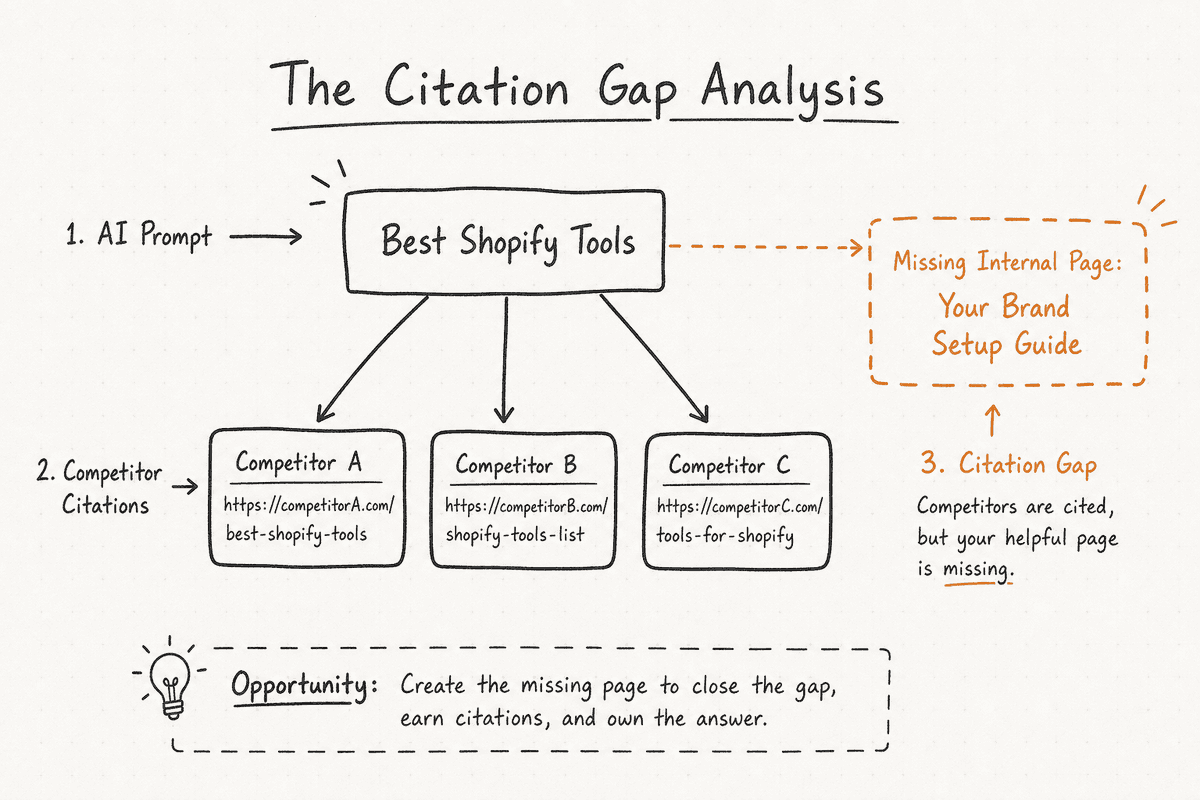
Framework 1: The Citation Gap Analysis
This framework focuses on reclaiming territory where your competitors are currently winning the LLM's trust.
The Process:
- Identify High-Intent Prompts: Use your monitoring tool to track prompts your ideal customer uses (e.g., "What are the best inventory management tools for Shopify?").
- Analyze the Winners: If the AI recommends three competitors and cites specific blog posts from their sites, extract those URLs.
- Deconstruct the Content: Analyze the competitor articles. What entities do they mention? What questions do they answer? What level of technical depth do they achieve?
- Build the "Upgrade" Article: Create a new asset on your site that doesn't just copy the competitors, but comprehensively outperforms them. Add primary data, custom graphics, and clearer formatting.
- Force the Re-evaluation: Once published, ensure the page is properly indexed and internally linked so AI crawlers discover the superior asset.
Framework 2: The Conversational Constraint Pivot
AI queries are fundamentally different from traditional search queries. They are often highly constrained and specific (e.g., "Find me a project management tool under $50/month that integrates with Jira and has a built-in time tracker").
The Process:
- Mine for Constraints: Look through your AI tracking data for recurring constraints (budget limits, specific integrations, industry niches).
- Identify the Weak Citations: Often, the AI will struggle to find a perfect match for highly constrained prompts and will cite forum threads or weak directory pages.
- Draft Constraint-Specific Pages: Build highly targeted content that perfectly matches the constraint. If users constantly ask AI for "Jira integrations with time tracking," build a dedicated pillar page exactly about that topic.
- Structure for Ingestion: Use clear, declarative statements that an LLM can easily parse: "[Our Brand] offers a native Jira integration featuring real-time syncing and built-in time tracking, starting at $30/month."
Framework 3: The Source Authority Takeover
Sometimes, an AI will recommend your product, but it will cite a third-party aggregator (like G2 or Capterra) instead of your own website. While a recommendation is good, relying on a third-party source limits your control over the narrative and reduces direct referral traffic.
The Process:
- Identify the Third-Party Citations: Filter your monitoring tool for instances where your brand is mentioned but the citation URL points to a domain you don't own.
- Analyze the Aggregator Page: What information is the AI extracting from that G2 page? Is it a list of pros and cons? A feature breakdown? Pricing details?
- Create the Definitive First-Party Hub: Build an "Ultimate Guide to [Your Product]" or a highly detailed "Features Deep Dive" page on your own domain. Ensure it is more comprehensive and up-to-date than the third-party page.
- Optimize for Clarity: Structure the page with clear H2s and H3s that directly answer the common questions the AI is trying to resolve. Over time, as crawlers re-index, the goal is for the LLM to realize the first-party source (your site) is more authoritative than the secondary aggregator.
The Technical Prerequisite: Making Sure AI Can Read Your Content
All the content ideation in the world won't help if AI crawlers (like OpenAI's OAI-Bot, Google-Extended, or PerplexityBot) can't actually read the articles you publish.
A common failure mode for SaaS companies occurs when their blog or marketing site relies heavily on client-side rendering without proper server-side fallbacks. If an AI crawler requests a page and receives an empty HTML shell waiting for JavaScript to execute, it will simply move on, and your brilliantly crafted content will never enter the LLM's context window.
If you are running a modern tech stack, ensuring technical accessibility is non-negotiable. Content teams must work with engineering to ensure that critical marketing pages are fully rendered upon request. For deeper technical requirements, reviewing a comprehensive SEO for Single Page Applications: A 5-Step Guide (2026) can ensure your technical foundation doesn't sabotage your AI visibility efforts.
Similarly, consider your internal linking structure. AI bots navigate the web through links. If your newly generated article idea is buried six clicks deep and never linked from your homepage or high-authority hubs, the bots may never find it. Consider building centralized resource hubs or borrowing structures from the 11 Best SEO Blogs Every SaaS Founder Needs (2026) to see how top-tier sites organize their content for maximum crawlability.
4 Common Mistakes When Writing for AI Answer Engines
As you transition from standard SEO writing to optimizing for AI answer engines, you must avoid the legacy tactics that actually harm your visibility in an LLM-driven world.
1. Clinging to Keyword Density
LLMs do not care how many times you use an exact-match keyword. They operate on vectors and semantic relationships. If you write an article about "email automation" but fail to include related entities like "drip campaigns," "deliverability," "DKIM/SPF," and "open rates," the LLM will view your content as shallow, regardless of how often you repeated the main keyword. Focus on comprehensive entity coverage, not keyword stuffing.
2. Burying the Answer
Traditional SEO often encouraged long, meandering introductions to keep users scrolling and increase time-on-page. AI crawlers hate this. They are looking for high-density information extraction. If an article is designed to answer a specific question, answer it clearly and concisely in the first paragraph, then use the rest of the article to provide context, examples, and depth.
3. Ignoring Conversational Formatting
When you build an SEO landing page, structure matters. Use formatting that makes it easy for an LLM to parse data. Use bulleted lists for features, numbered lists for processes, and markdown tables for comparisons. When you format data logically, you make it significantly easier for an AI to extract that data and cite you as the source.
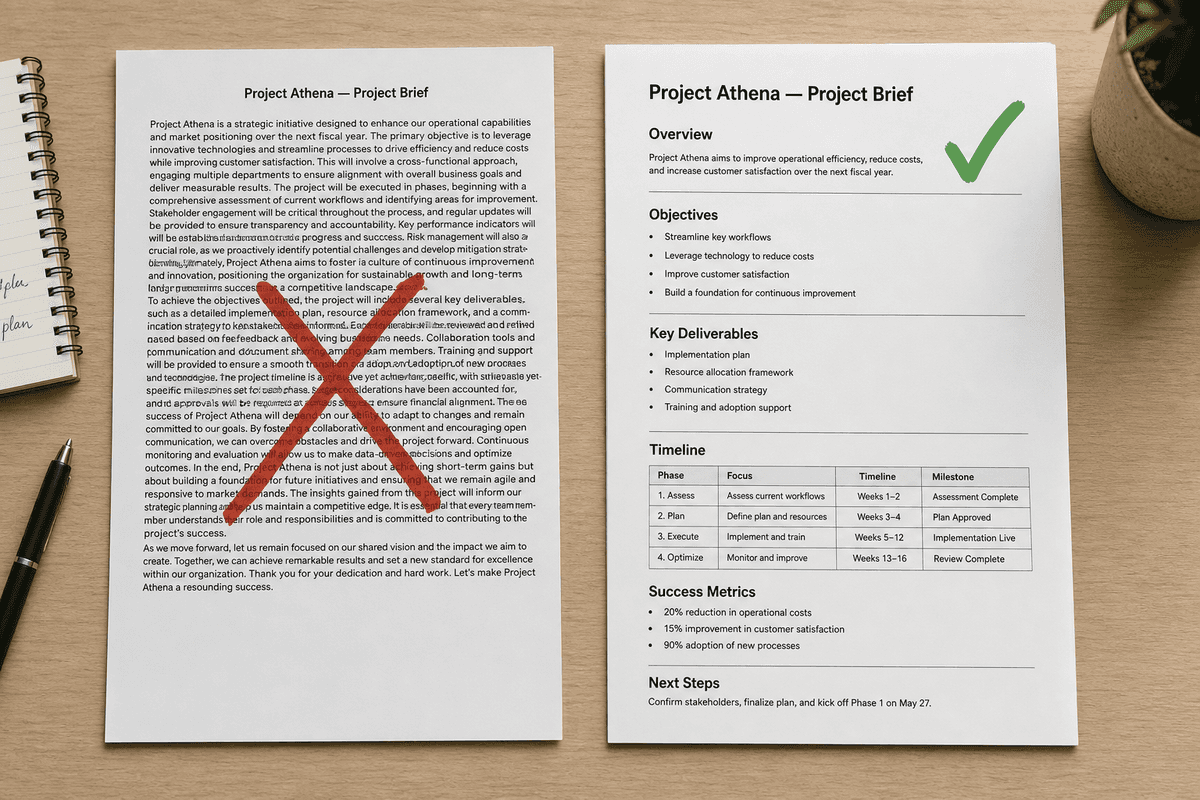
4. Writing "Fluff" Without Unique Value
If your article idea is just a synthesis of what five other websites have already said, an LLM has no reason to cite you. It already has that information. To win a citation, you must introduce net-new information into the ecosystem. This means primary data, unique opinions, proprietary case studies, or first-hand experience. Stop summarizing the internet and start adding to it.
FAQs on AI Content Ideation and Monitoring
How do AI monitoring tools differ from traditional rank trackers? Traditional rank trackers simulate a search query and tell you where your URL ranks from 1 to 100 on a SERP. AI monitoring tools track conversational prompts across multiple models (ChatGPT, Gemini, etc.) and report on whether your brand was recommended, what the sentiment was, and which specific sources the AI used to formulate its answer. They track entity relationships rather than simple URL positions.
Can I just use my existing SEO tools for AI content ideation? While traditional SEO tools are integrating AI features, they still fundamentally rely on trailing search volume data. They are excellent for understanding what users searched for in the past. Dedicated AI monitoring tools are necessary to understand how LLMs are synthesizing answers in real-time, which is essential for capturing zero-click conversational traffic.
How long does it take for a new article to influence an AI answer? It depends on the engine. Perplexity and Google's AI Overviews can incorporate new information very rapidly, sometimes within hours or days of indexing, because they execute live web searches to formulate answers. For models that rely heavily on static training data (like older versions of ChatGPT without web browsing enabled), it may take months for a new article to be incorporated into the model's base weights during a training run. This is why targeting engines that utilize Retrieval-Augmented Generation (RAG) is the most effective short-term strategy.
Moving from Passive Monitoring to Active Execution
The era of optimizing strictly for ten blue links is closing. As buyer behavior fragments across ChatGPT, Gemini, and Perplexity, visibility is no longer guaranteed by a high domain rating alone. It is earned by consistently providing the most authoritative, structurally sound, and entity-rich answers on the internet.
Tools like Peec AI paved the way for understanding this new landscape through citation tracking. But understanding the landscape is not the destination. The ultimate goal is execution.
By leveraging alternatives that actively connect visibility data with content generation—extracting ideas from missing citations, competitor hallucinations, and conversational constraints—you can ensure your brand remains the definitive answer, no matter which AI assistant your buyer consults.