
When a prospective B2B buyer evaluates enterprise software, category options, or security compliance platforms, they rarely scroll through ten pages of traditional search results. Instead, buyers open an AI assistant—asking ChatGPT, Perplexity, Gemini, or Google AI Mode for curated shortlists, feature comparisons, and vendor recommendations.
This shift has created a silent revenue leakage for B2B organizations. While your traditional SEO dashboards might show stable rankings for legacy keywords, your target accounts are receiving AI-generated answers that fail to mention your brand, cite your documentation, or highlight your flagship features. A brand that does not appear in AI-generated answers is effectively invisible to modern B2B buyers.
Profound emerged as an early enterprise monitoring option in AI Engine Optimization (AEO) and Generative Engine Optimization (GEO). However, growth teams, SaaS founders, and B2B marketers quickly run into major operational hurdles with Profound. Enterprise-only pricing tiers, static reporting that shows visibility drop-offs without providing actionable fix workflows, and limited tracking across non-Google AI models leave teams stranded. Knowing that your brand is absent from AI answers is only half the battle; knowing how to fix the gap, track citation sources, and publish compensating content is what actually moves revenue metrics.
This guide evaluates the top Profound alternatives for B2B companies, analyzing how each platform handles multi-model prompt tracking, source citation analysis, and the critical step that legacy tools ignore: turning missing AI mentions into published, revenue-generating content assets.
Why B2B Companies Are Looking Beyond Profound
Monitoring brand mentions across conversational AI engines differs fundamentally from tracking Google keyword rankings. Traditional rank trackers assume a linear relationship between backlinks, page titles, and SERP positions. AI models, on the other hand, rely on complex Retrieval-Augmented Generation (RAG) pipelines, semantic embeddings, and dynamic web search passes to synthesize answers.
While Profound helped pioneer enterprise awareness of AI search visibility, B2B teams frequently seek alternatives due to four primary friction points:
1. Passive Dashboards vs. Closed-Loop Execution
The largest drawback of traditional AI visibility software is passive data collection. A dashboard that alerts you that ChatGPT recommended three competitors for the prompt "best SOC2 automated compliance platform for series B SaaS" leaves you with a reporting problem, not a resolution. Profound stops at analytics. B2B teams are left manually analyzing source references, writing content in third-party editors, managing editorial reviews, and coordinating publishing schedules across separate silos.
2. Enterprise Cost vs. Accessible ROI
Profound's pricing structure heavily favors large enterprise budgets, making it cost-prohibitive for high-growth SaaS startups, boutique agencies, and mid-market B2B organizations. Many teams find themselves paying premium enterprise fees for a dashboard that primarily functions as a read-only monitoring panel.
3. Blind Spots Across Emerging AI Engines
B2B research journeys do not happen inside a single platform. A modern buyer might initiate category research in ChatGPT, verify technical integration details in Perplexity, ask Gemini for quick ecosystem comparisons, and review summaries inside Google AI Overviews or Google AI Mode. Platforms that lack balanced, prompt-level monitoring across all four core engines leave critical gaps in market intelligence.
4. Surface-Level Citation Intelligence
When an AI assistant recommends a competitor, it bases that decision on third-party digital touchpoints: review sites, industry blogs, technical documentation, digital PR mentions, and structured forum discussions. Profound often highlights top-level domain citations, but B2B marketers need deep, granular URL attribution. Without knowing the exact article, review page, or comparison guide an LLM relied upon, content teams cannot strategically update their digital footprint.

Key Criteria for Evaluating B2B AI Visibility Platforms
Selecting an AI visibility monitoring platform requires a framework tailored to complex B2B sales cycles. A consumer e-commerce brand might only care about top-line brand sentiment, but B2B SaaS decisions involve multi-tier prompts, technical evaluation questions, and vendor comparison matrices.
Use these five criteria when evaluating alternatives to Profound:
1. BeVisible: Best Overall Profound Alternative for Closed-Loop AI Monitoring & Execution
BeVisible was built specifically to solve the core flaw of legacy AI trackers: the disconnect between measuring AI search gaps and executing the work required to fix them.
While traditional platforms operate as static analytics panels, BeVisible bridges AI engine tracking with an automated publishing execution suite. It gives SaaS founders, growth teams, and B2B marketing departments full visibility into how AI models perceive their product category, while giving them the tools to publish content that alters those model outputs.
How BeVisible Track AI Models
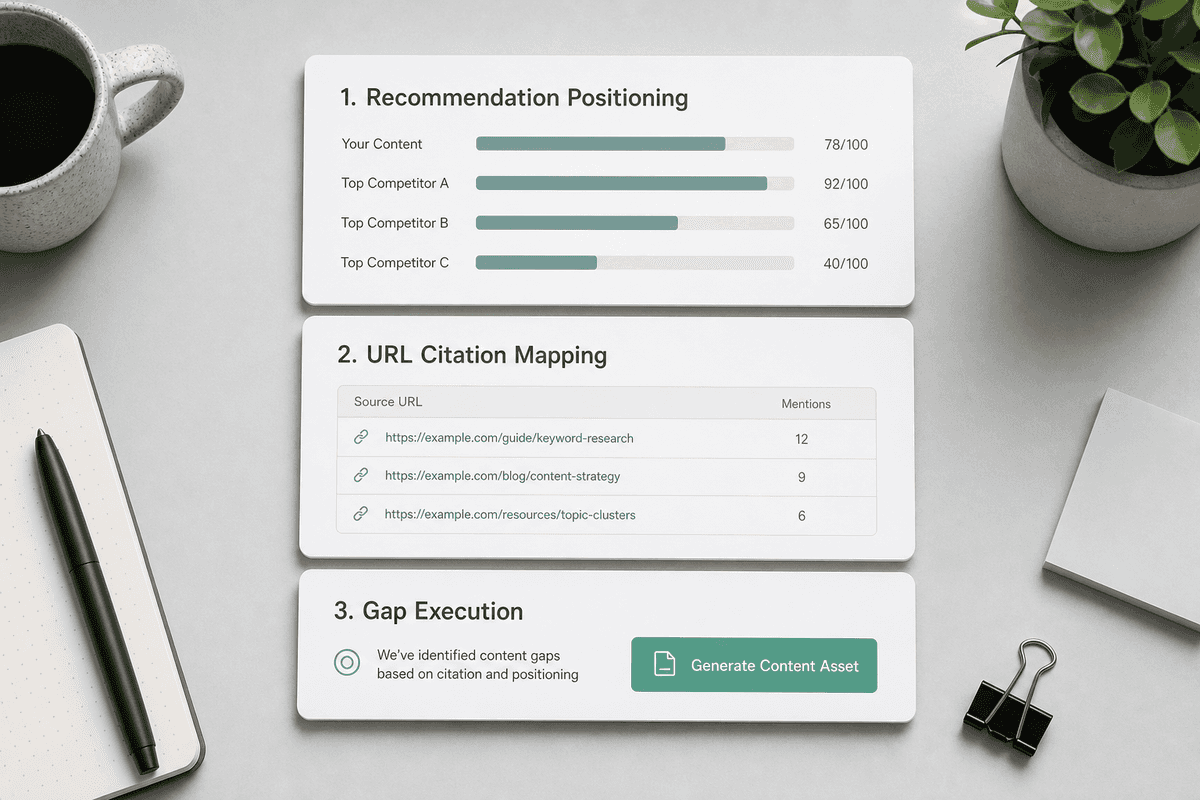
BeVisible continuously monitors buyer prompts across ChatGPT, Gemini, Perplexity, Google AI Mode, and Google AI Overviews. Rather than relying on static single queries, BeVisible lets teams model actual B2B buyer journeys—tracking how AI models respond to broad discovery questions, vendor comparison queries, and specific technical implementation requirements.
The platform breaks down every AI response into three concrete layers:
- Brand Recommendation Positioning: Measures whether your brand is recommended, mentioned neutrally, ignored, or cited alongside key competitors.
- Citation Mapping: Identifies the exact external web pages, digital PR placements, documentation, and review sites the AI assistant retrieved to generate its answer.
- Visibility Opportunity Scoring: Highlights specific visibility gaps where competitor brand mentions are vulnerable due to outdated citations or missing content coverage.
From Visibility Gaps to Published Content
What truly sets BeVisible apart from Profound is its native execution capabilities. When BeVisible identifies a prompt where your enterprise brand is omitted or mischaracterized, you do not need to export data or manually brief external writers.
BeVisible turns identified visibility gaps directly into evidence-backed articles, structured comparisons, and targeted guides. Built-in review, approval, and publication scheduling features allow your marketing team to move seamlessly from tracking AI omissions to deploying authoritative content that influences future LLM training passes and RAG search indexings.
For B2B marketing leaders building modern growth stacks, pairing AI visibility execution with insights from curated industry resources—such as reading curated selections from the best SEO blogs—ensures your content engine stays ahead of algorithm shifts.
Key Strengths
- Full tracking coverage across ChatGPT, Gemini, Perplexity, Google AI Mode, and Google AI Overviews.
- Direct conversion of AI visibility gaps into reviewable, schedulable, and publishable content.
- Granular URL-level citation breakdown, exposing third-party ecosystem sites driving competitor recommendations.
- Transparent, scaling pricing tiers designed for mid-market B2B teams, agencies, and high-growth SaaS firms.
- Designed around real B2B prompt logic rather than consumer search volume metrics.
Ideal User
B2B marketing teams, SaaS founders, and growth agencies that want to move beyond passive AI analytics and need an end-to-end platform to discover, draft, review, and publish content that fixes AI visibility gaps.
2. Semrush AI Search & SEO Suite
Semrush remains one of the foundational software pillars in traditional search engine optimization. As generative AI answers began reshaping search behavior, Semrush updated its core ecosystem to incorporate AI visibility metrics alongside its traditional keyword database.
Core Features & B2B Fit
Semrush provides an integrated environment where marketers can view classic search rankings alongside preliminary AI answer tracking. For businesses that rely heavily on traditional organic search reporting and want a single vendor to handle domain health, backlink auditing, and basic AI search tracking, Semrush offers a broad toolkit.
Recent updates to the platform introduce visibility scoring designed to track how often brands appear within AI-assisted search outputs across broader keyword pools, as analyzed in industry breakdowns of 17-year SEO milestone tools and AI upgrades.
Limitations Compared to Profound & BeVisible
While Semrush excels at massive keyword databases, its standard tracking architecture was built around fixed desktop/mobile SERP layouts rather than non-deterministic conversational AI prompts. It offers limited context into deep conversational flows inside standalone tools like Perplexity or ChatGPT. Furthermore, Semrush lacks a native AI content publishing pipeline; identifying a gap in Semrush still requires manual content creation across external content management systems.
Pros
- Deep legacy keyword, backlink, and technical SEO infrastructure.
- Single platform view for teams managing both classic SEO and preliminary AI visibility.
- Familiar user interface for established marketing teams.
Cons
- Broad tracking lacks the deep, prompt-level conversational nuance of dedicated AEO platforms.
- No direct workflow to turn missing AI brand recommendations into published content assets.
- Premium addon costs can quickly escalate for comprehensive tracking across both search modalities.
3. Ahrefs Brand & AI Mentions
Ahrefs built its global reputation on backlink crawling and index freshness. As LLMs increasingly rely on high-authority web mentions, digital PR, and co-citation networks to weigh source credibility, Ahrefs has positioned its backlink and brand mention monitoring features as crucial inputs for AI search presence.
Core Features & B2B Fit
Because AI engines rely heavily on Retrieval-Augmented Generation, the underlying authority of the pages being retrieved determines which brands get recommended. Ahrefs excels at tracking brand mentions across the entire web, identifying high-tier media mentions, and monitoring domain rating shifts.
In head-to-head comparisons evaluating Ahrefs vs Profound for AI brand tracking, market research shows that Ahrefs provides unmatched context into web citations and backlink footprints, helping SEO teams understand why certain web pages are prioritized by search crawlers.
Limitations Compared to Profound & BeVisible
Ahrefs is fundamentally a web crawler and backlink intelligence platform, not a prompt-level LLM simulator. While it answers the question, "Which sites link to my competitors?", it does not directly query ChatGPT, Gemini, or Claude with complex B2B buyer prompts to verify if those links actually translate into model recommendations. Content teams must manually bridge the gap between backlink reports and actual LLM response testing.
Pros
- Industry-standard web crawler with unmatched backlink and digital PR reference data.
- Excellent for identifying unlinked brand mentions across prospective LLM source pages.
- Robust competitive analysis features for traditional domain comparison.
Cons
- Does not monitor multi-turn conversational AI prompts directly.
- Lacks native generative engine optimization (GEO) workflows.
- No integrated publishing execution suite to resolve identified citation deficits.
4. Frase.io & AI Content Intelligence Platforms
Frase.io originated as an AI-powered content brief and outline generation tool, but it has expanded into broader content intelligence and AI presence tracking.
Core Features & B2B Fit
Frase focuses on analyzing search intent and top-ranking web documents, converting intent patterns into structured outlines. In comparative analyses covering the top 10 AI visibility tools in 2026, platforms like Frase highlight how structured content generation aids in creating pages that answer clear search questions.
For B2B content teams focused on building thorough, topic-focused pages designed to satisfy both human readers and search crawlers, Frase provides strong on-page content optimization tools.
Limitations Compared to Profound & BeVisible
Frase is primarily an on-page content optimization tool rather than a full-fledged enterprise AI visibility tracker. While it helps writers include relevant topic clusters on a page, it does not continuously run real-time prompt monitoring across independent conversational engines like Perplexity, Gemini, or ChatGPT to track overall brand share of voice.
Pros
- Excellent on-page content editing and outline generation features.
- Deep focus on search intent and topical completeness.
- Accessible entry-level pricing for small editorial teams.
Cons
- Lacks dedicated, multi-model prompt tracking dashboards.
- Cannot track non-search conversational platforms effectively.
- Limited source citation mapping across third-party ecosystem web properties.
5. Niche AEO / GEO Trackers
A variety of point-solution startups have launched simple prompt-tracking utilities designed to capture snapshots of brand recommendations across LLMs.
Core Features & B2B Fit
These lightweight tools allow teams to input a set of prompts and view a basic tally of whether their brand was mentioned by an AI model. They serve as quick diagnostic utilities for teams seeking an inexpensive entry point into AI Engine Optimization.
Limitations
Niche tracking utilities often suffer from severe limitations in dataset reliability and operational depth. LLMs are non-deterministic, meaning response variations occur based on geographic routing, temporal context, and system prompt updates. Point solutions that take a single daily snapshot fail to account for answer variance. Furthermore, without integrated citation mapping or content execution tools, point solutions merely generate static reporting lists that require manual intervention to act upon.
Detailed Platform Comparison Matrix
To help your growth and marketing teams select the ideal Profound alternative, this comparison table breaks down capabilities, target use cases, and operational models across top platforms:
The Mechanics of B2B AI Visibility: How Models Select Brands
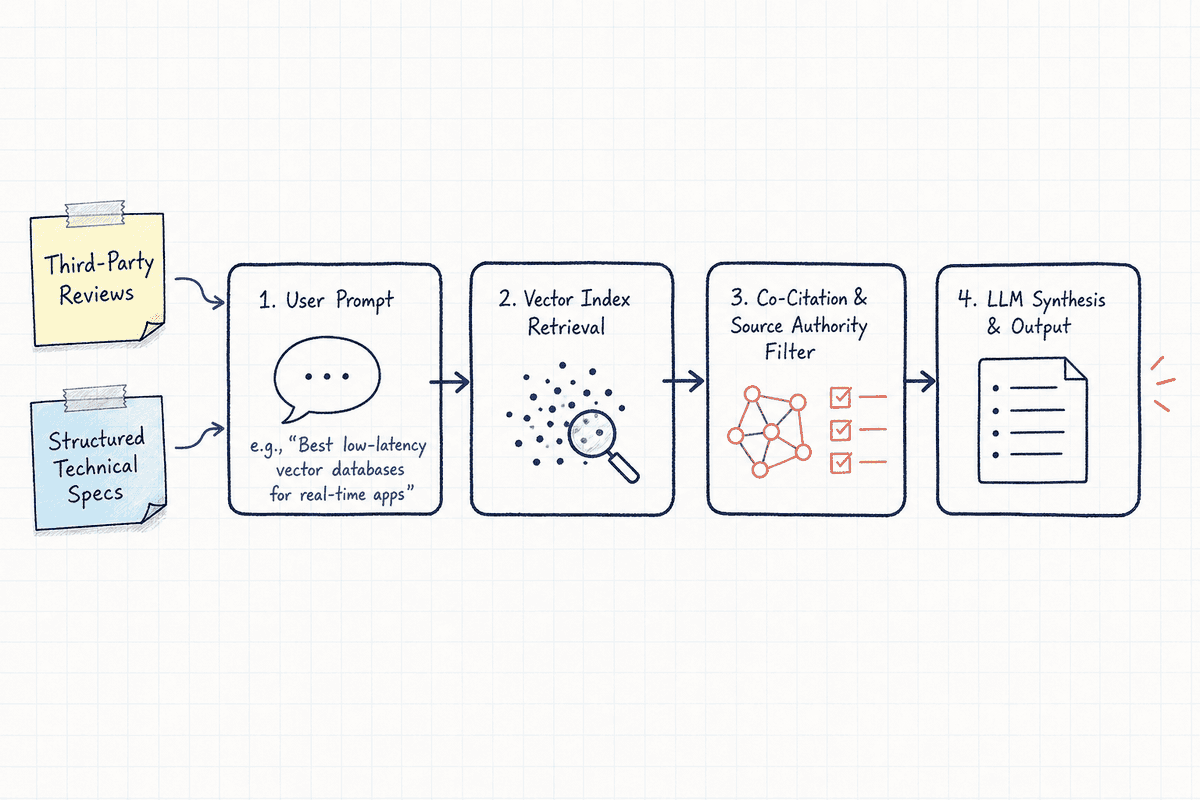
Understanding why your business needs dedicated AI visibility tools requires looking closely at how modern AI engines curate recommendations. Traditional search engines index web pages based on links and keywords. AI engines synthesize information using Retrieval-Augmented Generation (RAG).
When a prospective B2B client inputs a prompt like "What are the best vendor management platforms for mid-market healthcare organizations?", the AI model executes a multi-step retrieval process:
[User Prompt]
    │
    ▼
[Query Expansion & Intent Parsing]
    │
    ▼
[Vector Retrieval from Search Index & Web Corpus]
    │
    ▼
[Source Authority & Co-Citation Filtering]
    │
    ▼
[LLM Synthesis & Recommendation Output]
    │
    ▼
[Citations & Source Links Provided to User]
To earn a consistent recommendation inside this pipeline, your brand must clear three primary technical hurdles:
1. Co-Citation and Entity Knowledge Graphs
LLMs build semantic understandings of industry categories by observing co-citations across authoritative web sources. If your company name appears frequently alongside key category terms ("SOC2 compliance", "automated vendor tracking", "enterprise encryption") across trusted industry journals, review sites, and documentation, the model learns to associate your brand with that problem space.
2. High-Density Informational Architecture
AI crawlers prioritize dense, well-structured information over promotional marketing copy. Pages that utilize clean markdown tables, clear comparative headings, step-by-step implementation notes, and explicit feature metrics provide the structured data points that LLM parsing layers extract during RAG passes. For instance, when designing dedicated assets like an SEO landing page, ensuring clear structure makes it vastly easier for both search engines and AI assistants to parse key value propositions.
3. Source Diversity and Freshness
An AI model rarely relies on a company's own homepage to validate brand claims. It cross-references product claims against independent third-party sources: specialized tech blogs, customer review platforms, public GitHub repositories, community forums, and industry trade publications. Monitoring platforms must track this entire web ecosystem to explain why an AI assistant recommends one vendor over another.
Step-by-Step Guide: Building a High-Visibility AI Content Engine
Transitioning away from static reporting tools like Profound requires establishing a structured, repeatable workflow that turns visibility gaps into published authority assets.
Step 1: Define Your B2B Buyer Prompt Matrix
B2B buying committees ask different questions at each stage of the consideration funnel. Build a prompt matrix that mirrors actual evaluation steps:
- Stage 1: Category Discovery ("How do enterprise SaaS companies automate vendor risk assessments?")
- Stage 2: Technical Capability Verification ("Which risk assessment platforms support continuous HIPAA API monitoring?")
- Stage 3: Head-to-Head Comparison ("Compare Brand A vs Brand B for enterprise security teams.")
- Stage 4: Implementation & ROI ("What is the average setup timeline for vendor risk management software?")
Step 2: Establish Multi-Engine Baseline Tracking
Configure your tracking platform to run your prompt matrix continuously across ChatGPT, Gemini, Perplexity, and Google AI Overviews. Document your baseline metrics:
- Share of Model Voice (SoMV): The percentage of prompt queries where your brand is included in recommended lists.
- Sentiment & Positioning: Whether the AI engine frames your platform as a category leader, a legacy option, or an entry-level tool.
- Citation Dominance: Which specific web domains are linked in AI response footers.
Step 3: Audit Ecosystem Citation Deficits
When an AI engine omits your brand, inspect the underlying citations retrieved by the model.
- Are competitors cited due to recent product roundups on industry blogs?
- Is the LLM retrieving outdated pricing or legacy documentation from your own site?
- Are third-party comparison guides lacking detailed coverage of your modern feature set?
Step 4: Execute Evidence-Backed Content Publishing
Use an execution-focused tool like BeVisible to convert identified prompt gaps into structured content briefs. Publish comprehensive content assets that fill specific informational voids:
- Detailed Comparison Pages: Build structured, honest head-to-head pages comparing your platform against primary category alternatives.
- Technical Architecture Guides: Publish detailed documentation explaining how your software resolves complex integration edge cases.
- Data-Backed Industry Benchmark Reports: Release original research papers that third-party publications and tech blogs will cite, creating fresh co-citation references for LLMs.
Step 5: Close the Audit Loop
After deploying updated content, track the historical prompt performance inside your visibility dashboard. Monitor how long it takes for LLMs to re-crawl your updated assets, update their internal retrieval indexes, and adjust their natural language recommendations.
Common Misconceptions About AI Visibility Monitoring
As B2B organizations adjust their go-to-market strategies for generative search, several persistent myths cause teams to waste resources on ineffective tactics.
Myth 1: "Tracking Google AI Overviews Is Enough"
Many traditional SEO platforms claim to offer AI tracking simply by capturing Google AI Overviews on standard search engine results pages. However, enterprise B2B buyers routinely use standalone conversational assistants like ChatGPT and Perplexity for technical research, software comparisons, and vendor vetting. A brand that appears in Google AI Overviews but remains completely absent from ChatGPT and Perplexity loses major deals before buyers ever reach a standard search bar.
Myth 2: "AI Engine Optimization Is Just Keyword Stuffing for LLMs"
Generative AI models do not evaluate keyword density in the way legacy algorithms once did. Repeating a term twenty times on a landing page will not trick a vector database or an LLM summary pass. AI models evaluate topical completeness, logical structure, semantic relevance, and third-party validation. Optimizing for AI engines requires publishing authoritative, logically organized content that directly answers complex buyer questions.
Myth 3: "Monitoring Data Alone Will Improve Your Visibility"
Buying an expensive enterprise monitoring dashboard like Profound gives you visibility into your problem, but data alone does not influence AI outputs. Without an active execution strategy that creates, reviews, and publishes authoritative content assets directly addressing identified citation gaps, your AI market share will remain stagnant while agile competitors capture model mindshare.
Frequently Asked Questions
What is the difference between AEO (AI Engine Optimization) and GEO (Generative Engine Optimization)?
AEO (AI Engine Optimization) focuses broadly on ensuring your brand, products, and authoritative content are accurately indexed, retrieved, and recommended by conversational AI engines like ChatGPT, Gemini, and Perplexity. GEO (Generative Engine Optimization) specifically refers to structuring content—using explicit tables, direct answer formats, clear headings, and dense entity relationships—so that generative models can easily summarize and cite your pages within generated answers. Both methodologies work together to build overall brand presence in AI-driven search ecosystems.
Why do B2B companies specifically need dedicated AI visibility tools?
B2B buying journeys involve longer sales cycles, multiple stakeholders, and highly specific technical criteria. Buyers ask conversational AI engines nuanced, multi-layered questions rather than simple head keywords. Dedicated AI visibility tools allow B2B companies to simulate complex buyer prompts across multiple models, analyze third-party technical citations, and protect enterprise brand position in competitive category shortlists.
How often should B2B growth teams audit their AI brand recommendations?
Because AI models continuously update their web search indexes, fine-tune model weights, and adjust RAG retrieval logic, B2B teams should monitor high-intent buyer prompts on a continuous or weekly basis. Major updates to competitor websites, industry review site rankings, or digital PR releases can alter AI recommendations within days.
Can traditional SEO tools like Semrush or Ahrefs replace specialized platforms like Profound or BeVisible?
Traditional SEO tools provide essential data regarding legacy keyword volumes, domain authority, and overall backlink health. However, they were not designed around conversational prompt logic, non-deterministic LLM response tracking, or multi-engine assistant monitoring. While traditional SEO tools remain valuable for classic search optimization, B2B companies need dedicated AI visibility platforms to accurately track conversational model recommendations and execute targeted AEO workflows.
Taking Control of Your B2B AI Footprint
The way buyers evaluate software, services, and enterprise solutions has changed permanently. As traditional search volume shifts toward conversational AI assistants, B2B brands cannot afford to remain blind to how ChatGPT, Gemini, Perplexity, and Google AI Mode answer target account queries.
While early monitoring dashboards like Profound helped introduce teams to AI analytics, modern growth teams require tools built for the reality of B2B marketing: platforms that combine prompt-level tracking, deep citation intelligence, and closed-loop publishing workflows.
By moving beyond passive analytics and implementing an execution-focused AI visibility strategy, your company can identify missing brand mentions, correct misinformation, outmaneuver competitors, and ensure that whenever buyers ask AI engines for top category recommendations, your brand leads the answer.