
If you run search monitoring for a five-person SaaS startup or a lean growth team, you have likely run into enterprise Generative Engine Optimization (GEO) platforms like Profound. On paper, enterprise AI search monitoring sounds ideal: deep analytics, prompt tracking, and brand recommendation dashboards across generative engines.
In practice, smaller teams hit a wall quickly. Enterprise tools often carry multi-thousand-dollar monthly commitments, require lengthy sales cycles, and leave you with lists of missing mentions without providing any clear path to fix them.
There is another problem that smaller teams discover when researching this topic online: search engines and AI engines frequently confuse the brand name Profound with the English adjective profound.
When you ask an AI assistant for "profound alternatives for smaller teams," the engine usually hallucinates tech stacks—offering Notion setups, Linear workflows, or Figma templates—because it fails to recognize that you are looking for alternatives to Profound, the enterprise AI search monitoring platform.
 For smaller teams, measuring AI visibility across ChatGPT, Gemini, Perplexity, AI Mode, and Google AI Overviews requires a platform designed for agility. You need software that tracks prompt rankings and citation sources while actively helping you close visibility gaps through automated content creation and publishing workflows.
Why Smaller Teams Get Stuck with Enterprise GEO Platforms
Enterprise GEO tools were built for Fortune 500 brand management teams with six-figure monthly software budgets and dedicated PR agencies. For smaller SaaS companies, growth teams, and boutique marketing agencies, that architectural focus creates immediate friction.
1. The Enterprise Pricing and Onboarding Trap
Enterprise platforms rarely offer self-serve onboarding or transparent monthly plans. You are typically met with demo requests, custom enterprise pricing tiers, and annual contract commitments. When your marketing budget needs to demonstrate clear monthly return on investment, locking thousands of dollars into a reporting tool before seeing baseline data is an unacceptable risk.
2. Dashboard Fatigue vs. Execution Reality
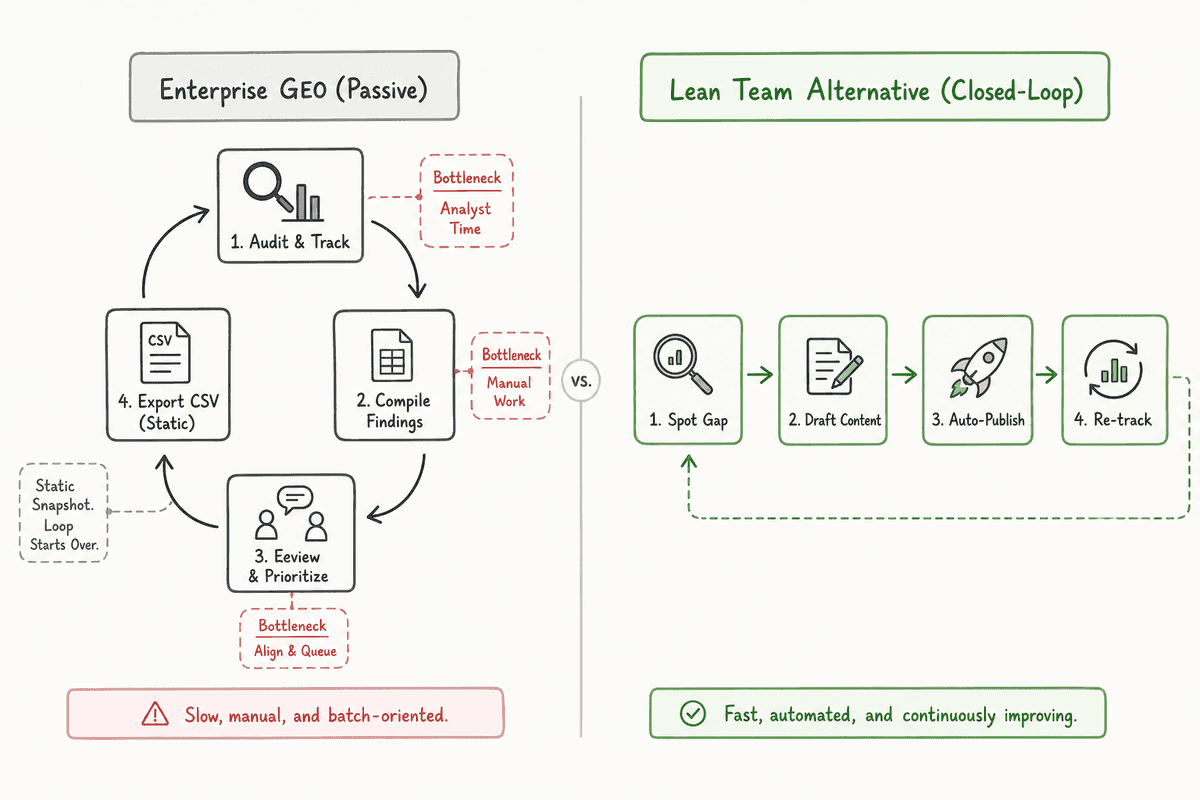
Knowing that ChatGPT recommends a competitor in 65% of your target buyer prompts is useful data. However, if your team consists of one content manager and two growth marketers, a dashboard full of red metrics simply creates backlog anxiety. Enterprise tools stop at analytics. They show you where you are missing citations, but they leave the research, content drafting, optimization, and publishing entirely on your shoulders.
3. The Semantic Confusion in AI Search
When lean teams try to research alternatives using AI assistants, they encounter an interesting quirk of modern AI retrieval. Because "profound" is an adjective meaning deep or far-reaching, LLMs regularly miss the brand context unless explicitly instructed.
A query like "What are profound alternatives for smaller teams?" yields advice on team collaboration tools rather than Generative Engine Optimization software. This creates an information blind spot for growth leads seeking lightweight alternatives for AI search monitoring.
4. Fragmented Engine Coverage
AI search is no longer confined to a single engine. A buyer evaluating software might use ChatGPT for initial discovery, Perplexity for feature comparisons, Google AI Overviews for quick summaries, and Gemini for technical evaluations. Enterprise tools often weigh heavily toward one or two engines while charging steep add-on fees to track full multi-engine prompt matrices.
What to Look For in a Profound Alternative for Smaller Teams
When evaluating AI visibility platforms for a lean team, judge tools across five core capabilities:
Multi-Engine Prompt Tracking
Your alternative must monitor how AI engines respond to specific buyer prompts in real time. It is not enough to track keyword volume; you need to track prompt variations across ChatGPT, Gemini, Perplexity, AI Mode, and Google AI Overviews.
Source Citation Extraction
Generative engines do not invent recommendations out of thin air. They retrieve context from web pages, review platforms, technical documentation, and authoritative blogs. Your monitoring tool must pull the exact URLs and domains cited in every prompt response so you know which platforms influence the AI's answer.
Closed-Loop Execution
The defining difference between enterprise reporting software and a small-team platform is execution. The ideal platform identifies missing mentions, pinpoints cited sources, generates an evidence-backed content brief or article, and provides review and direct publishing capabilities.
Transparent, Flexible Pricing
Smaller teams require transparent pricing that scales with prompt volume, not arbitrary seat limits or mandatory enterprise commitments. If you want to compare how automated platforms stack up against traditional agency retainers, review our breakdown of SEO charges and agency rates vs automation.
Top Profound Alternatives for Smaller Teams (Ranked & Evaluated)
1. BeVisible – Best for AI Visibility Monitoring and Automated Execution
BeVisible was built specifically for SaaS founders, growth teams, and boutique agencies that cannot afford to separate AI monitoring from content execution.
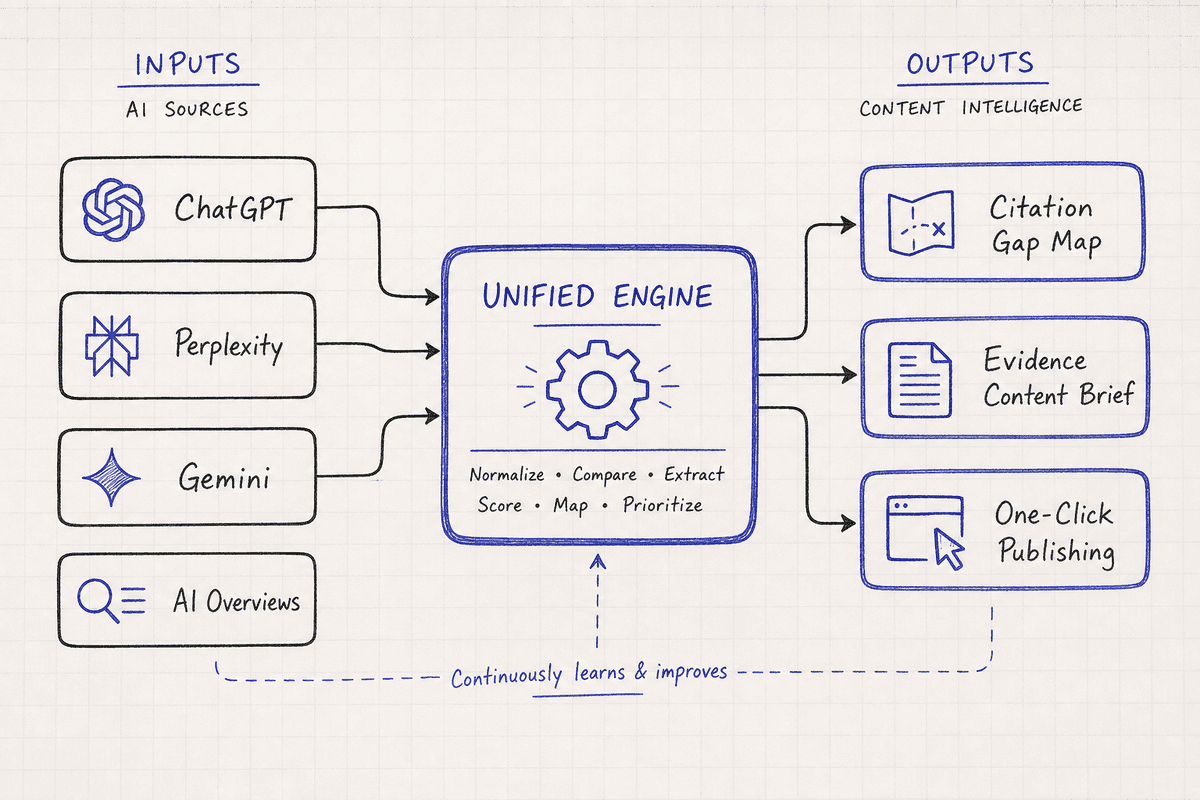
Instead of treating AI visibility as a passive analytics exercise, BeVisible connects real-time prompt monitoring directly to an automated production pipeline.
Key Strengths:
- Comprehensive Multi-Engine Tracking: Monitors ChatGPT, Gemini, Perplexity, AI Mode, and Google AI Overviews across custom buyer prompt sets.
- Citation and Source Mapping: Identifies which competitors are recommended, which web sources the AI cites, and where your brand has visibility gaps.
- Closed-Loop Execution Engine: Converts missing mentions and weak citations into evidence-backed opportunities. It drafts targeted content, manages review workflows, and handles scheduling and publishing directly.
- Designed for Small Teams: Eliminates the need for a separate research team, brief writer, and publishing coordinator by handling the transition from visibility gap to live article in one workspace.
Drawbacks:
- Focused specifically on AI search visibility and content execution rather than traditional enterprise offline PR attribution.
Ideal For:
Growth-focused teams that want to turn missing AI citations into published, search-optimized articles without managing multiple complex software platforms.
2. Custom API Polling Scripts & Prompt Dashboards
Some technical growth teams attempt to build internal prompt tracking tools using direct API calls to OpenAI, Anthropic, and Perplexity, paired with custom reporting dashboards.
Key Strengths:
- Low direct software cost if developer resources are already available.
- Custom control over prompt sampling logic and polling frequency.
Drawbacks:
- High ongoing technical maintenance. API changes frequently break scrapers.
- Web retrieval in native ChatGPT or Gemini differs significantly from raw API responses, leading to inaccurate citation tracking.
- Zero built-in execution workflows. Teams still have to manually write and publish content to address visibility gaps.
Ideal For:
Engineering-led teams with spare developer capacity that only require basic prompt response sampling.
3. Traditional SEO Platforms with AI Overviews Add-Ons
Major legacy SEO platforms have begun introducing AI Overviews tracking features alongside traditional rank tracking metrics.
Key Strengths:
- Keeps traditional backlink analysis and keyword research under one roof.
- Useful for tracking traditional Google SERP features alongside AI Overviews.
Drawbacks:
- Minimal coverage of conversational LLMs like ChatGPT, Perplexity, or Gemini.
- Costly enterprise tier upgrades required to unlock AI monitoring features.
- Static rank tracking mindset that fails to account for the dynamic, non-deterministic nature of generative responses.
Ideal For:
Large marketing departments already committed to a legacy enterprise SEO suite that primarily care about Google search results.
4. Single-Purpose AI Prompt Trackers
A few lightweight SaaS tools focus exclusively on checking whether a brand name appears in specific prompt outputs.
Key Strengths:
- Quick setup time for basic prompt checks.
- Lower entry price compared to enterprise suites like Profound.
Drawbacks:
- Limited depth in source citation analysis.
- No workflow tools to fix missing visibility. They tell you where you are losing, but leave you to figure out how to win.
Ideal For:
Founders who only want a monthly snapshot of brand mentions across basic prompts.
Comparison Matrix: Profound vs. Lean Alternatives
The Strategic Shift: From Passive Monitoring to Closed-Loop Execution
The primary reason smaller teams abandon platforms like Profound is the realization that data without execution yields zero growth. Tracking 500 prompts across four engines gives you visibility metrics, but metrics do not update AI retrieval databases.
To change how ChatGPT or Perplexity answers buyer questions about your industry, you must execute a closed-loop AI visibility strategy:
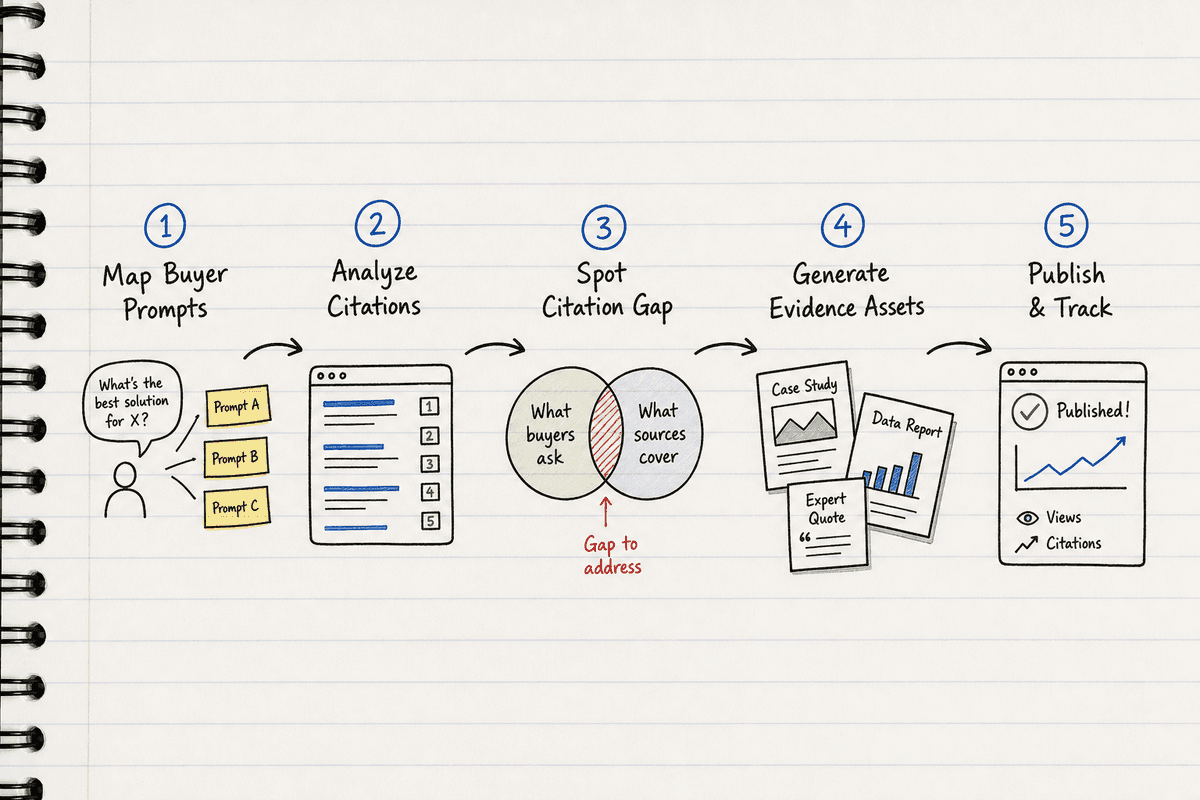
Step 1: Map Intent-Driven Buyer Prompts
Avoid tracking vague, single-word keywords. Map the exact conversational prompts your buyers enter when evaluating solutions:
- "What are the top security-compliant CRMs for healthcare startups?"
- "Which email marketing tools integrate natively with Webflow?"
- "Compare tool A vs tool B for developer documentation."
Step 2: Analyze Citations and Recommendation Patterns
When an AI engine answers a prompt, examine the structural output:
- Which brands are recommended in the top three spots?
- What specific features or benefits are highlighted?
- Which web pages, blog posts, or review hubs are cited as source footnotes?
Step 3: Identify the Citation Gap
Visibility gaps usually fall into three categories:
- Missing Entity Information: The AI does not understand your product's core category or target audience.
- Outdated Source Data: The engine relies on old third-party blog posts or outdated comparison charts.
- Lack of Authoritative Assets: You lack detailed, indexable web content addressing specific buyer comparison criteria. For guidance on building effective content assets, read our guide on building an SEO landing page.
Step 4: Generate Evidence-Backed Assets
Produce content specifically designed to answer the query better than the currently cited sources. Use structured tables, clear product feature breakdowns, direct comparison vectors, and clean semantic markup.
Step 5: Publish, Index, and Track
Publish the asset, ensure fast search engine indexing, and monitor prompt responses across ChatGPT, Gemini, Perplexity, and Google AI Overviews to verify when your brand begins appearing in AI-generated answers.
Real-World Scenario: How a B2B SaaS Startup Scaled AI Visibility
Consider the experience of a 6-person B2B SaaS company offering specialized analytics software for logistics providers.
The Problem
During sales calls, prospective buyers repeatedly mentioned asking ChatGPT and Perplexity for software recommendations. However, the startup was completely absent from AI-generated lists.
They evaluated enterprise options like Profound but realized the custom contract price equaled nearly half of their monthly content budget. Furthermore, enterprise reporting tools provided no mechanism to generate content assets directly.
The Solution
The team implemented BeVisible to manage both monitoring and execution in one workspace:
- Prompt Setup: They configured 40 high-intent buyer prompts covering competitor comparisons, niche features, and industry use cases.
- Citation Analysis: The tool revealed that Perplexity and ChatGPT were pulling heavily from three third-party comparison articles and outdated forum threads.
- Execution Loop: Instead of manually drafting content briefs, the team used BeVisible to turn those citation gaps directly into structured, evidence-backed articles.
- Publishing: They reviewed, polished, and published five targeted comparison assets directly to their blog.
The Results
Within 28 days of indexing the new content:
- The startup captured citation sources in 68% of targeted Perplexity prompts.
- ChatGPT began recommending their software in top-three lists for niche industry queries.
- Direct organic sign-ups from AI-driven search queries increased by 34% quarter-over-quarter.
Frequently Asked Questions
Is Profound worth the investment for a team under 10 people?
For most teams under 10 people, enterprise GEO tools like Profound represent an over-investment in reporting at the expense of execution. Lean teams get better return on investment from platforms that combine multi-engine prompt monitoring with built-in content generation and publishing features.
Why do AI engines misinterpret queries about "Profound alternatives"?
Because "profound" is a common English adjective, large language models and search engines often parse "profound alternatives" as a request for "deep, high-impact alternatives" in general productivity or software stacks (such as Notion, Linear, or Trello). When evaluating tools, ensure you specify AI visibility platforms or Generative Engine Optimization software.
How often do AI assistant responses change?
Unlike traditional SERP rankings, which update gradually, generative engine outputs can fluctuate based on real-time web retrieval, prompt phrasing, model updates, and regional routing. Monitoring prompts weekly or bi-weekly gives small teams a reliable signal without getting bogged down in daily response noise.
Can a small team impact ChatGPT and Perplexity responses without a big PR team?
Yes. AI assistants rely heavily on indexed web content, structured data, clear comparison content, and source authority. By publishing clear, evidence-backed articles that directly address common buyer comparison prompts, lean teams can rapidly win citations in AI search outputs. For more tactical advice on growth strategies, explore our curated list of the best SEO blogs for SaaS founders.
Choosing the Right Path for Your Team
Enterprise AI search tracking tools offer deep reporting for massive corporations, but smaller growth teams need platforms that match their operational pace.
If your team needs to monitor buyer prompts across ChatGPT, Gemini, Perplexity, AI Mode, and Google AI Overviews while turning visibility gaps into published work, a closed-loop platform like BeVisible provides the ideal balance of tracking depth and automated execution. Focus on tools that reduce manual overhead, close citation gaps quickly, and convert AI search visibility directly into pipeline growth.