
Automating your content pipeline feels like an undeniable win when you first flip the switch. For a long time, the standard playbook involved connecting an AI writing tool directly to your CMS, feeding it a list of keywords, and letting it run. Platforms in this space deliver exactly that baseline functionality. They spin up articles, connect to Google’s Indexing API, and push pages live without human intervention.
But indexing a post on Google is only half the battle. If generative AI engines like ChatGPT, Gemini, and Perplexity are not surfacing your brand in their answers, your automated blog is practically invisible to a massive segment of modern B2B buyers. Teams often realize that sheer volume cannot compensate for a lack of authoritative citations. They start looking for tools that offer more control, better integrations, and the flexibility to adapt to an AI-first search environment.
If you are outgrowing basic automation, you need a system that does more than just publish blindly. You need workflows that turn visibility gaps into published work, track how AI assistants answer buyer questions, and execute targeted content strategies.
The Shift from Sheer Volume to AI Visibility Execution
Many marketing teams initially adopt automated publishing systems like Frizerly to optimize SEO and improve visibility on Google. The value proposition is straightforward: reduce the human hours required to draft and format standard keyword articles.
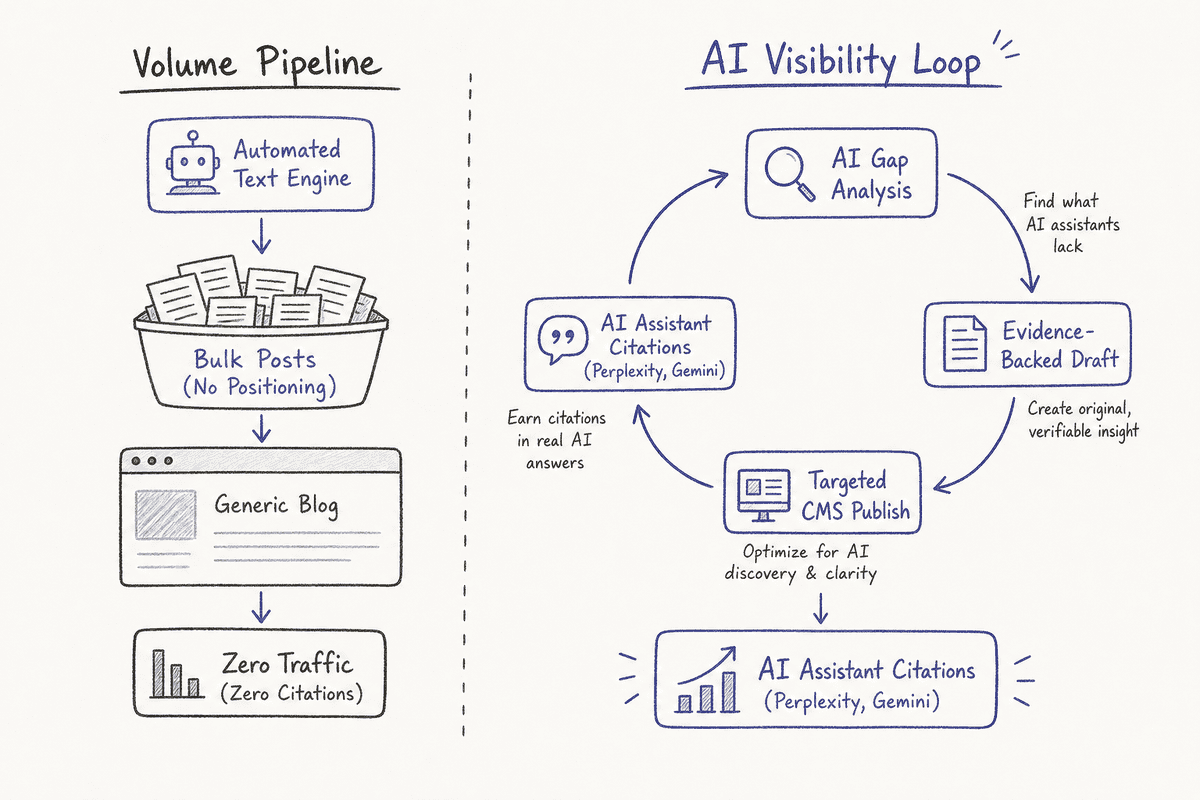
However, failure modes emerge when teams scale this approach without a strategy for AI engines. Automated systems often pull from generic training data, creating posts that are technically sound but lack the specific insights, brand mentions, and evidence-backed citations that tools like Perplexity require to formulate a confident answer.
When you evaluate marketing automation tools for businesses focusing on search engine ranking, the criteria must extend beyond simple text generation. The software needs to support a strategic feedback loop. It should allow you to identify exactly which competitor brands are winning the AI assistant recommendations, which sources are being cited, and where your own content is falling short.
This requires a fundamental shift in how you view your CMS. Instead of a dumping ground for automated text, your blogging platform must become an execution layer. When you discover a missing mention or a weak citation in an AI Overview, your automated publishing tool should help you quickly spin up an evidence-backed article, schedule it, and push it live to fill that exact gap.
Core Categories of Automated Blogging and Indexing Software
Finding the right alternative depends heavily on your existing technical stack and your team's capability to manage infrastructure. The market splits into several distinct categories, ranging from deep CMS integrations to headless developer tools.
WordPress AI Blog Plugins with Deep Automation
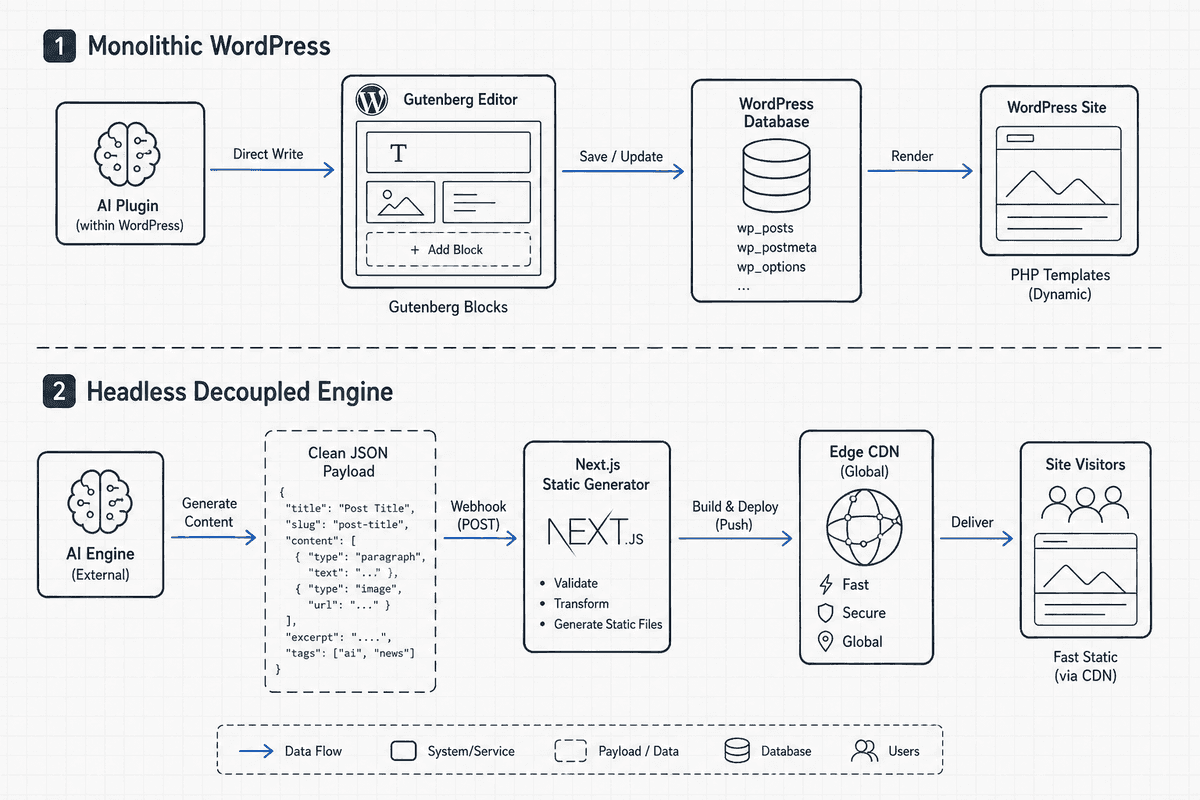
For teams already heavily invested in the WordPress ecosystem, standalone plugins offer a frictionless path to automation. These tools live directly inside your wp-admin dashboard, eliminating the need for complex API routing or external webhooks.
Implementation typically involves installing the plugin, configuring your OpenAI or Anthropic API keys, and setting a daily or weekly publishing schedule. The best plugins in this category act as SEO copilots. They do not just dump text into the classic editor; they automatically format Gutenberg blocks, pull in relevant internal links from your existing media library, and structure headers for optimal readability.
Pros:
- Keeps your workflow contained entirely within WordPress.
- Eliminates the need for third-party dashboard subscriptions.
- Native integration with standard SEO plugins to manage metadata automatically.
Cons:
- Heavy generation processes can bloat your database and slow down your site if your hosting environment is weak.
- Output quality varies wildly depending on the specific plugin's prompt engineering.
- Managing multi-site architectures requires purchasing expensive agency licenses.
If you run multiple niche properties, you likely need a dedicated management layer. Finding the right tools for this specific use case is critical, which is why many publishers explore how niche site owners automate daily publishing to manage fleets of websites without overwhelming their servers. For those moving away from legacy tools, examining Sight AI alternatives for automating daily publishing often reveals plugins better suited for high-volume WordPress networks.
Headless CMS Platforms and API-First Workflows
Modern SaaS companies and enterprise marketing teams often abandon monolithic CMS architectures entirely. They move toward headless systems like Wisp or custom Next.js frontends powered by robust backend content APIs.
In this environment, automated blogging looks completely different. You do not use a plugin. Instead, your automation layer lives in a dedicated AI content engine that pushes JSON payloads via webhooks directly to your headless CMS. The CMS then triggers a static site rebuild, deploying the fresh content globally in seconds.
Pros:
- Total control over the front-end presentation.
- Lightning-fast page load speeds, which inherently benefit your technical SEO baselines.
- Clean content APIs allow you to distribute the exact same automated post to a web frontend, a mobile app, and a partner portal simultaneously.
Cons:
- Requires dedicated developer resources to set up the initial webhooks and frontend rendering logic.
- Marketers lose the visual drag-and-drop experience they are accustomed to.
- The initial infrastructure cost is significantly higher than buying an off-the-shelf automation tool.
This level of custom integration is what defines a true hands-free SEO blog engine. When your frontend is decoupled from your backend, you can swap out your AI generation tools at any time without migrating your actual website. Teams looking to build this kind of resilience frequently evaluate Blogseo alternatives for building a hands-free SEO blog engine to find systems that prioritize API reliability over flashy interfaces.
Dedicated Multi-Channel Content Engines
Some tools are built entirely around the AI writing experience and later bolted on publishing capabilities. Platforms like Jasper or Writesonic started as prompt-based text generators and evolved into multi-channel distribution hubs.
When you evaluate a Writesonic alternative that automatically creates and publishes content, you are usually looking for a platform that handles the entire lifecycle. You enter a topic, the engine discovers subtopics, drafts the piece, optimizes the keyword density, and pushes it to WordPress, Medium, and your social channels simultaneously.
Pros:
- Exceptionally mature AI writing workflows with sophisticated tone-matching capabilities.
- Strong built-in analytics to track how the content performs across different channels.
- Ideal for marketing teams that want to centralize their output outside of their CMS.
Cons:
- You are often paying a premium for the proprietary interface.
- Cross-channel publishing can sometimes result in duplicate content issues if canonical tags are not configured perfectly via the API.
- These tools can feel bloated if you only need them for simple blog automation.
To avoid the bloat, some growth teams turn to specialized contentbot alternatives for automated blogging platforms. These specialized tools focus purely on the drafting and deployment pipeline, stripping away the social media scheduling and ad-copy generators to provide a cleaner automated blogging platform besides Contentbot.
High-Volume Multichain Platforms
For agencies or portfolio managers operating across different blockchain niches or highly fragmented industries, standard tools often fail to manage the sheer volume of distinct personas required. Multichain blogs require platforms that can handle distinctly separate knowledge bases, ensuring the AI does not cross-contaminate the tone or facts between completely different brands.
If you are managing this level of complexity, you need strict tenant isolation within your automation software. You might want to explore affordable alternatives to Arvow for multichain blogs to find infrastructure capable of segregating data securely. Cost control becomes paramount at scale, making it necessary to evaluate the best affordable alternatives to Arvow to prevent API costs from destroying your margins.
The Myth of "Set It and Forget It" Indexing
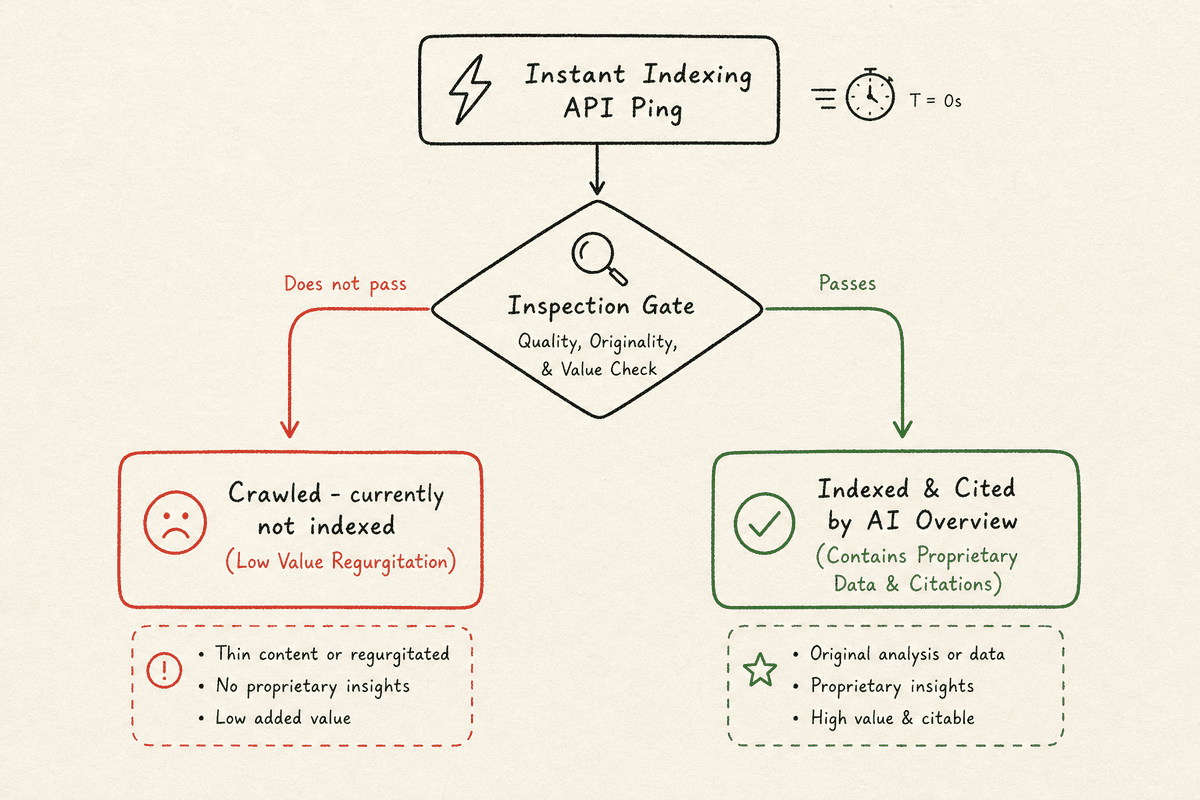
A common misconception in the automated content space is that utilizing the Google Indexing API guarantees traffic. Software vendors often highlight their ability to ping search engines the second a post is published, promising instant visibility.
The reality is much more nuanced. The Indexing API was originally designed for rapidly changing content like job postings or live event broadcasts. While it can force search engines to crawl your automated blog posts quickly, it does not force them to index those posts, let alone rank them.
Google’s systems are highly sophisticated at detecting high-volume, low-effort programmatic content. If you generate a thousand articles that simply regurgitate existing top-ranking pages without adding net-new information, the crawler will visit your site, analyze the content, and relegate it to the "Crawled - currently not indexed" status in your Search Console.
Indexing speed is irrelevant if the content lacks citation value. AI assistants like Perplexity and Gemini prioritize pages that offer concrete data, unique vendor comparisons, and clearly structured evidence. They do not cite a page simply because it was crawled quickly. To actually rank on Google without writing articles manually, your automation workflow must inject proprietary data, internal statistics, or specific buyer context into the prompts before the draft is generated.
Integrating Low-Competition Gap Analysis
Before you configure any automation engine, you must know what to write about. Blindly feeding a massive list of broad industry terms into a software tool guarantees failure. The most successful automated publishing strategies begin with rigid gap analysis.
You need to identify the exact long-tail queries, specific feature comparisons, and narrow troubleshooting questions that your competitors are ignoring. When you leverage software to find low competition keyword gaps and write articles, you provide your automation tools with a much higher probability of success.
Instead of asking an AI to write about "marketing software," you ask it to execute a highly structured comparison of "marketing automation data retention policies for healthcare SaaS." The latter is specific enough to trigger an AI Overview citation and narrow enough to bypass high-authority competitors on traditional search engines.
Transitioning to AI Visibility Execution: A Practical Scenario
Consider the trajectory of a typical B2B SaaS growth team. They notice their organic traffic flatlining and decide to scale output using an automated publishing tool. They connect the software, upload a CSV of five hundred glossary terms, and set the system to publish ten posts a day.
For the first month, the technical execution is flawless. The pages go live, the internal links populate, and the indexing API pings Google.
By month three, the results are dismal. Traffic barely moves, and more importantly, zero qualified leads enter the pipeline. The team investigates and discovers a fatal flaw in their strategy. Their buyers are no longer typing simple glossary definitions into standard search bars. Instead, their target audience is asking Perplexity complex questions like, "Which AI visibility tools integrate specifically with custom headless architectures?"
The automated glossary terms completely missed this intent. The team realizes they do not need more volume; they need precise execution based on actual AI engine behavior.
They pivot their approach entirely. They adopt a platform like BeVisible to monitor exactly how AI assistants are answering those specific buyer questions. BeVisible tracks ChatGPT, Gemini, and Perplexity across their core buyer prompts. The platform reveals that a major competitor is currently being recommended for headless architecture integrations, while their own brand is completely missing from the AI's response.
Armed with this specific visibility gap, the team alters their automation strategy. Instead of generating generic definitions, they use BeVisible to turn that missing mention into an evidence-backed opportunity. They structure a highly detailed, technically accurate article detailing their headless API capabilities, customer success metrics, and integration workflows. They publish this targeted piece. Within weeks, the AI assistants ingest the new, high-value information and begin citing their brand in responses.
This scenario illustrates the difference between blind automation and strategic execution. Automation is merely a mechanism for delivery. The true value lies in monitoring the AI-search landscape, identifying your weak citations, and leveraging your publishing tools to correct those gaps with undeniable evidence.
Evaluating Infrastructure and Cost Nuances
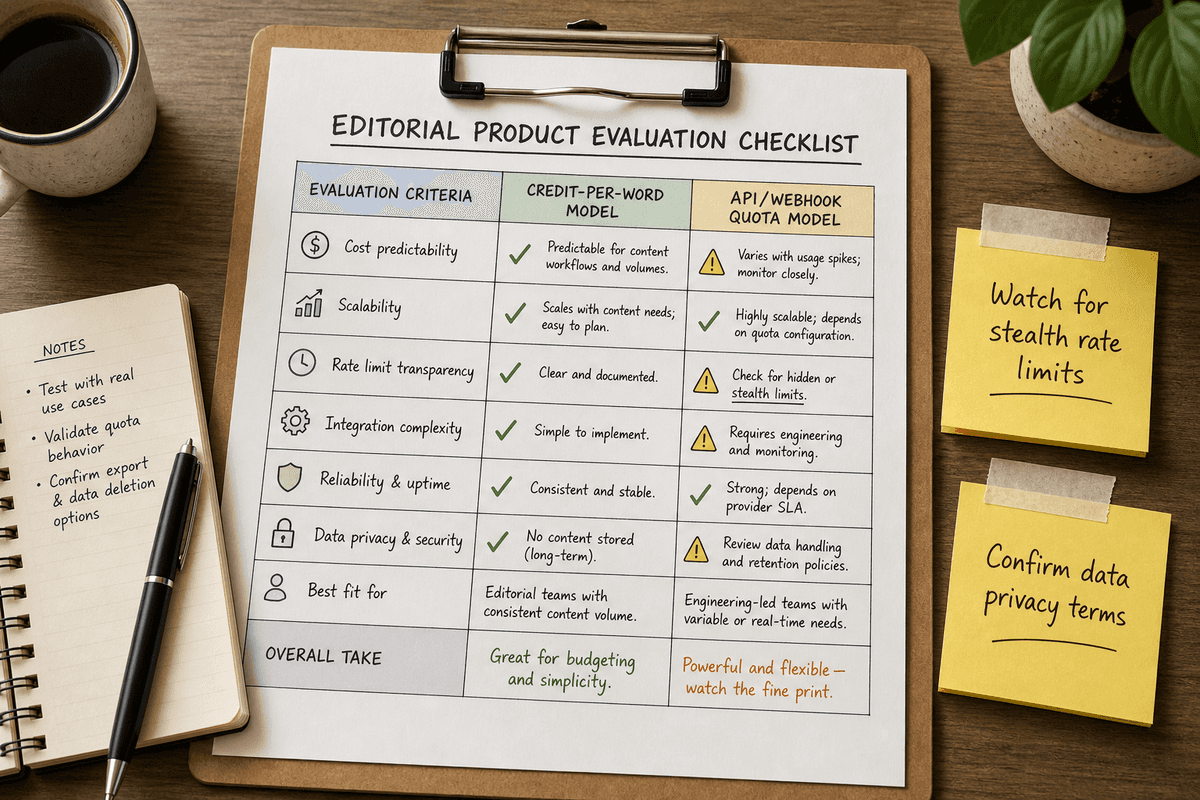
When you are ready to implement a new system, you must conduct a thorough cost-benefit analysis of the underlying infrastructure. Discovering the features, user reviews, and alternatives to AI-powered platforms requires looking past the marketing copy and understanding the pricing models.
Many tools operate on a credit-based system, charging you per generation or per word. This model can become prohibitively expensive if you are running iterative workflows that require multiple revisions, internal linking passes, and formatting updates before publishing.
Other platforms offer unlimited generation but cap the number of automated API pushes or webhooks you can execute per month.
Key Decision Criteria
Understanding these criteria is essential when comparing lists based on the best alternatives in the market. You are not just buying a writing assistant; you are integrating a core piece of technical infrastructure into your content operations.
FAQs about Frizerly Alternatives for Automated Blogging and Indexing
What makes an alternative better for AI engine citations?
Standard automated bloggers focus entirely on traditional keyword density and meta tags. An alternative better suited for AI engine citations prioritizes structured data, factual density, and clear formatting. Generative AI engines look for unique insights, statistical evidence, and definitive answers. Your chosen tool must allow you to inject proprietary data into the drafting process so the final output contains the specific evidence that AI assistants prefer to cite.
How do modern blogging platforms handle the Google Indexing API safely?
Safe handling of the Indexing API requires strict pacing. Instead of submitting hundreds of URLs simultaneously—which often triggers spam filters—intelligent platforms queue the submissions, pacing them out to mimic natural publishing velocity. Furthermore, they monitor the Google Search Console API for actual indexation status, alerting you if a batch of automated pages gets flagged as "Crawled - currently not indexed," allowing you to refine your content strategy.
Can I automate Perplexity and Gemini visibility?
You cannot force Perplexity or Gemini to index and cite a page via a direct API ping in the same way you ping Google. Automating visibility on these platforms requires a two-step process: First, you must monitor the exact prompts buyers use and track the current citations (which BeVisible handles). Second, you must generate highly specific, context-rich content designed to answer those exact prompts better than the currently cited sources. The automation happens in the monitoring and the drafting, but the visibility is earned through content quality.
Moving Beyond Basic Automation
The era of generating unguided text and hoping for organic traffic is over. As buyer behavior shifts toward conversational AI assistants, your content infrastructure must adapt. The goal is no longer just to populate a domain with articles; the goal is to become the definitive, cited authority whenever a buyer asks a relevant question.
Choosing the right platform requires moving past tools that only offer basic text generation. You need software that integrates seamlessly with your CMS, respects your architectural choices, and most importantly, allows you to execute against specific visibility gaps. When you connect a robust monitoring strategy to a powerful, controlled publishing pipeline, you stop guessing what the market wants and start systematically capturing the citations that matter.